


Vintage Banqueting Table
A vintage banqueting table provides the anchor for formal dining, bringing substantial timber and generous proportions to the room.
Vintage Banqueting Table
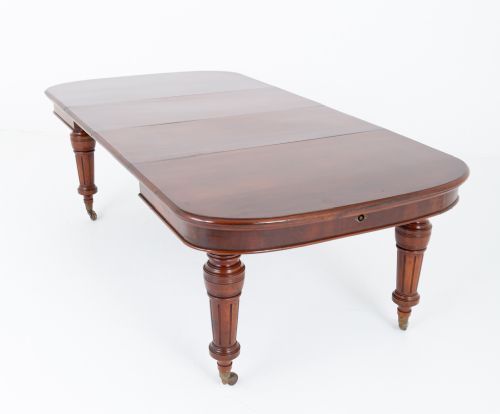
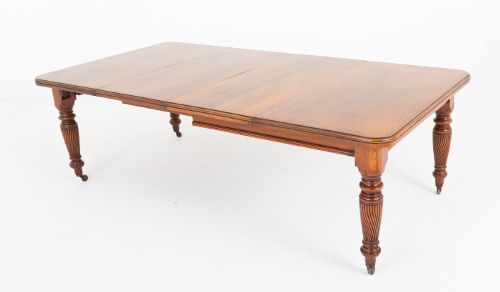
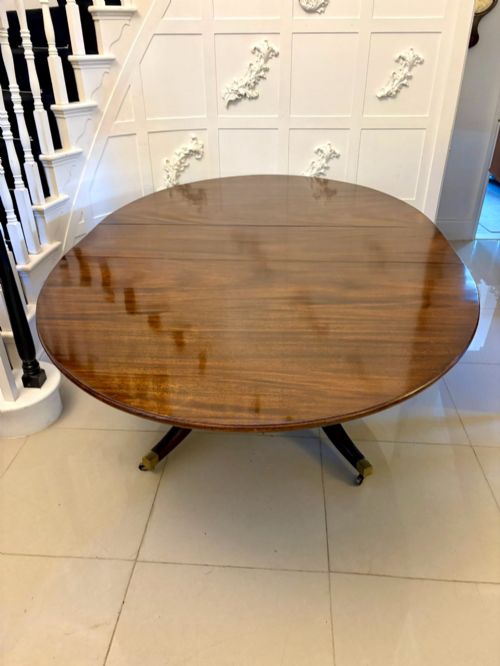
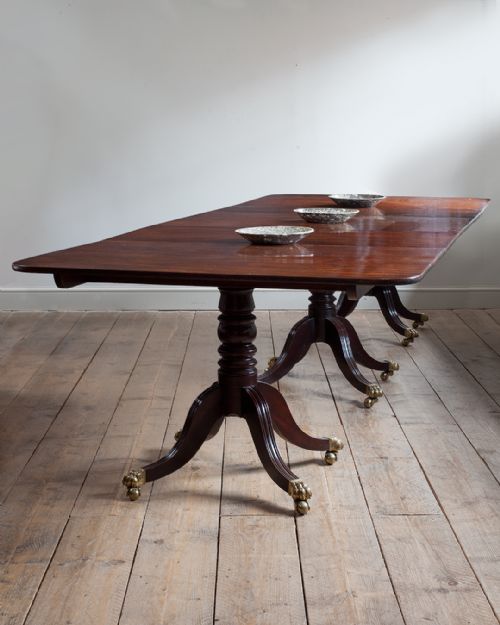
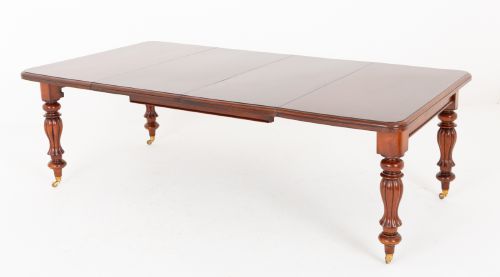
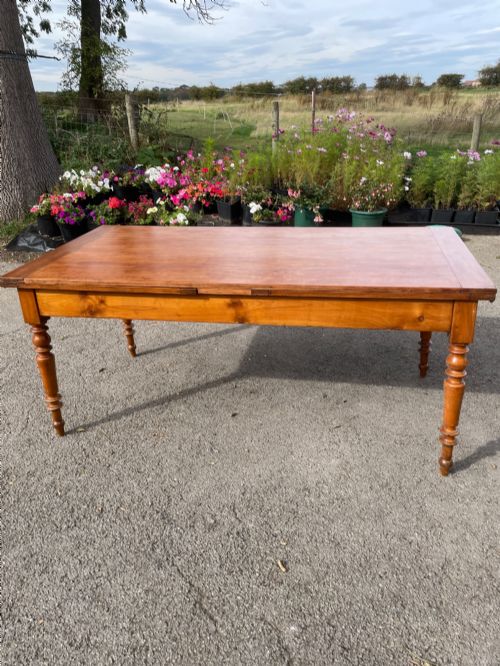
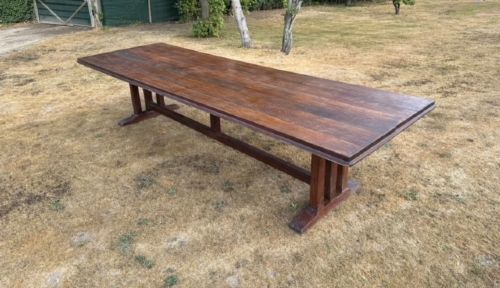
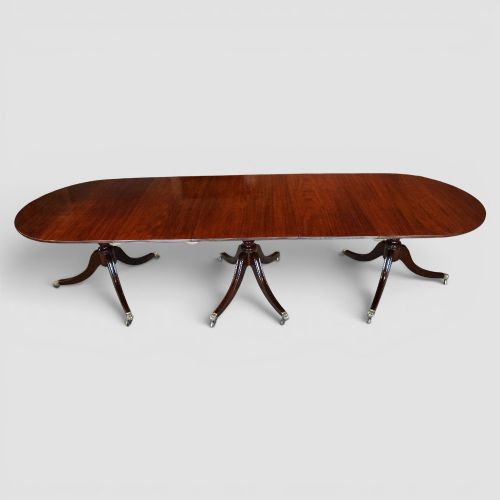
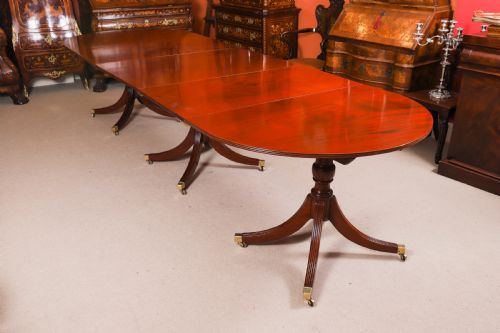
A vintage banqueting table is designed to accommodate large gatherings, frequently found in forms such as extending dining tables with multiple leaves, refectory tables, and multi-pillar pedestals. These pieces originate across the nineteenth and early twentieth centuries, spanning periods from George III and Regency through to Edwardian and later revivals.
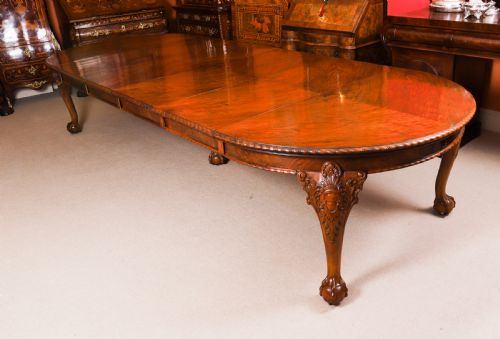
Buyers seeking a vintage banqueting table most commonly encounter mahogany examples featuring extending mechanisms or pillar supports, alongside oak, walnut, and cherrywood alternatives. These tables range from modest seating arrangements for eight up to grand twelve-seater configurations suitable for extensive dining spaces.
How they were made
Cabinet makers utilised dense hardwoods, predominantly mahogany, burr walnut, and oak, often selecting figured veneers and flame mahogany for the primary top surfaces. Timber sections were joined using traditional methods to withstand the structural demands of extending mechanisms and heavy daily use.
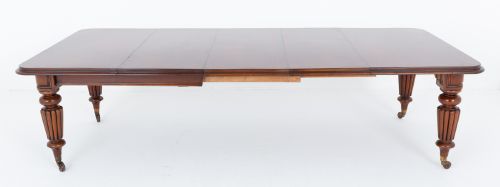
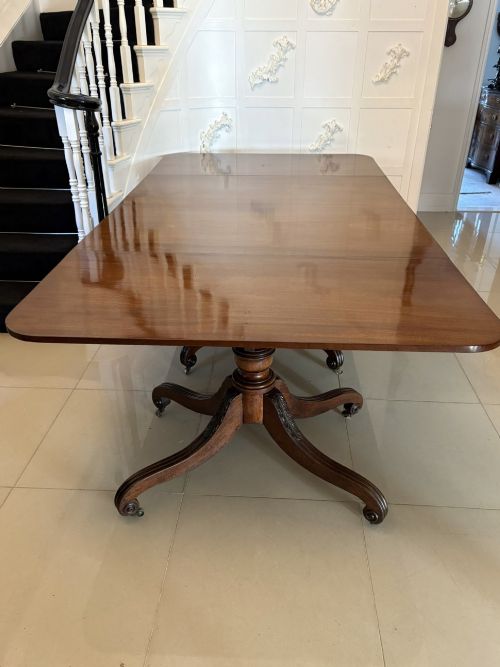
Pedestal bases and table legs incorporate turned columns, carved details, and brass castor fittings to permit movement. Extending formats rely on internal runners and drop-in leaves that allow the central span to expand or contract according to the required seating capacity.
Vintage Banqueting Table Retail Price Guide 2026
Typical asking prices for vintage banqueting table among the pieces listed under this phrase on Sellingantiques today, from the lower quarter to the upper quarter. They describe what is for sale here now, not the wider market.
Listings feature mahogany, oak, walnut, burr walnut, cherrywood, and rosewood across nineteenth and early twentieth-century periods.
What varies in quality
The choice of timber grain defines the visual calibre of the surface, with highly figured mahogany, plum pudding mahogany, and burr walnut commanding greater presence than plain stock. Cabinet work dexterity is evident in how cleanly leaves match the main table sections when fully extended.
Base construction distinguishes standard production from superior pieces, particularly in the carving execution on pillar supports, legs, and friezes. The integrity of the extending mechanism and the weight of the underlying timber framework dictate the overall substance of the piece.
Gillows·Maple and Co·Robert Adam
The Vintage Banqueting Table Glossary
- Extending dining table
- A table equipped with removable leaves and internal tracks that alter the overall length to seat varying numbers of guests. This design ensures adaptability for both everyday meals and large gatherings.
- Triple pillar
- A structural arrangement utilising three separate pedestal columns to support long dining surfaces. This configuration provides stability and allows unobstructed legroom along the length of the table.
- Flame mahogany
- A veneer cut from the fork of the mahogany tree that displays a distinctive flickering flame pattern. Cabinet makers prize this grain for its decorative impact on table tops.
- Refectory table
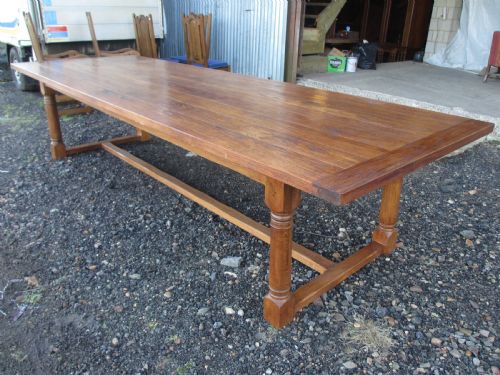
- A long, narrow dining table traditionally supported by heavy legs and a central stretcher. Edwardian and earlier interpretations adapt this communal form for domestic dining rooms.
- D-End
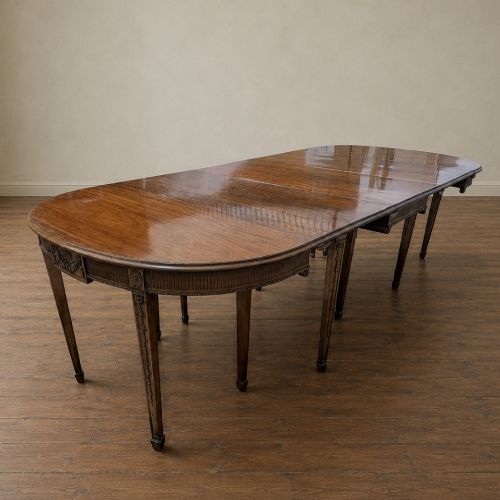
- A table formation featuring semi-circular ends that detach or separate to form console tables when the central leaves are removed. This versatile layout characterises many Georgian and Regency dining pieces.
Vintage Banqueting Table: Frequently Asked Questions
How many people do these tables seat?
Most large extending formats accommodate between ten and twelve diners comfortably when all leaves are inserted. Smaller configurations seat eight, while multi-pillar designs adapt easily to intermediate numbers.
Buyers should measure their dining space with the maximum leaf extension in place to ensure adequate clearance around the room.
How do extending mechanisms operate?
Tables typically utilise wooden runners mounted beneath the top that pull apart to accept drop-in leaves. Brass clips or wooden pegs secure the sections in alignment.
Heavier multi-pillar versions separate at the pedestals, allowing the central framework to expand evenly before the individual leaves are dropped into place.
Which woods appear most frequently?
Mahogany dominates the selection, appearing in plain, figured, flame, and plum pudding varieties across nineteenth-century examples. Oak, walnut, burr walnut, and cherrywood also feature prominently in Victorian and Edwardian pieces.
Each timber brings a distinct tone and grain pattern that influences the character of the dining room.
How do I identify the period?
Cabinet proportions, leg turning styles, and timber selection offer clear indicators of date, ranging from neoclassical Regency lines to heavy Victorian oak and lighter Edwardian refectory forms. Maker signatures, brass castor designs, and secondary woods beneath the top provide further chronological clues.
Stylistic revivals in the early twentieth century often emulate eighteenth and nineteenth-century proportions while employing contemporary hardware.