


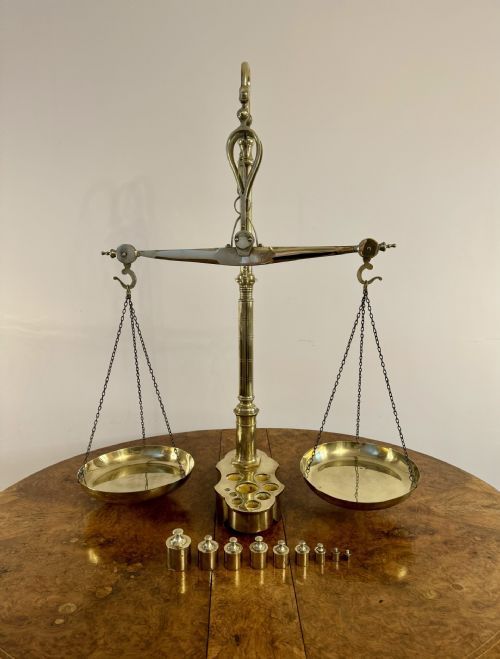


Vintage Balance Beam
These vintage balance beam pieces are precise mechanical instruments forged in brass and iron, offering functional history and tactile engineering for the desk or shelf.
Vintage Balance Beam
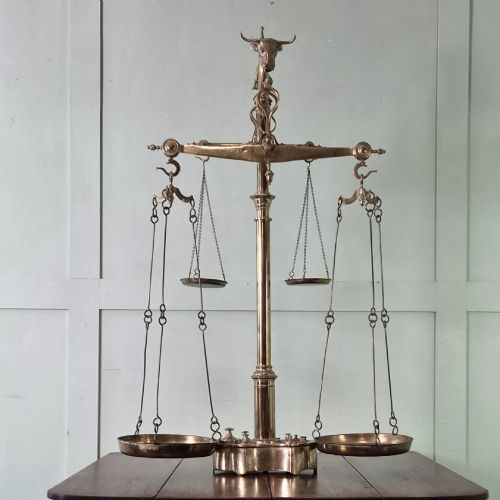
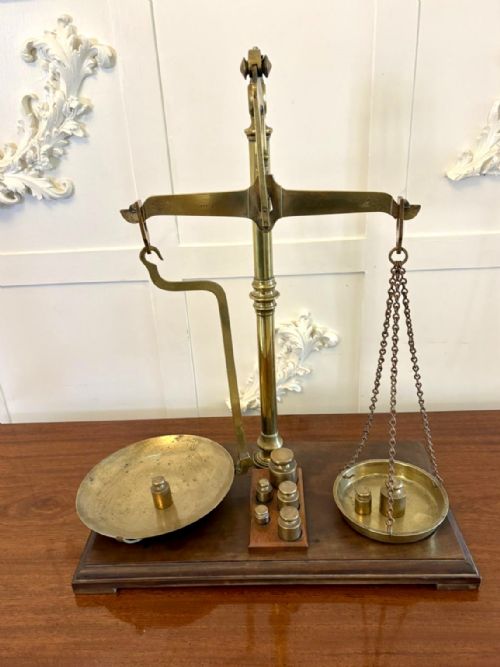
When searching for a vintage balance beam, you encounter a range of heavy utilitarian and precision instruments spanning the eighteenth century through to the mid-twentieth century. The selection leans heavily toward nineteenth-century Victorian brass and mahogany apothecary and postal scales, alongside robust industrial workshop examples.
Forms vary from delicate chemist precision scales housed in glass cases and free-hanging Frisian models to large shopkeeper counters and heavy verification instruments. Origins stretch from British makers to Dutch colonial workshops and Welsh dairies, capturing centuries of practical weighing history.
How they were made
Makers utilised cast iron, wrought iron, and heavy hardwoods like mahogany and oak to construct stable, rigid bases capable of supporting precise horizontal beams. These structural elements provided the necessary mass and rigidity to ensure accurate pivoting without warping under repeated loads.
Brass components, polished copper pans, and delicate steel knife-edge pivots delivered low-friction movement essential for accurate weighing. Many examples integrated hand-turned wooden mounting boards and intricate glass protection houses to shield sensitive mechanisms from drafts.
Vintage Balance Beam Retail Price Guide 2026
Typical asking prices for vintage balance beam among the pieces listed under this phrase on Sellingantiques today, from the lower quarter to the upper quarter. They describe what is for sale here now, not the wider market.
Current listings feature scales from the eighteenth century to the mid-twentieth century, constructed from brass, mahogany, iron, copper, and oak.
What varies in quality
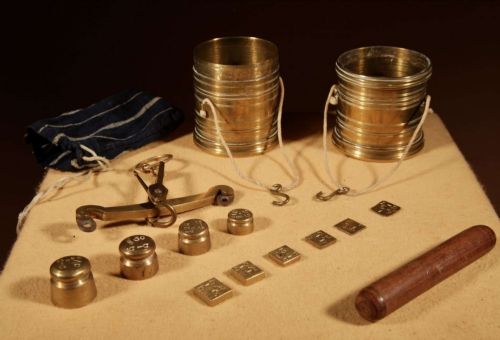
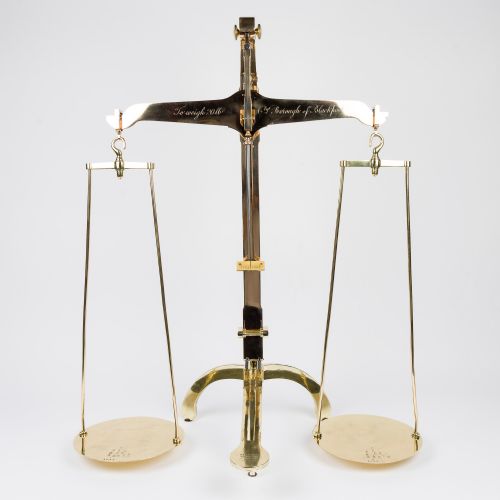
Superior examples distinguish themselves through the precision of their knife-edge bearings and the integrity of their original maker signatures, such as stamped brass plates or engraved beam inscriptions. High-end pieces often retain complete, matching sets of calibrated weights housed in fitted wooden compartments.
The choice of materials and secondary craftsmanship also define the upper tier, seen in polished brass work, finely dovetailed mahogany box bases, and robust cast iron frameworks that maintain perfect balance alignment over decades of use.
Day & Millward·Parnall & Sons of Bristol·De Grave Short & Co·Oertling·Bartlett & Sons
The Vintage Balance Beam Glossary
- Beam
- The central horizontal bar of a scale that pivots on a central fulcrum. It transfers the weight from the hanging pans to the indicator pointer.
- Knife-edge pivot
- A hardened steel wedge resting on an agate or steel plane. This low-friction contact point is critical for high-precision weighing.
- Verification balance
- A heavy-duty scale utilised by official inspectors to check commercial weights and measures for accuracy. These often bear municipal stamps.
- Apothecary scales
- Precision instruments designed for weighing small quantities of medicine or chemicals. They frequently feature enclosed glass cases to prevent air currents from interfering.
Vintage Balance Beam: Frequently Asked Questions
How do I read a balance beam?
A balance beam relies on equilibrium between two suspended pans, where an equal weight on each side centres the pointer. You place the object on one pan and add known weights to the other until the beam rests level.
Most antique examples include a central indicator needle that swings across a graduated scale plate to show exact alignment. Fine adjustment screws at the ends of the beam allow for calibration before taking a measurement.
Were these scales used in shops?
Many of these pieces served commercial roles on shop counters, in post offices, and across apothecary dispensaries. Shopkeepers relied on them for measuring dry goods, letters, and medicinal ingredients daily.
Other examples served official municipal functions, utilised by inspectors to verify local trade standards and commercial weights.
How do I date a balance beam?
Dating relies on stylistic shifts in the wooden bases, the presence of maker stamps, and construction materials. Victorian models often feature polished mahogany boxes and ornate brass pillars, while eighteenth-century pieces display simpler vernacular woodwork.
Maker signatures and municipal verification stamps etched into the metal or wood provide specific production windows and historical context.
How do I display a balance beam?
These instruments suit placement on sturdy desks, console tables, or deep shelving units where their brass and dark wood components stand out. Keeping them on a level surface ensures the beam rests correctly.
Some collectors choose to display complete sets with their original brass weights arranged neatly alongside the pans or stored within their fitted wooden bases.