



Vintage Ash Chairs
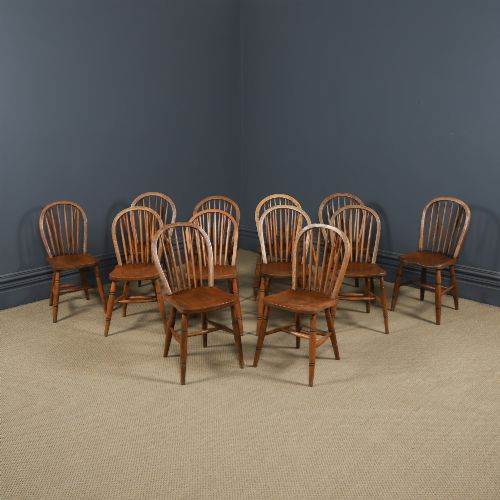
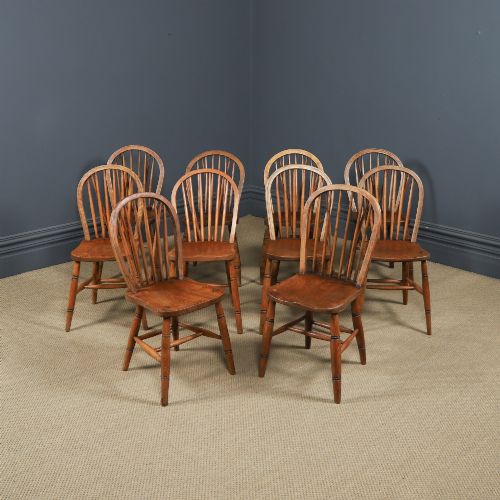
These vintage ash chairs bring rustic English vernacular character into a room through honest country craftsmanship and robust timber construction.
Vintage Ash Chairs
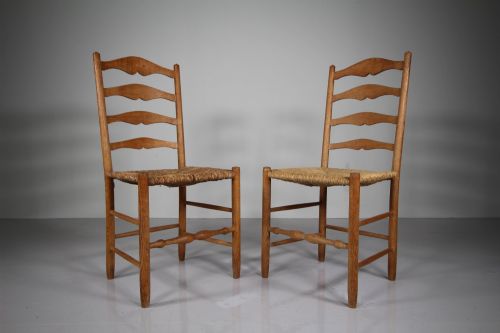
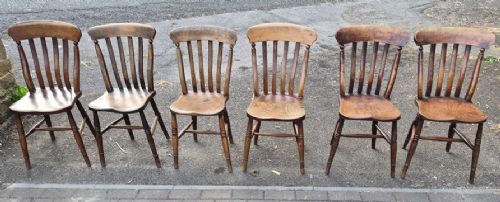
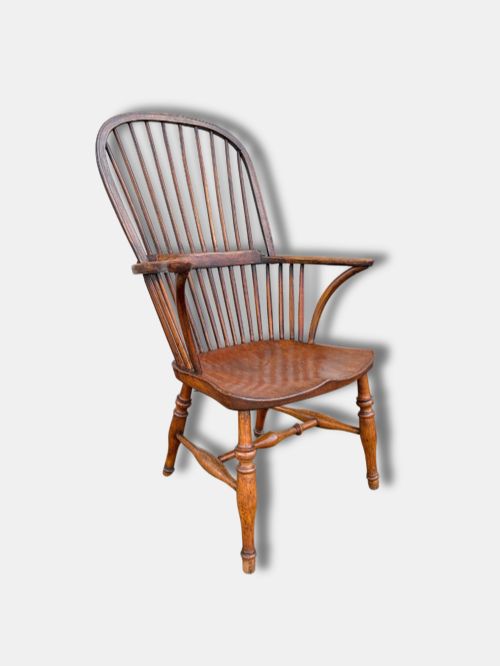
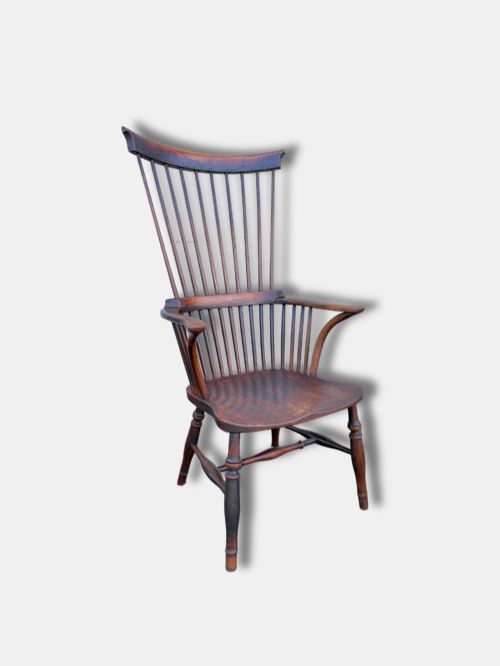
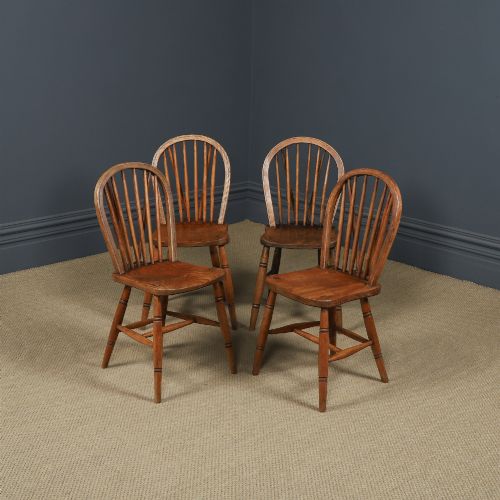
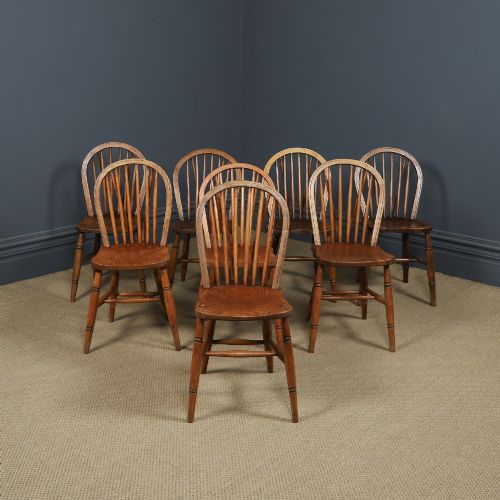
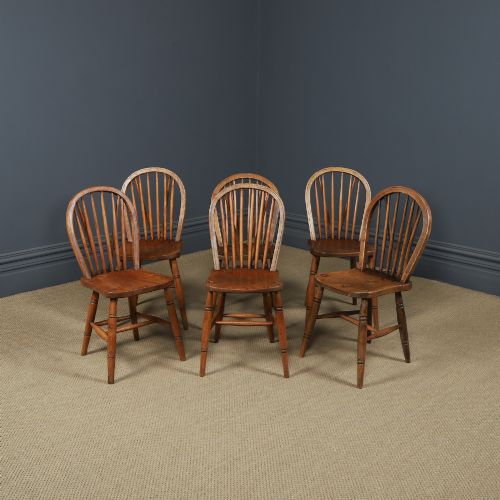
Vintage ash chairs encompass a diverse range of country seating, most frequently encountered as Windsor chairs, kitchen dining chairs, and sturdy armchairs fashioned in the 19th and early 20th centuries. These forms reflect English country traditions, embracing styles such as stickbacks, hoop backs, and Thames Valley kitchen chairs.
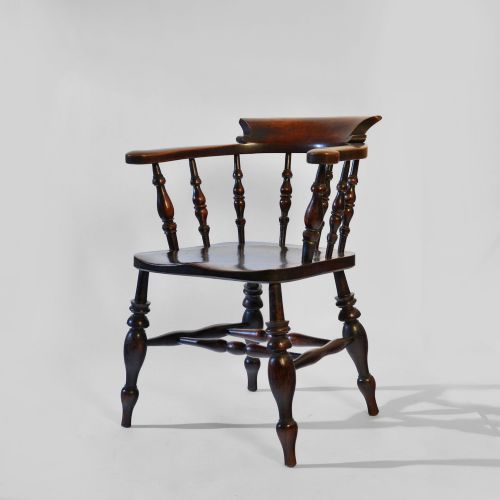
The selection ranges from single fireside carvers and smokers' bows to matched sets of dining chairs, alongside smaller children's high chairs and potty chairs. Their origins trace deeply into rural workshops and provincial maker traditions spanning the Georgian, Victorian, and Edwardian eras.
How they were made
Makers utilised a combination of native timbers, predominantly pairing resilient ash for frames and spindles with figured elm for saddled solid seats, occasionally incorporating beech, yew, and iron reinforcement. This multi-wood construction exploited the specific mechanical properties of each tree, using flexible ash for steam-bent hoops and tough elm to prevent seat splitting.
Joinery relied on traditional techniques including turned spindle work, wedged mortise and tenon joints, and pegged assemblies that allowed the timber to move naturally over decades of use.
Vintage Ash Chairs Retail Price Guide 2026
Typical asking prices for vintage ash chairs among the pieces listed under this phrase on Sellingantiques today, from the lower quarter to the upper quarter. They describe what is for sale here now, not the wider market.
Several diminutive children's high chairs and tiny potty chairs survive here, proving that Victorian toddlers took their posture just as seriously as the country gentry.
What varies in quality
Quality in these pieces is dictated by the articulation of the turnings, the depth and comfort of the sculpted elm seat, and the overall balance of proportions. Superior examples display refined spindle profiles, well-defined arm scrolls, and a harmonious integration of timber grain.
The integrity of the construction and the crispness of the original maker's stamp or regional vernacular details further separate standard utility furniture from finer workshop output.
Fred Walker·Lawrence Neal·Darvil
The Vintage Ash Chairs Glossary
- Windsor chair
- A wooden chair built with a heavy solid elm seat into which the legs and back spindles are independently inserted. This form evolved through numerous regional British styles during the 18th and 19th centuries.
- Smoker's bow
- A low-backed Windsor armchair featuring a continuous curved armrail supported by turned spindles. These robust chairs were common in country houses, inns, and offices.
- Stickback
- A chair design where simple turned or cleft rods form the backrest rather than a solid carved splat. The style is characteristic of utilitarian vernacular seating.
- Thames Valley
- A regional English style of Windsor chair recognised by distinctive cabriole-fronted legs and thoughtful timber selection. These pieces often exhibit high levels of provincial joinery skill.
- Spindle back
- A light framework construction utilising slender turned wooden uprights to form the back support. This method provides strength without excessive weight.
Vintage Ash Chairs: Frequently Asked Questions
What is a smoker's bow chair?
A smoker's bow is a sturdy low-back Windsor armchair featuring a continuous curved armrail supported by turned spindles above a solid timber seat. These comfortable seats were traditionally used in parlours, offices, and country inns.
Their low profile made them practical for sitting near fires or desks while offering robust support through heavy ash and elm construction.
How do I identify a Windsor chair?
A Windsor chair is defined by its construction method, where all the structural components - legs, back spindles, and stiles - are wedged directly into a thick, heavily sculpted wooden seat rather than a traditional frame.
Most examples pair an elm seat with ash or beech framing, showing visible top-wedged joints where the back spindles pass right through the seat board.
Are these chairs comfortable for daily use?
Country chairs were designed for practical everyday living, featuring deep-dished wooden seats carved to fit the human body and supportive steam-bent back rails. Their ergonomic shapes make them surprisingly comfortable for long periods.
Pairing them with a dining table or desk allows you to experience the ergonomic benefits intended by rural 19th-century makers.
How can I tell the age of a country chair?
Dating relies on observing construction marks, timber shrinkage, tool traces, and stylistic shifts between Georgian, Victorian, and Edwardian vernacular designs. Hand-turned spindles and adze marks on the underside of seats often point towards earlier 19th-century manufacture.
Examining the wear patterns and patina accumulated over generations also helps distinguish mid-Victorian pieces from later Edwardian reproductions.