

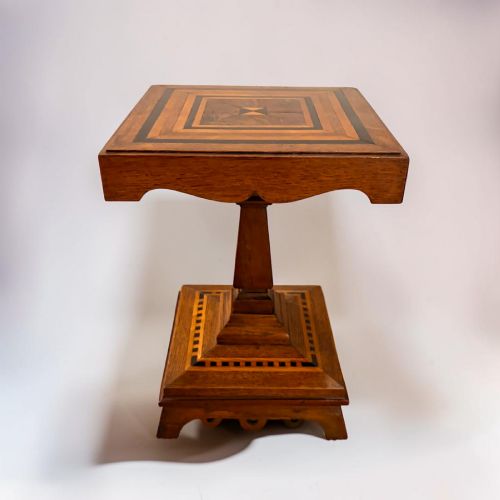
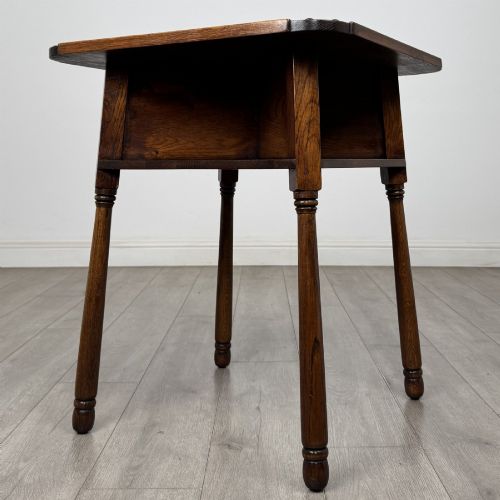
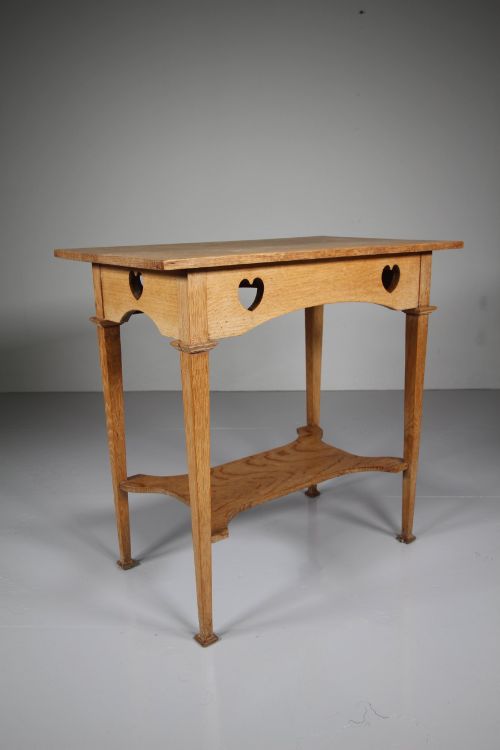
Vintage Arts and Crafts Table
A vintage arts and crafts table brings solid oak construction and honest joinery into a modern room.
Vintage Arts and Crafts Table
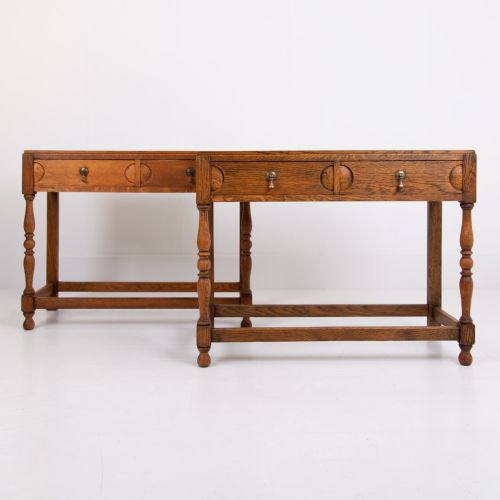
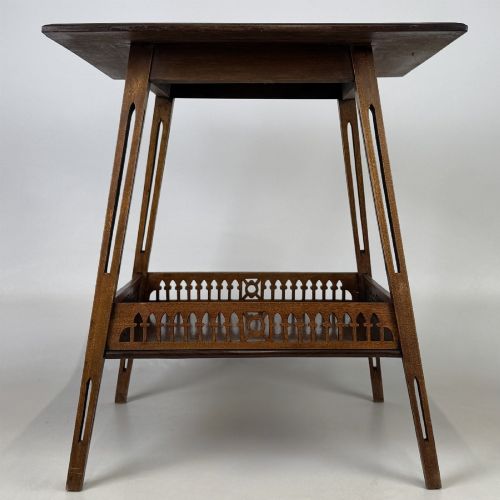
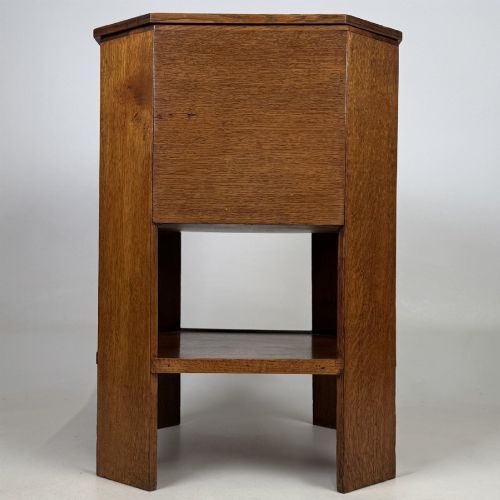
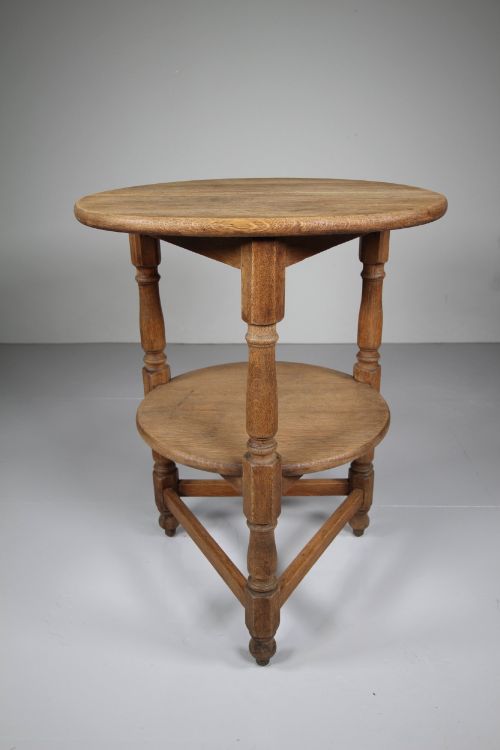
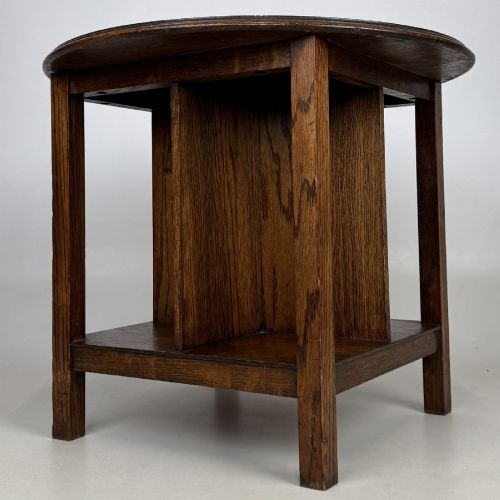
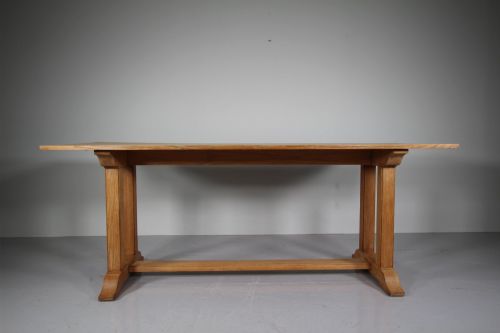
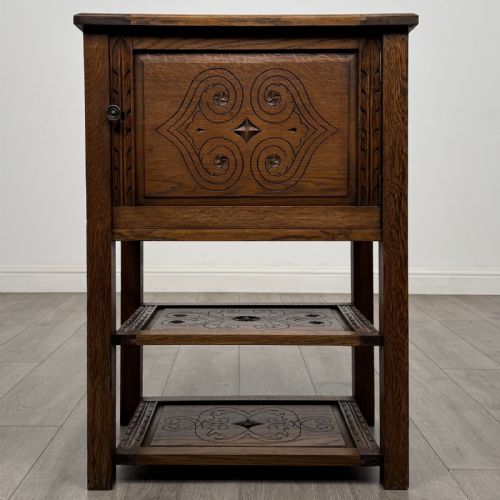
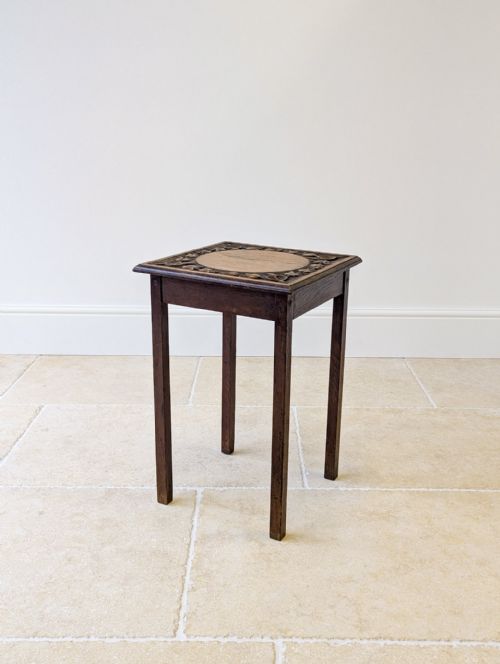
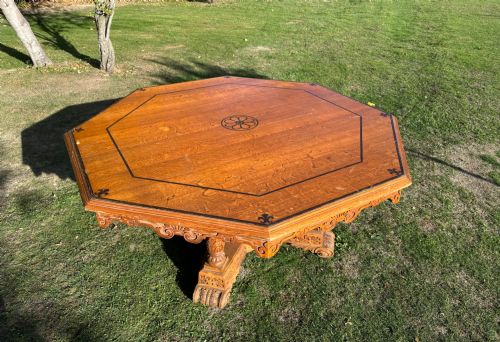
When a buyer searches for a vintage arts and crafts table, they encounter a range of sturdy wooden furniture designed to emphasise utility and simple construction. Most examples appearing on this page date from the Edwardian period through to the nineteen thirties, drawing on design principles from the late nineteenth century onwards. Side tables, occasional tables and plant stands form the core of what is available, frequently constructed from oak with octagonal or round tops.
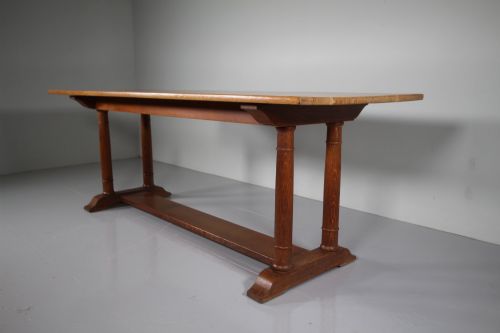
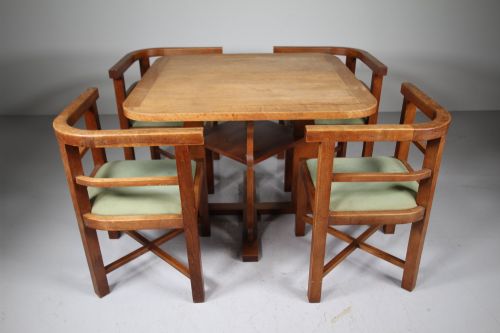
Beyond basic side tables, the selection includes larger library tables, writing desks, and refectory dining pieces alongside specialised variants like magazine racks. Makers adopted diverse regional expressions, from Cotswold School workshops to continental styles such as the Amsterdam School. The typical form prioritises functional surfaces and visible structural elements over excessive surface ornament.
What varies in quality
The distinction between standard commercial production and finer workshops lies in the selection of timber and the precision of the hand-carved details. Pieces originating from named designers or specific schools display superior proportion and intentional restraint in decoration, whereas mass-produced items rely on repetitive machine stamping.
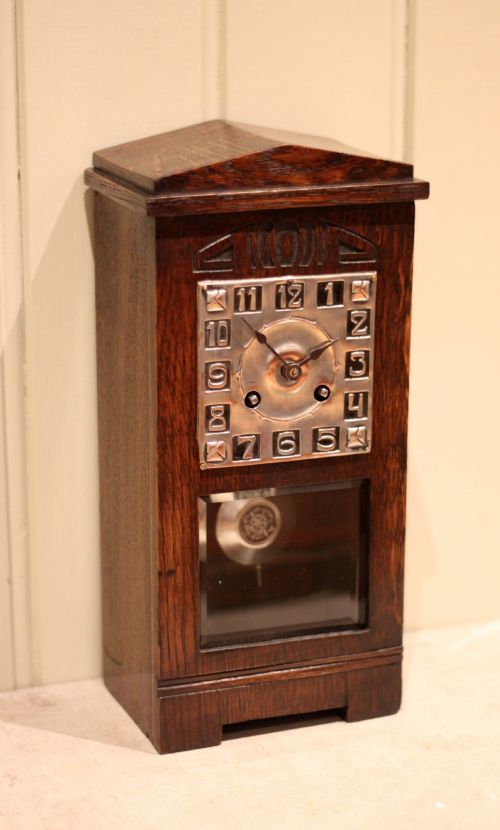
Hardware and secondary materials also dictate overall merit, separating items fitted with heavy cast brass or hand-hammered copper from those utilising generic base metals. The integrity of the original finish, whether waxed oak or limed timber, preserves the character intended by the maker.
Vintage Arts and Crafts Table Retail Price Guide 2026
Typical asking prices for vintage arts and crafts table among the pieces listed under this phrase on Sellingantiques today, from the lower quarter to the upper quarter. They describe what is for sale here now, not the wider market.
The inventory spans the Victorian era, Edwardian period, and the nineteen thirties through to Art Deco and Amsterdam School expressions.
Shapland & Petter·Finnigans·Guild of Handicrafts·Edward Barnsley·W.A.S. Benson
The Vintage Arts and Crafts Table Glossary
- Octagonal top
- A geometric tabletop with eight distinct sides frequently utilised on small side tables and plant stands. This shape allowed makers to showcase timber grain across multiple facets.
- Limed oak
- A finishing technique where a white pigment is rubbed into the open grain of oak timber. The process lightens the overall tone while accentuating the natural texture of the wood.
- Refectory style
- A long, narrow table design historically used for communal dining and adapted by later makers. These pieces emphasise sturdy wooden legs joined by low stretchers.
- Repoussé
- A metalworking technique where the artisan hammers the reverse side of sheet metal to create a raised design on the front. This method frequently appears on brass table tops and decorative accessories.
Vintage Arts and Crafts Table: Frequently Asked Questions
How do I identify an authentic arts and crafts table?
Authentic pieces typically feature solid oak construction, visible pegged joints, and straightforward geometric forms rather than elaborate historical revival carving. Look for honest construction methods where the structure itself serves as the primary decoration.
Examine the hardware and finish for signs of hand-working, such as hammered brass fittings or waxed timber surfaces that display the natural grain of the wood.
What is the difference between an occasional table and a plant stand?
Occasional tables generally offer a broader surface intended for holding books, lamps, or tea items within a living space. Their heights and proportions are designed for general utility beside seating.
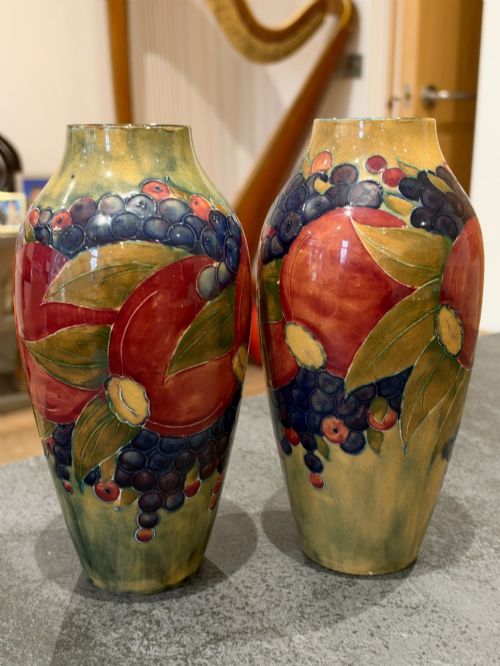
Plant stands feature taller, narrower proportions and smaller octagonal or round tops specifically engineered to support heavy ceramic pots or vases.
How should I care for a vintage oak table?
Maintain the timber by applying natural beeswax periodically to nourish the dry wood and preserve the surface sheen. Avoid placing the furniture in direct sunlight or near heat sources that could cause the oak to split.
Clean the surface using a soft, dry cloth and avoid harsh chemical polishes that might strip the historic wax or patinated finish.
Are these tables suitable for everyday use?
Solid construction and durable materials make these pieces well-suited for daily placement in modern hallways, living rooms, or bedrooms. Their sturdy frames handle normal household weights easily.
Protect the historic timber surfaces from excessive moisture and heat by utilising coasters and placemats during daily activities.