
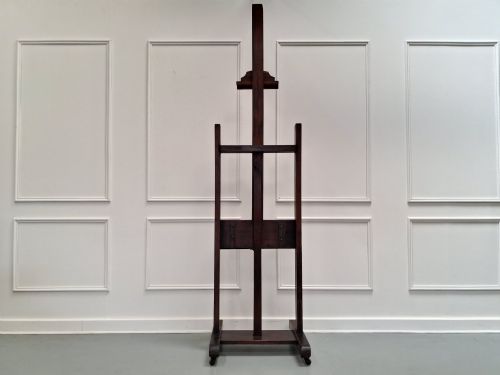
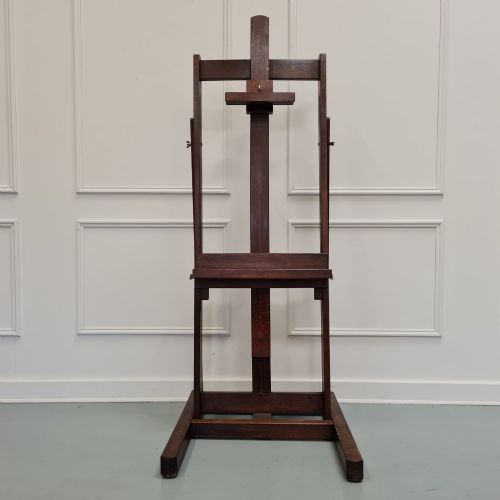
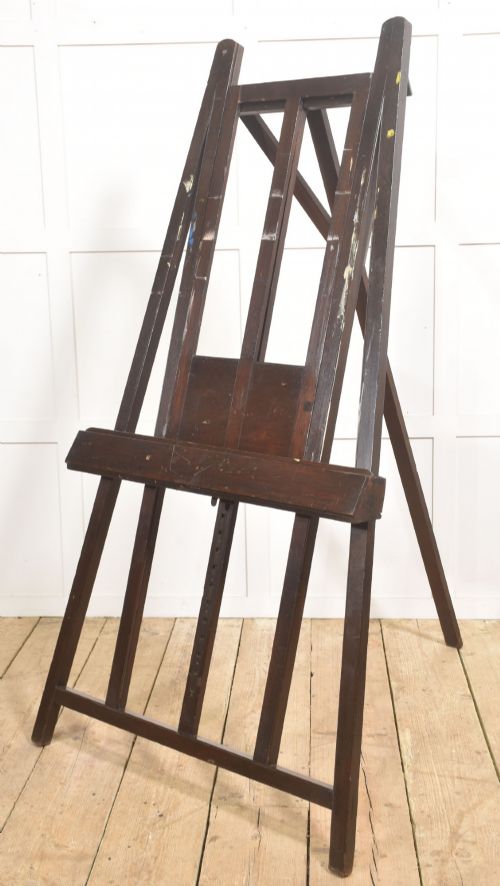
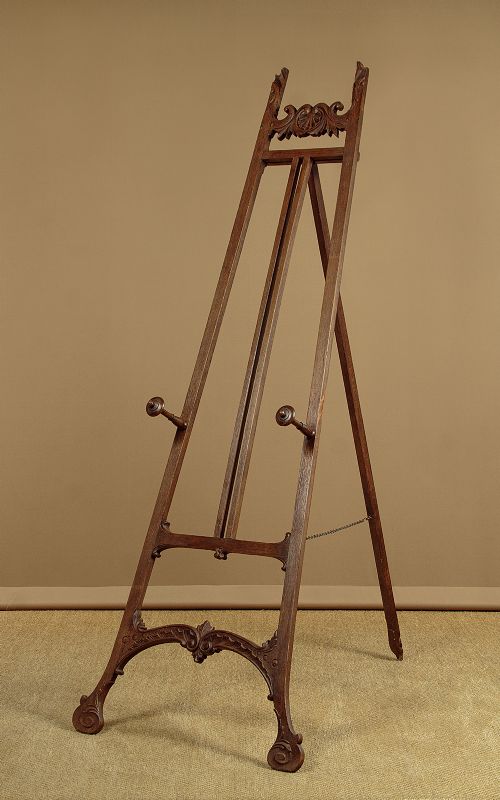


Vintage Artist Display Easel
A vintage artist display easel gives your canvases and pictures a proper stage, drawing the eye with period timber and ironwork.
Vintage Artist Display Easel
When you search for a vintage artist display easel, you encounter a variety of practical framing frames, floor-standing studio frames, and folio stands designed to hold pictures and folios. These pieces originate from periods spanning the Georgian era through the Victorian years and into the 1930s, reflecting diverse uses from active studios to home galleries.
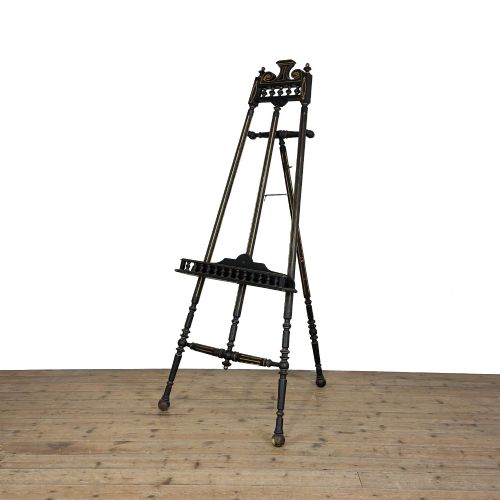
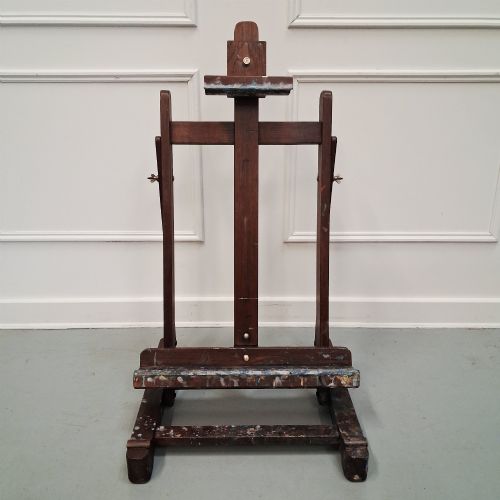
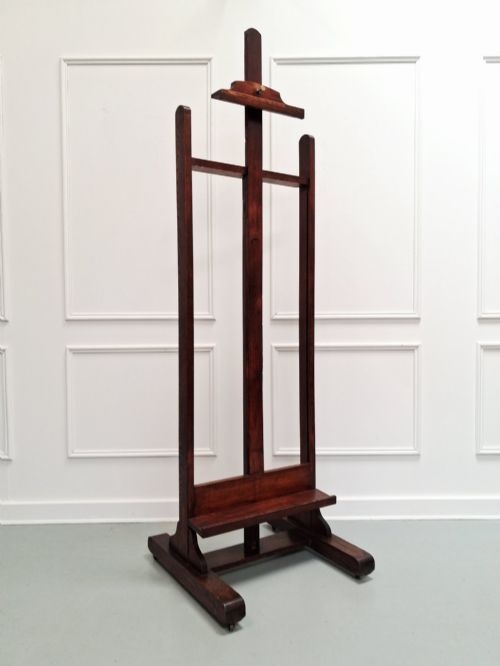
The most common versions on this page are sturdy oak and mahogany studio pieces alongside French oak and pitch pine examples from around 1900. You also find specialised formats like double-sided gallery stands, tabletop models, and bamboo or ebonised creations.
Originating from English, French, and Italian workshops, these items serve both a functional workspace purpose and a decorative display function. Their forms range from fully adjustable mechanics for painting to static frames intended purely for showing finished works.
How they were made
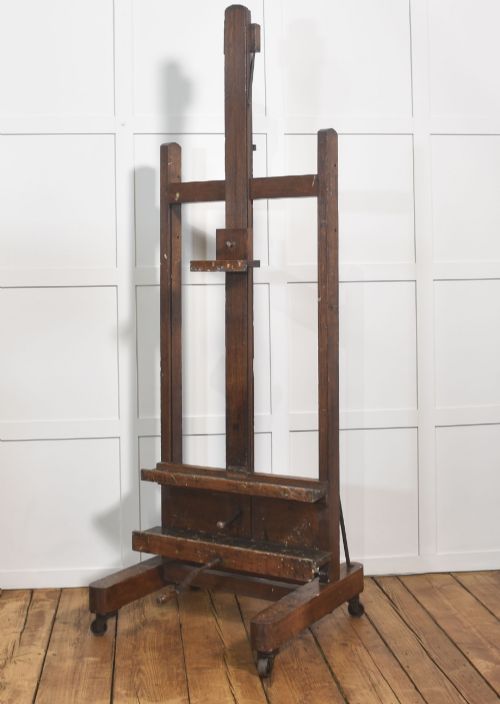
Makers utilised dense hardwoods such as oak, mahogany, walnut, and pitch pine, often shaping them with carved details or smooth ebonised finishes. Brass fittings and cast iron components provided the robust, fully adjustable mechanisms needed to alter height and angle.
Construction techniques combined traditional joinery with metal ratchets, screws, and hinges to bear the heavy weight of large canvases and architectural folios. Selected pieces also incorporated decorative elements like ivory inlay, bamboo framing, or leather accents.
French and English cabinetmakers built these structures to endure the rigours of daily studio use while maintaining aesthetic elegance. The integration of metal hardware with solid timber remains a defining characteristic of the surviving examples.
The listings show periods ranging from Georgian and Regency up through Victorian, Edwardian, and 1930s French eras.
What varies in quality
Quality rests heavily on the integrity of the timber, the complexity of the carving, and the robustness of the mechanical adjustments. Superior pieces feature substantial hardwoods, smooth-operating brass or iron ratchets, and well-balanced proportions that support heavy canvases without tipping.
Finer examples distinguish themselves through deliberate stylistic touches, such as Aesthetic Movement designs, swan motifs, or intricate gallery framing, rather than plain utility. The presence of original hardware and specialised forms like double-sided display frames elevates a piece above standard workshop output.
Windsor and Newton
The Vintage Artist Display Easel Glossary
- Studio easel
- A large, heavy floor-standing timber frame used by painters to hold canvases during creation. These pieces typically feature adjustable heights and strong castor wheels.
- Folio stand
- A piece of furniture designed to hold large books, prints, and paper folios flat or at an angle. They often double as architect picture racks.
- Gallery easel
- A display stand built to exhibit finished artworks to prospective buyers in a commercial setting. Some versions are double-sided to present multiple pictures simultaneously.
- Ebonised wood
- Timber treated with a chemical stain or finish to imitate ebony. This dark, formal surface treatment appears frequently on Victorian and Aesthetic Movement pieces.
- Tabletop easel
- A scaled-down display frame intended for resting on a table or cabinet. These compact versions suit smaller paintings and photographs.
Vintage Artist Display Easel: Frequently Asked Questions
How do I choose the right easel for my home?
Consider the size of the artwork you intend to display and the available floor space in your room. Floor-standing studio models make a strong focal point, while tabletop versions suit smaller spaces.
Check whether you need an adjustable mechanism for changing picture heights or a static display stand meant purely for presentation.
Can I use these vintage stands for modern paintings?
These sturdy timber and iron structures easily accommodate modern canvases of appropriate weight and dimensions. Their adjustable brackets and strong ledges secure various frame thicknesses safely.
Ensure the maximum height and weight capacity of the specific stand match your artwork before placing it on display.
What is the difference between a studio and a display easel?
Studio pieces are built for active painting, featuring heavy-duty adjustable frames, winding handles, and large bases designed to withstand vigorous brushwork. Display models prioritize visual elegance and show finished works.
Gallery and display variants often incorporate decorative carving, ebonised wood, or double-sided frames meant for viewing rather than working.
How do I care for antique timber and brass?
Dust the wood regularly with a dry cloth and apply a quality furniture wax periodically to nourish the grain. Avoid placing timber frames near direct heat sources or strong sunlight.
Polish brass and iron fittings gently with a dry cloth to maintain their metal lustre without stripping the aged patina.