



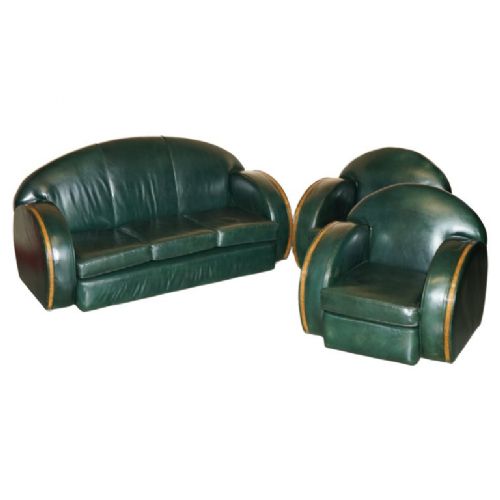

Vintage Art Deco Settee
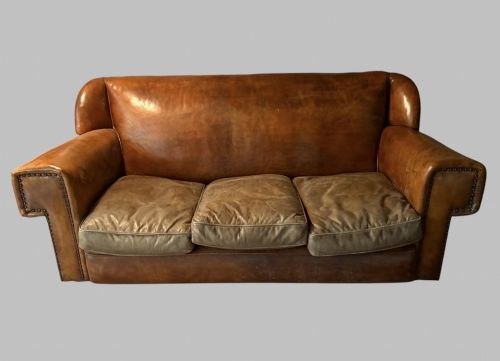
A vintage art deco settee brings sculptural geometry and club-chair comfort straight from the nineteen-twenties and nineteen-thirties into your sitting room.
Vintage Art Deco Settee
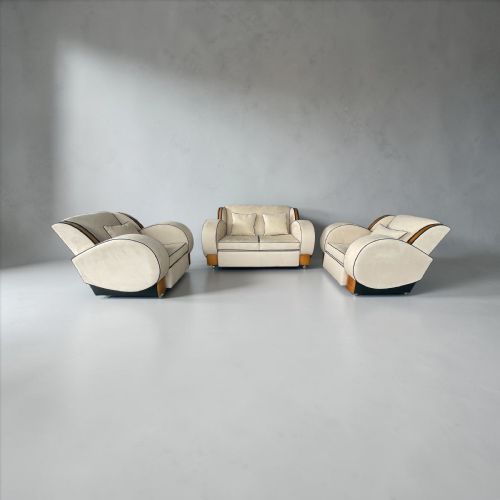
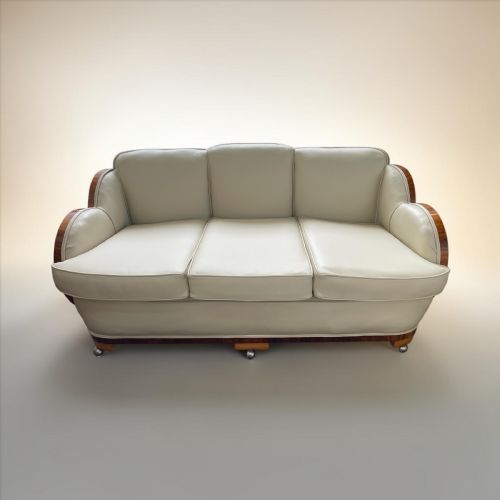
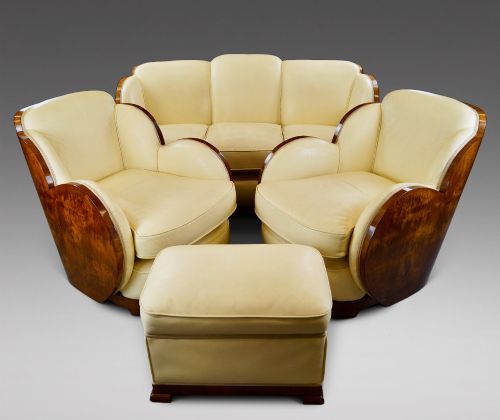
The dominant forms span generous cloud suites and streamlined scroll shapes, often accompanied by matching armchairs to form complete three-piece suites. Walnut, burr walnut, and palisander frames support upholstery in leather and fabric, establishing the characteristic heavy silhouette of the period.
Materials and Construction
Craftsmen built these frames using solid woods and applied striking veneers such as walnut, burr walnut, and exotic palisander or zebrano to create high-gloss surfaces with dramatic grain patterns. Metal and brass details frequently accent the wooden bases and feet.
Upholstery relies heavily on supple leather, sometimes paired with contrasting fabrics, while specialised forms like the tank suite or cloud suite utilise internal padding to achieve their rounded, sculptural profiles.
Vintage Art Deco Settee Retail Price Guide 2026
Typical asking prices for vintage art deco settee among the pieces listed under this phrase on Sellingantiques today, from the lower quarter to the upper quarter. They describe what is for sale here now, not the wider market.
Current listings feature pieces spanning both the nineteen-twenties and nineteen-thirties, constructed from materials including leather, walnut veneer, burr walnut, palisander, zebrano, and brass.
Assessing Quality and Distinction
Quality reveals itself in the choice of wood veneers and the precision of the timber matching across the curved surfaces of the frame. Superior examples demonstrate expert cabinetmaking that accommodates the demanding geometric and rounded shapes characteristic of the nineteen-thirties.
The integrity of the upholstery materials, from specialist leathers to traditional fabric coverings, dictates the refinement of the finished suite. Attributions to notable makers like Harry and Lou Epstein further separate standard production pieces from high-end workshop commissions.
Harry and Lou Epstein
The Vintage Art Deco Settee Glossary
- Cloud suite
- An upholstered seating group featuring rounded, billowing padded elements reminiscent of clouds. This style defines the heavy, comfortable seating popular in nineteen-thirties interior design.
- Drop end sofa
- A sofa with adjustable or hinged arms that can be lowered flat. This mechanism allows the seating piece to function temporarily as a daybed or lounge.
- Palisander
- A dense, dark tropical hardwood valued for its rich colour and prominent grain patterns. Makers utilised its decorative surface as a veneer on high-end cabinetwork and furniture frames.
- Burr walnut
- Wood harvested from the growths on walnut trees, yielding highly figured swirling patterns. It served as a premium veneer on luxury art deco furniture.
- Tank suite
- A robustly upholstered seating set characterised by heavy, blocky proportions and smooth curved corners. The silhouette evokes the solid geometry of military tanks from the era.
Vintage Art Deco Settee: Frequently Asked Questions
How do I care for leather upholstery?
Leather upholstery requires regular dusting and occasional treatment with appropriate leather conditioners to prevent drying and cracking. Keeping the material away from direct sunlight and heat sources preserves its suppleness and colour over decades.
Promptly addressing spills with a dry or slightly damp cloth prevents staining while maintaining the natural finish of vintage hides.
Where were these settees used originally?
These seating arrangements furnished domestic drawing rooms, hotel lounges, and luxury public spaces such as ocean liners. Their robust construction and generous proportions suited both private entertaining and commercial hospitality.
Pieces originating from significant venues retain a distinct historical context alongside their decorative appeal.
Are miniature suites functional furniture?
Miniature apprentice pieces served as scale models or examples of craftsmanship rather than full-sized functional seating for adults. Makers and apprentices created them to demonstrate mastery of upholstery and woodworking techniques.
They function today as decorative collector objects rather than everyday living room seating.
How do I distinguish nineteen-twenties from nineteen-thirties pieces?
Nineteen-twenties pieces frequently exhibit sharper geometric lines, scroll shapes, and exotic wood veneers like palisander. Drop-end sofas and transitional forms also appear commonly in this earlier decade.
Nineteen-thirties design leans towards softer, rounded volumes, exemplified by cloud suites and tank suites with generous leather upholstery.