


Vintage Alabaster Bowl
A vintage alabaster bowl brings a soft, translucent glow and carved classical weight to a room, shifting from simple hanging dishes to grand pedestal tazze.
Vintage Alabaster Bowl
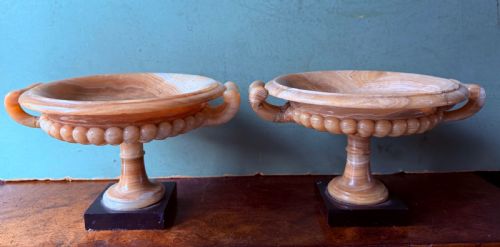
A vintage alabaster bowl encompasses both actual decorative vessels and the shallow suspended shades that diffuse light across a ceiling or room. The items gathered under this phrase range from nineteenth-century Italian souvenir tazze on marble bases to Art Deco hanging dish lights and pendant fixtures.
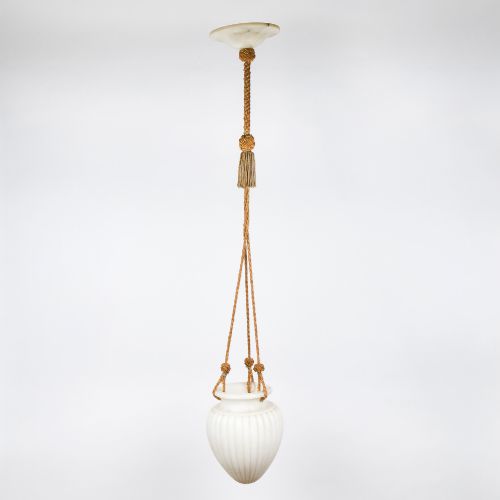
The most common form you will meet on this page is the hanging ceiling light or pendant dish from the early decades of the twentieth century, often carved from white stone and suspended by cords. Alongside these lighting fixtures sit decorative comports, campana urn bases, and campana-supported fruit lamps.
Origins stretch from English and Swedish workshops to Italian makers influenced by classical revival and Grand Tour traditions. Pieces date from the nineteenth century through the 1930s, capturing shifts from ornate classical carving to streamlined geometric styles.
How they were made
Carving defines the stone elements, shaping soft gypsum or calcite into translucent dishes, urns, and tazze. Highly-figured stone and banded varieties display natural mineral patterns that become visible when light passes through the thin material.
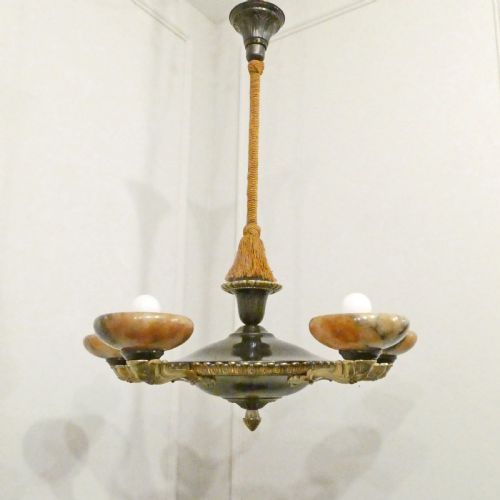
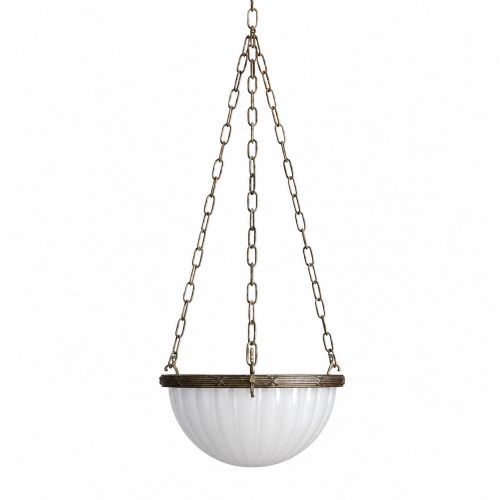
Metalwork mounts in brass, bronze, and iron support the stone bowls, utilising chains, braided cords, and structured frames for hanging fixtures. Certain designs incorporate contrasting materials like black marble blocks, pietra dura mosaics, and glass fruit elements to complete the composition.
Materials across these listings span natural stone, cast bronze, brass, glass, and fabric cord.
What varies in quality
The depth and precision of the stone carving separate standard vessels from exceptional examples, particularly in the handling of classical motifs and figural details. Translucency also plays a role, as finer stone lets light through evenly without heavy dark inclusions.
Mounting hardware contributes to the overall standard of a piece, with cast bronze or detailed brass mounts indicating careful workshop production. The integration of auxiliary materials, such as inlaid pietra dura or bespoke fabric cords, adds complexity to the construction.
The Vintage Alabaster Bowl Glossary
- Alabaster
- A soft, fine-grained stone used for carving decorative bowls, lighting diffusers, and architectural ornaments. Its translucency allows light to pass through the material with a warm diffusion.
- Tazza
- A shallow ornamental bowl or cup set upon a stem and foot, originating from classical forms. Nineteenth-century versions often served as Grand Tour souvenirs.
- Grand Tour
- A traditional journey through Europe undertaken by upper-class travellers in the eighteenth and nineteenth centuries. Souvenirs from these trips frequently imitated classical antiquities in stone and bronze.
- Pietra dura
- An artistic technique involving the inlay of cut and fitted polished coloured stones into a base material. It appears on nineteenth-century comports alongside brass and alabaster.
- Campana
- A bell-shaped vessel form derived from ancient Roman urns and pottery. This profile shapes several of the urn bases and lamp supports listed.
Vintage Alabaster Bowl: Frequently Asked Questions
How do I hang a heavy alabaster ceiling light?
Hanging a heavy stone bowl requires securing the suspension points directly into ceiling joists using rated fixings and appropriate weight-bearing hooks. The braided cords or metal chains must be adjusted evenly to keep the dish level.
Consulting a professional electrician ensures the electrical wiring safely supports the combined weight of the stone and the internal lamp fittings.
Are these alabaster bowls fragile?
Alabaster is a relatively soft mineral that can scratch, chip, or crack under sharp impacts or sudden temperature changes. Care must be taken when cleaning or moving the fixtures.
Suspended light bowls should be checked periodically at their suspension points to ensure the stone and mounting hardware remain secure.
How do I clean a vintage alabaster bowl?
Dusting the stone gently with a dry microfiber cloth prevents the buildup of grime on porous surfaces. Avoid using water, harsh chemical cleaners, or acidic solutions, which can etch or stain the soft material.
For stubborn marks, a specialist stone cleaner tested on an inconspicuous area is recommended.