

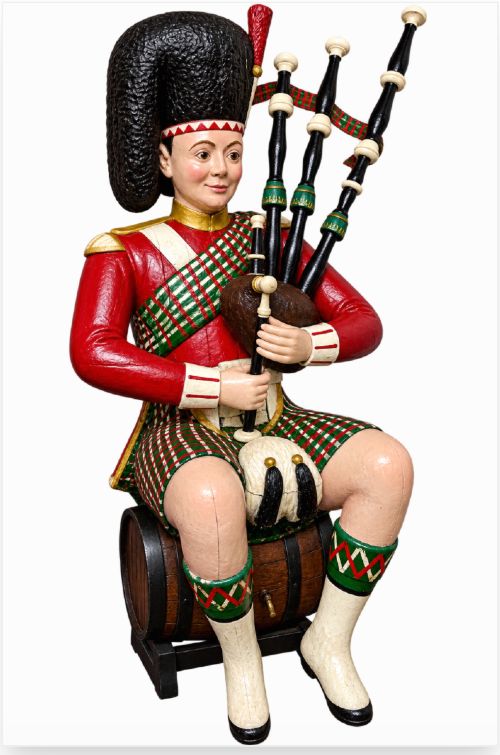


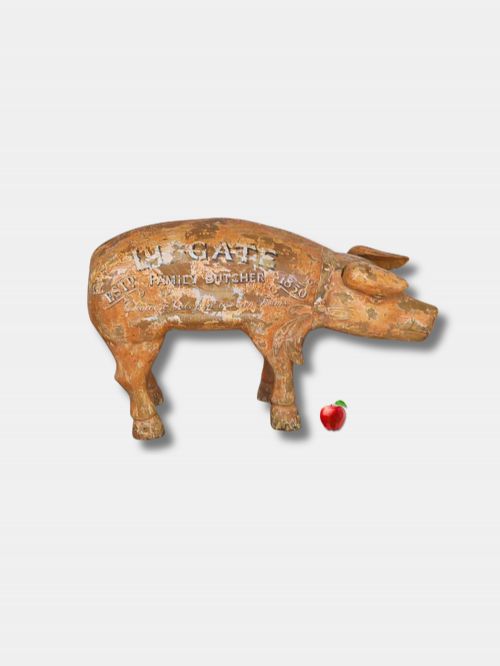

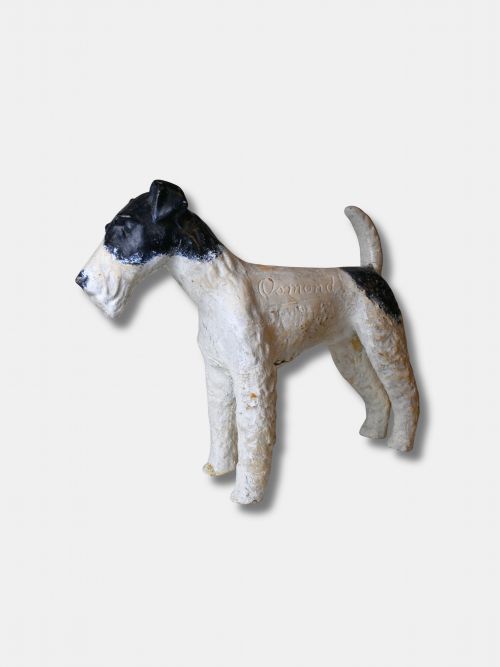


Vintage Advertising Figure
These vintage advertising figure pieces are trade signs, shop display models and commercial sculptures made to draw the eye in busy streets and shop interiors.
Vintage Advertising Figure
When you search for a vintage advertising figure, you encounter trade signs, shop display models and commercial sculptures designed to promote goods in nineteenth and early twentieth century commerce. These items include freestanding figures, hanging trade signs and window display pieces originating from English, French and American shops.
You are most likely to meet painted wooden figures, plaster animals and metal trade signs dating from the Victorian and Edwardian eras up through the 1920s and 1930s. The selection spans utilitarian butcher displays, lingerie mannequins and folk art figures that once stood inside or outside commercial premises.
How they were made
Makers shaped these display pieces from carved wood, cast iron, plaster and composition materials, often applying polychrome paint and gesso to finish the surface. Carved wood examples show the hand of the artisan in the grain, while plaster and composition models rely on moulded forms built up around structural armatures.
Surfaces received layers of lead or oil paint to withstand the atmosphere of streets and shop windows, frequently resulting in thick, crazed patination through decades of exposure. Metal pieces utilised cast iron formed in foundry moulds, while wooden trade signs and dummy boards combined joinery with painted pictorial details.
Vintage Advertising Figure Retail Price Guide 2026
Typical asking prices for vintage advertising figure among the pieces listed under this phrase on Sellingantiques today, from the lower quarter to the upper quarter. They describe what is for sale here now, not the wider market.
Materials recorded across the current selection include paint, wood, plaster, cast iron, carved wood, polychrome paint, gesso and metal.
What varies in quality
The quality of a vintage advertising figure rests in the vigour of its carving and the original integrity of its polychrome paint surface. Stronger examples display confident anatomical modelling and lively characterisation, whereas weaker pieces rely on simpler, blocky execution.
Original surface preservation dictates desirability, with undisturbed early paint layers holding more visual presence than later overpainting. The balance between utilitarian function and sculptural expression determines how successfully a piece translates from a commercial streetscape into a decorative interior.
The Vintage Advertising Figure Glossary
- Trade Sign
- A board, figure or sculpture hung outside a shop to indicate the trade carried on within. These objects served an illiterate public before literacy became universal.
- Dummy Board
- A flat silhouette figure painted to resemble a real person or animal, positioned in doorways or windows as a decoy or display. They were typically cut from wood.
- Polychrome Paint
- The application of multiple colours to decorate the surface of wood, plaster or metal sculptures. This finish brought realism and visibility to commercial figures.
- Composition
- A moulded material made from mixtures of pulp, resin, glue and whiting pressed into forms. It allowed makers to produce detailed display mannequins relatively quickly.
- Gesso
- A plaster mix applied as a smooth ground on wood before painting. It provided a stable base for fine polychrome decoration.
Vintage Advertising Figure: Frequently Asked Questions
Where were these figures placed?
Shopkeepers placed these figures on counters, in display windows, or mounted them outside buildings to signal their trade to passersby. Butchers, tobacconists and drapers utilised them to identify their shops.
Larger items like iron pigs or wooden cows stood directly in windows, while flat dummy boards and hanging signs projected onto the street.
How do I clean a painted wooden figure?
Cleaning requires a soft, dry brush to gently remove dust from the crevices of carved wood and flaking paint surfaces. Water and chemical solvents should be avoided to protect fragile historical finishes.
Preserving the original patination and paint layers is essential, as aggressive cleaning strips away the character acquired through decades of commercial use.
How do I date a trade sign?
Dating relies on stylistic clues, materials such as cast iron or composition, and construction techniques typical of the nineteenth and early twentieth centuries. The lettering style and type of paint provide further chronological indicators.
Comparative analysis with documented shop displays from Victorian folk art and 1920s commercial eras helps narrow down the period of manufacture.