




Vintage Abstract Expressionist Art
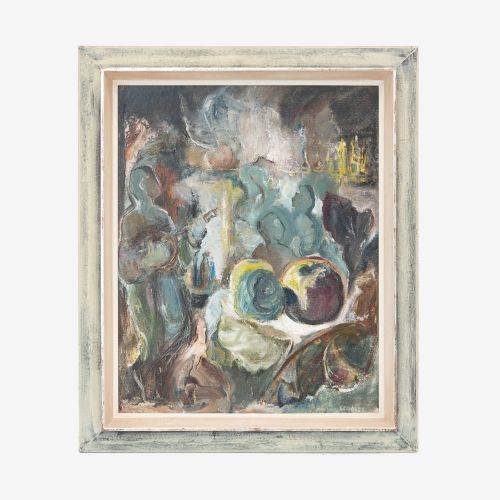
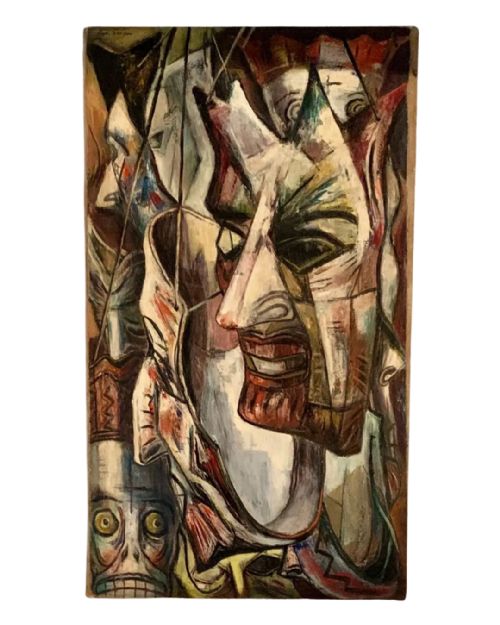
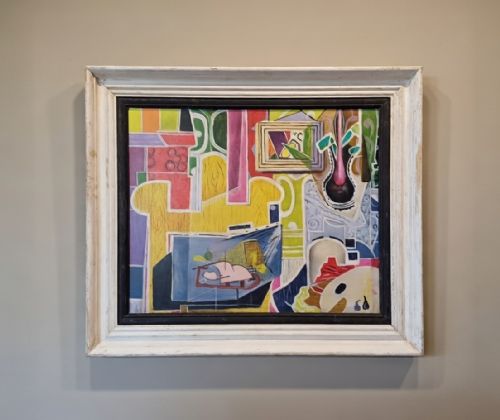
Vintage abstract expressionist art brings bold gestural energy and mid-century experimentation into a room.
Vintage Abstract Expressionist Art
Vintage abstract expressionist art encompasses paintings, wall art, and works on paper created primarily across the middle decades of the twentieth century. These pieces record a period of intense experimentation in form and gesture, bridging mid-century modernism and expressive figuration.
You will most frequently encounter oil paintings on board or canvas from the nineteen-fifties and nineteen-sixties alongside mixed media compositions and ink drawings. The selection includes cityscapes, still lifes, and figurative studies rendered through non-naturalistic palettes and energetic brushwork.
Materials and methods of creation
Artists worked primarily with oil paint, ink, and mixed media applied to canvas, board, paper, and wood supports. Many compositions employ thick impasto techniques, building physical texture upon the surface to create relief and depth.
Support materials range from traditional stretched canvas to sturdy boards and heavy paper. Frames often form an integral part of the presentation, matching the mid-century aesthetic of the paintings they house.
Vintage Abstract Expressionist Art Retail Price Guide 2026
Typical asking prices for vintage abstract expressionist art among the pieces listed under this phrase on Sellingantiques today, from the lower quarter to the upper quarter. They describe what is for sale here now, not the wider market.
Among the abstract canvases rests a fierce German woodcut portrait of Astra the lion, proving even mid-century modernists enjoyed a roaring beast.
Distinctions in quality and execution
Quality rests upon the confidence of the brushwork and the internal coherence of the composition, whether the subject is a cityscape, a nude, or a purely non-representational arrangement. Stronger works demonstrate a deliberate handling of medium, where impasto and colour relationships serve the structural rhythm of the piece.
Works carrying clear attribution to established painters or bearing precise dates and signatures tend to hold greater documentary interest. The synergy between the support, the application of oil or mixed media, and the integrity of the surface condition defines the standing of an individual piece.
Lilian Colbourn·Tony Giles·Derek Latimer Sayer·William McCance·Peter Jackson·Lester Epstein·Burr Singer·Richards Rubin·William Ernst Burwell
The Vintage Abstract Expressionist Art Glossary
- Impasto
- Paint applied thickly to a canvas or board, standing out in relief from the plane so that the marks of the brush or palette knife remain visible. This technique adds tactile dimension to mid-century compositions.
- Medium
- The substance in which an artist works, such as oil paint, ink, or mixed media combinations on paper and wood. Understanding the medium helps identify the physical layering of a work.
- Expressionism
- A modernist style where the artist distorts visual reality to evoke emotional moods rather than physical likeness. It underpins much of the mid-century painting found in this category.
- Abstract art
- Imagery that uses visual languages of shape, colour, and form to create a composition independent from visual references in the world. It forms the core vocabulary of these twentieth-century works.
Vintage Abstract Expressionist Art: Frequently Asked Questions
What defines vintage abstract expressionist art?
These works are defined by their twentieth-century origins, spontaneous brushwork, and departure from strict representation. They capture a period of intense artistic freedom across Britain, Europe, and America.
Paintings and drawings from this era prioritize emotional resonance and material texture over traditional perspective and smooth finishes.
How do I date these paintings?
Dating relies upon artist signatures, exhibition labels, stylistic markers, and occasionally direct inscriptions on the reverse of the canvas or board. Mid-century works frequently display characteristic palettes and framing methods tied to their decade.
Comparison with documented periods of an artist's output helps narrow the year of creation when exact dates are absent.
Where should I hang these artworks?
These expressive pieces suit modern and traditional interiors alike, acting as focal points in living spaces, studies, or hallways. Their bold textures and dynamic compositions pair well with minimalist furniture and neutral walls.
Ensure placement avoids direct sunlight to protect oil paint and paper supports from fading over time.
What is impasto paint?
Impasto involves laying oil paint onto the support with noticeable thickness, leaving ridges and peaks that catch the light. Artists used this method to give physical weight and three-dimensional presence to flat surfaces.
Works featuring heavy impasto require careful handling to prevent chipping or pressure damage to the dried paint layers.