




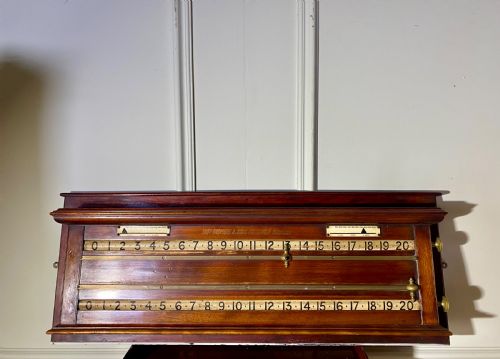
Victorian Wooden Scoring Board
These Victorian wooden scoring board examples bring genuine period character to a games room, offering traditional functionality for cue sports and card games.
Victorian Wooden Scoring Board
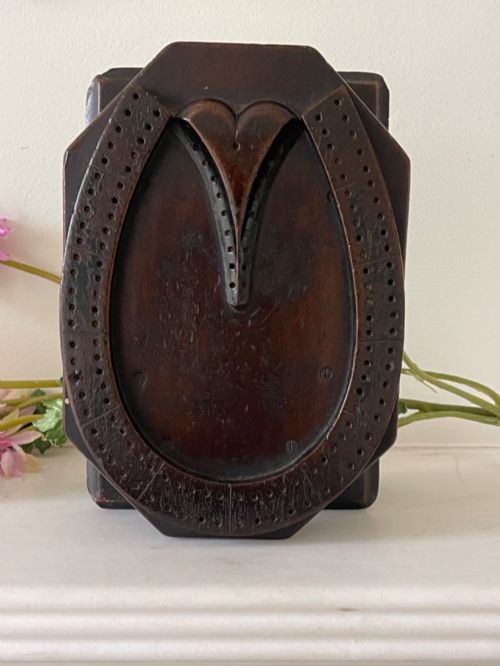
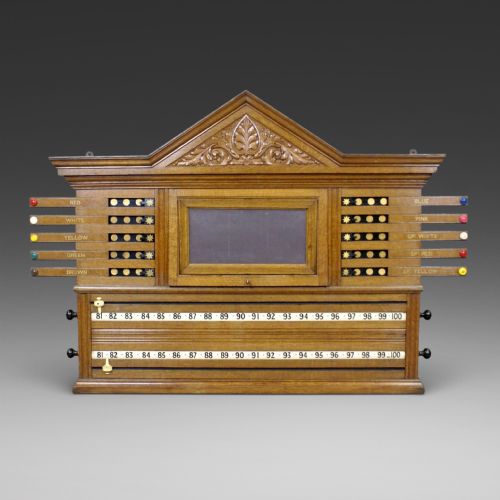
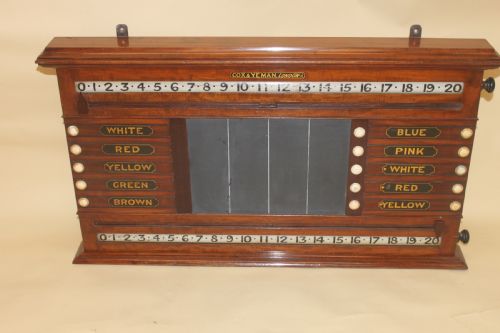
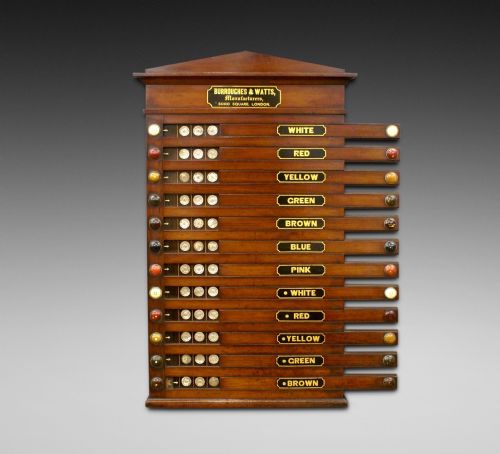
A victorian wooden scoring board serves as a traditional tally device for games rooms, featuring specific markers for billiards, snooker, pool, and cribbage. These items originate from the nineteenth century, encompassing dates across the eighteen-sixties, seventies, eighties, and nineties.
The pieces on this page appear as substantial wall-mounted billiards accessories alongside smaller tabletop boxes and cribbage boards. They function practically to keep score while acting as decorative fixtures for domestic interiors.
How they were made
Cabinet makers utilised dense timbers such as mahogany, oak, and kingwood to construct these durable scoring boards. Selected pieces incorporate marquetry inlay for decorative enhancement.
Makers integrated contrasting materials including brass for sliding pointers and hinges, alongside bone and slate details for indicator panels. These elements were assembled to withstand regular use in billiard rooms.
Victorian Wooden Scoring Board Retail Price Guide 2026
Typical asking prices for victorian wooden scoring board among the pieces listed under this phrase on Sellingantiques today, from the lower quarter to the upper quarter. They describe what is for sale here now, not the wider market.
Listings feature items from the 19th century incorporating mahogany, oak, kingwood, brass, bone, and slate.
What varies in quality
Quality rests upon the selection of cabinet timbers and the precision of the integrated scoring mechanisms. Superior examples exhibit finer grain timber and more elaborate marquetry inlay work.
The presence of maker attribution and the complexity of the design distinguish standard items from exceptional ones. Well-preserved brass markers and sound structural integrity elevate a piece.
Orme & Sons Manchester·Thurston & Co Ltd·Burroughes and Watts
The Victorian Wooden Scoring Board Glossary
- Cribbage board
- A small board with tracks of holes used to keep score in the card game cribbage. These items often appear in wood with accompanying pegs.
- Life pool
- A variation of cue sport popular in the nineteenth century that required specialised scoring rows on large wall boards. Players lost lives as balls were potted.
- Marquetry inlay
- Decorative woodwork where small pieces of fitted veneer form patterns on the surface of the board. This technique enhances the visual appeal of mahogany and other timbers.
- Billiard accessories
- Equipment associated with the game of billiards, including scoreboards, cues, and rests. These items equipped nineteenth-century games rooms.
Victorian Wooden Scoring Board: Frequently Asked Questions
Where were these scoreboards used?
These boards were housed in domestic billiard rooms, gentlemen's clubs, and public houses during the Victorian period. They hung on walls near the table for easy access during matches.
Smaller tabletop versions, such as cribbage boxes, sat in parlours for card games. Their primary purpose remained the accurate tracking of points during social gaming.
How do I clean a wooden scoreboard?
Dust the timber gently with a dry, soft cloth to remove surface particles without harming the finish. Avoid using modern chemical polishes that can build up over time.
Brass pointers and slate sections require careful wiping with a barely damp cloth. Keep the wood away from direct heat sources and excessive moisture.
What woods were commonly used?
Victorian craftsmen favoured robust timbers like mahogany and oak for large wall-mounted scoreboards. These woods offered durability and stability for heavy daily use.
Exotic timbers such as kingwood appeared on smaller tabletop cribbage boxes. Marquetry inlay occasionally provided contrasting decorative borders on the wooden surfaces.
Can these scoreboards still be used?
Most surviving Victorian boards remain fully functional for scoring modern games of snooker, pool, or billiards. The sliding brass markers and wooden rollers operate much as they did in the nineteenth century.
Careful handling ensures the antique mechanisms suffer no undue strain during play. They serve both practical scoring duties and decorative functions in modern homes.