


Victorian Wooden Pub Chairs
Victorian wooden pub chairs are sturdy, honest seats built for daily tavern life that bring robust character to modern rooms.
Victorian Wooden Pub Chairs
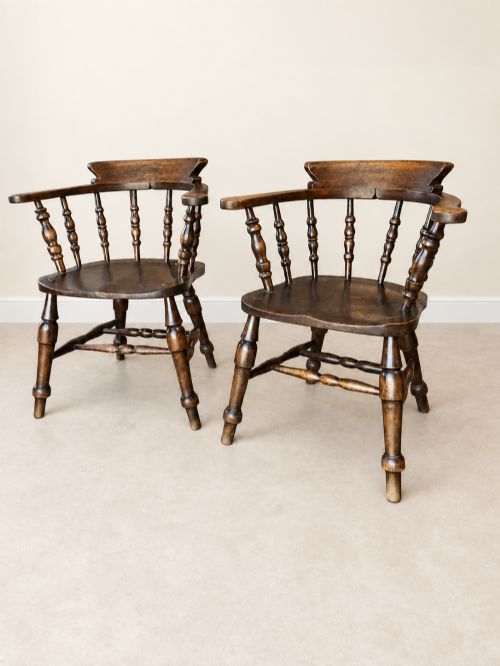
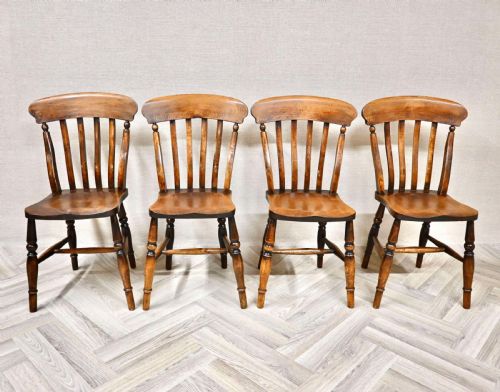
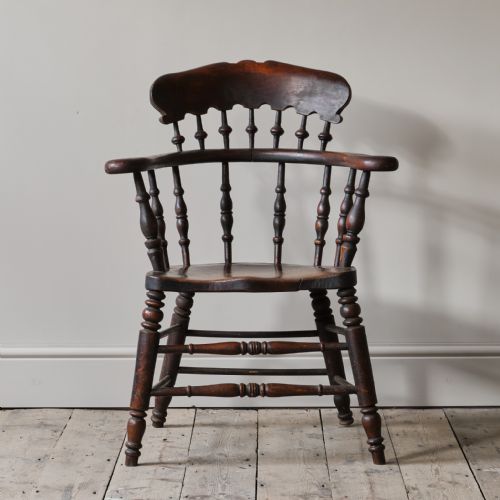
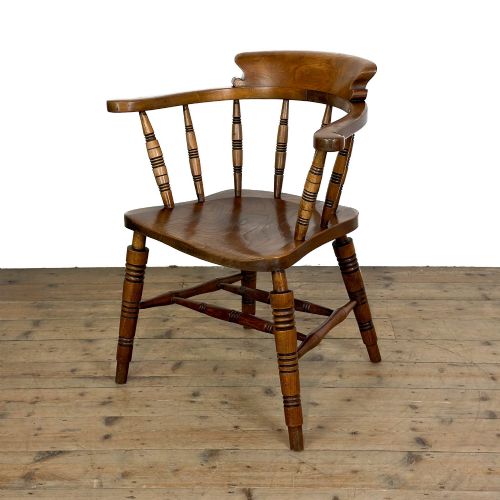
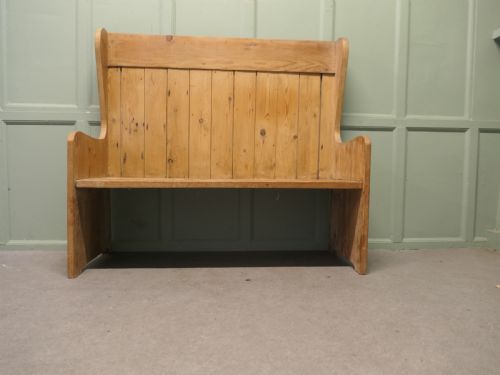
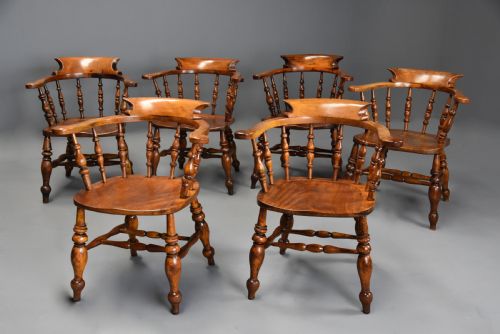
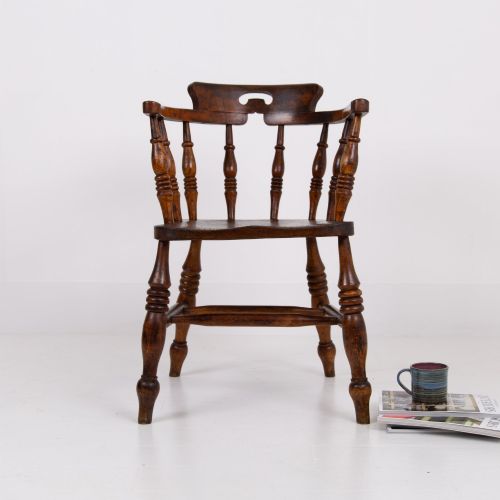
Victorian wooden pub chairs encompass robust seating built for heavy commercial use in taverns and country inns during the nineteenth century. Buyers searching this phrase meet various forms including smokers bow armchairs, lathback kitchen chairs, captain chairs, and high back pine settles.
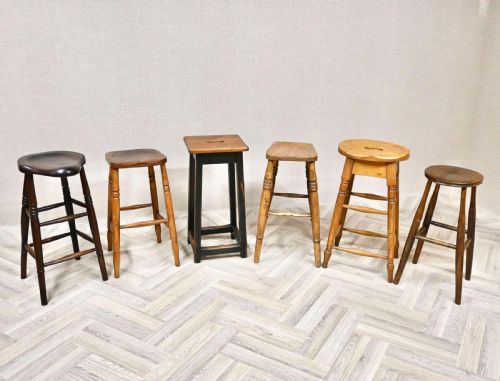
The selection on this page leans heavily towards the classic smokers bow design alongside Windsor variations and tall bar stools. These pieces originate from periods spanning the mid nineteenth century into the Edwardian era, showing vernacular country styling.
Makers produced these chairs for utilitarian endurance rather than delicate display, resulting in honest construction that survives today. Individual examples function equally well around a farmhouse dining table or as singular fireside seats.
Materials and construction
Workshops utilised sturdy timbers suited to heavy tavern use, combining elm seats with beech, ash, or oak frames. Elm provided a tough, interlocking grain that resisted splitting under constant shifting, while turned beech or ash formed resilient spindles and legs.
Joinery relied on traditional methods such as steam-bending solid wood for the characteristic low curved backrests of smokers bows and mortise and tenon joints for the underframes. Additional elements like leather seats, brass details, and satin birch appear on select finer variants.
Pub chairs often bear accidental knife-whittling marks left by patrons who spent long evenings carving the elm seats.
Distinctions in quality
Quality rests primarily in the choice of timber combinations, particularly the grain figure and thickness of the solid elm seat. Superior examples display well-figured timber with deep saddle-moulding carved for comfort, whereas utilitarian pieces remain plain and flat.
The crispness of the wood-turning on legs and spindles separates standard production from finer craftsmanship. Retaining original structural integrity without excessive replacement parts preserves the integrity of the piece.
The Victorian Wooden Pub Chairs Glossary
- Smokers bow
- A low-backed Windsor armchair with a continuous curved rail sweeping around to form the armrests. This sturdy form was a staple of nineteenth-century public houses.
- Windsor chair
- A chair built with a solid wooden seat into which the legs and back spindles are directly bored and wedged. They rely on the combination of turned components and bentwood.
- Lathback
- A chair back constructed with flat vertical wooden slats or laths secured between a top rail and the seat. These offer upright support suited to kitchen and tavern dining.
- Settle
- A wooden bench featuring a high solid back to block draughts and often incorporating enclosed storage beneath the seat. They stood near hearths in country pubs.
- Satin birch
- A pale, lustrous hardwood occasionally selected for high-status country furniture. Its fine grain accepts polishing to a warm golden glow.
Victorian Wooden Pub Chairs: Frequently Asked Questions
What are Victorian pub chairs?
Victorian pub chairs are heavy-duty wooden seats manufactured during the nineteenth century for use in public houses and taverns. They prioritized durability and bodily comfort for patrons spending hours sitting.
Common forms include the low-backed smokers bow and Windsor lathback chairs. These seats were constructed to withstand commercial wear while developing a rich patina over decades.
How were smokers bows used?
Smokers bows served as communal seating around tavern tables where patrons gathered to drink, smoke, and converse. Their low backs allowed servers to carry trays overhead without obstruction.
In domestic settings today, they function as versatile armchairs for desks, bedrooms, or dining tables. Their compact footprints make them easy to place in various rooms.
Which woods were used?
Joiners paired elm for the solid, shaped seats because its twisted grain prevented splitting under heavy use. Turned beech, ash, and oak formed the legs, stretchers, and back spindles.
Some refined examples utilised satin birch or incorporated leather seat pads. These mixed-wood constructions were standard for nineteenth-century vernacular seating.
How do I date these chairs?
Dating relies on examining construction marks, timber shrinkage, and the style of the turnings on legs and spindles. Mid-nineteenth-century examples often display broader proportions and heavier timbers.
Later Victorian and Edwardian iterations show lighter turning profiles and occasional factory stamps. Natural wear patterns accumulated in public houses also help indicate age.
How do I care for antique pub chairs?
Maintain the wood by applying natural beeswax periodically to nourish dry timber and preserve the historic finish. Avoid placing them near direct heat sources which can cause the solid wood to split.
Check the underframe joints occasionally to ensure the wedged spindles remain secure. Gentle daily use ensures these robust chairs endure for future generations.