



Victorian Wooden Library Steps
Victorian wooden library steps bring architectural height and practical elegance to high bookshelves, combining functional climbing aids with fine timber craftsmanship.
Victorian Wooden Library Steps
Victorian wooden library steps are practical climbing aids designed to reach high bookshelves in period rooms, appearing in forms ranging from standard flights and folding sets to metamorphic library chairs and spiral ladders. When you search for victorian wooden library steps, you encounter pieces intended for domestic studies, grand libraries, and institutional spaces alike.
The materials span traditional cabinet timbers such as mahogany, oak, walnut, satinwood, and fruitwood, alongside utilitarian pine and elm used for simpler steps and pantry stools. Many examples incorporate leather-topped treads and brass hardware, merging utility with the aesthetic standards of the nineteenth century.
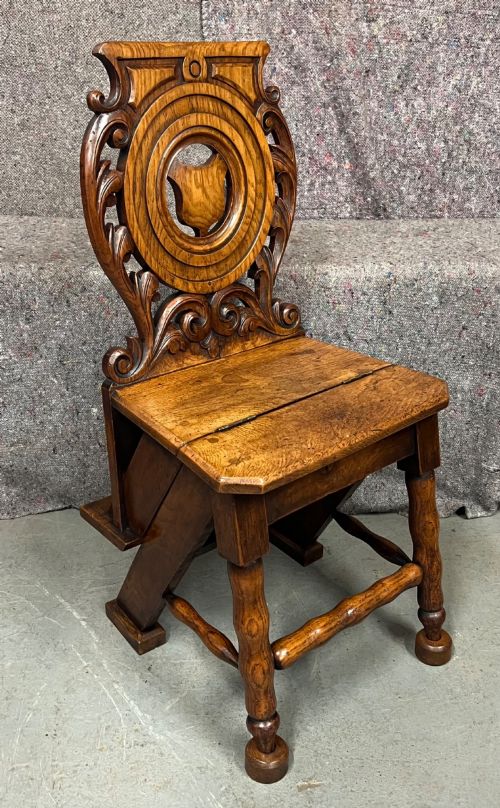
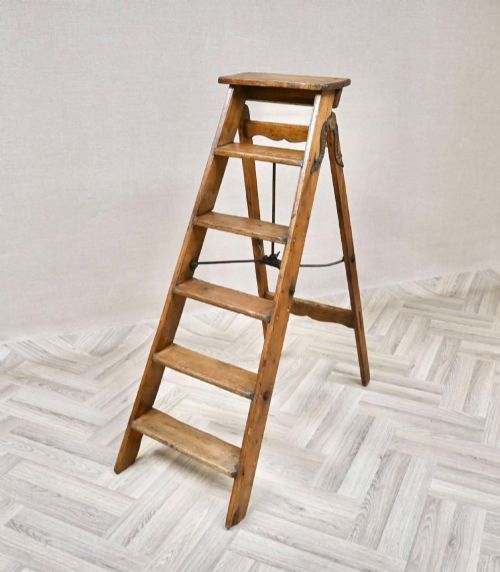
Beyond standard flights, the listings reveal specialised forms including bed steps, step ladders, and library chairs that transform into steps. These varied configurations reflect the diverse spatial demands of nineteenth-century interiors, accommodating everything from grand estate libraries to compact rooms.
Materials and construction methods
Cabinetmakers built these steps using dense hardwoods like mahogany and oak, joining treads and risers with robust joinery to support weight securely. Softer woods such as pine and elm appear in vernacular and utilitarian pieces, demonstrating regional woodworking traditions.
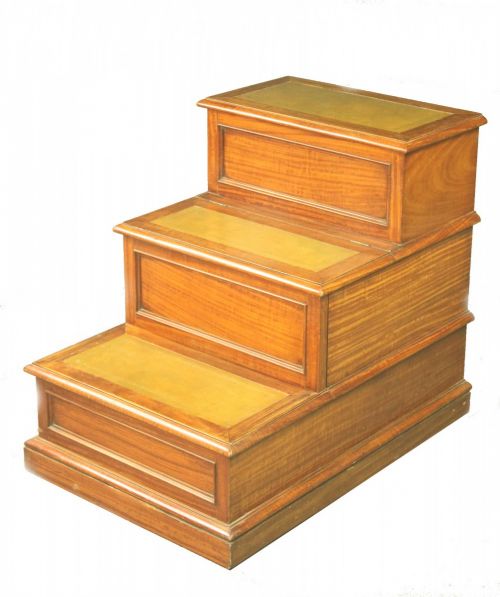
Working surfaces frequently feature inset leather panels on the treads, often bordered with blind or gilt tooling to provide grip and visual refinement. Metal components in brass and iron serve as hinges, castors, and structural supports in folding and metamorphic designs.
Surface finishes range from polished mahogany and golden oak to painted pine and rustic elm, showing the spectrum from formal drawing-room furniture to workshop utility.
Victorian Wooden Library Steps Retail Price Guide 2026
Typical asking prices for victorian wooden library steps among the pieces listed under this phrase on Sellingantiques today, from the lower quarter to the upper quarter. They describe what is for sale here now, not the wider market.
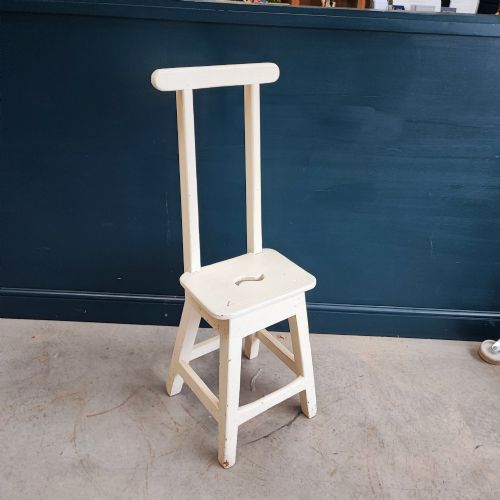
A solitary nineteenth-century elm stool doubles as a pantry step, proving that even the humblest kitchen helper aspired to reach great heights.
Quality factors in construction and design
The distinction between ordinary and superior pieces rests on the choice of timber and the sophistication of the mechanism. Finer examples utilise figured mahogany, golden oak, or satinwood with precise dovetailing and stable folding actions.
Design complexity marks the upper tier of the range, seen in metamorphic library chairs and spiral staircases with turned supports. Utility items and vernacular pine steps rely on straightforward pegged construction suited to heavy service rather than formal display.
The Victorian Wooden Library Steps Glossary
- Metamorphic furniture
- Pieces designed to transform from one form of furniture into another, such as a chair that unfolds into a flight of steps. This clever duality suited the space-saving ingenuity valued in nineteenth-century interiors.
- Treads
- The horizontal surfaces of the steps upon which a person places their feet when climbing. In library steps, these are frequently inset with leather for grip.
- Library chair
- A seating item constructed to serve as a chair while concealing a set of folding steps within its framework. It allowed readers to sit at a desk before accessing high shelves without fetching a separate ladder.
- Gothic Revival
- A design style drawing inspiration from medieval architecture, characterised by pointed arches, tracery, and robust timber construction. This aesthetic appears on oak library steps influenced by the movement.
- Bed steps
- Small flights of steps originally placed beside high nineteenth-century beds to ease getting into mattress levels. They share construction methods with library steps and often feature leather treads.
Victorian Wooden Library Steps: Frequently Asked Questions
What are metamorphic library steps?
Metamorphic library steps are dual-purpose pieces designed to transform from an armchair or table into a functional flight of stairs.
They allowed Victorians to reach high shelves without storing a bulky ladder in the room.
How do I use library steps safely?
Library steps should be placed on a flat, even floor and checked for stability at the hinges or folding joints before climbing.
Most antique steps are built from solid hardwoods, but their historical mechanisms require careful handling.
Where were these steps originally placed?
They originated in domestic libraries, studies, and institutional book rooms where shelving extended beyond reach.
Smaller variants also served in bedrooms as bed steps or in pantries as utility stools.
What timbers were used for these steps?
Cabinetmakers employed dense hardwoods like mahogany, oak, walnut, and satinwood for formal library steps.
Utilitarian examples and vernacular pieces were often made from pine, elm, or fruitwood.