


Victorian Woman Picture
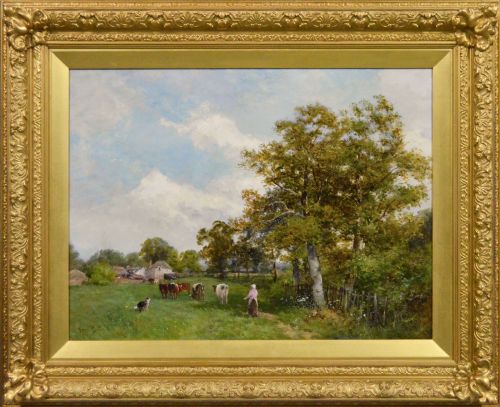
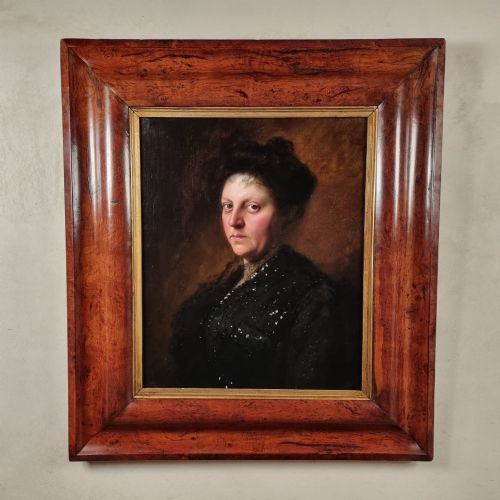
A victorian woman picture captures a nineteenth-century subject in oil, porcelain, or chrystoleum, offering an immediate window into historical portraiture and pastoral life.
Victorian Woman Picture
A victorian woman picture spans diverse nineteenth-century representations, from formal studio portraits to pastoral genre scenes set near streams and vineyards. These works typically feature oil on canvas, porcelain plaques, or chrystoleum, framed in wood and gold leaf.
Buyers frequently encounter Edwardian portraits and 19th-century romanticism alongside strict Victorian realism. The subjects range from named individuals like Mary Anne Sykes to anonymous Italian women and rural labourers painted by listed artists.
The selection encompasses wall art ranging from intimate oval porcelain pieces to larger landscape oil paintings. Each object records historical dress, social roles, and domestic or agricultural settings preserved across the decades.
How they were made
Makers utilised oil paint applied to prepared canvas to build rich, textured portraits and landscape backgrounds. Gold leaf and gilt wood were expertly carved and assembled to create ornate frames that completed the presentation of each wall art piece.
Specialised techniques also included painting upon Berlin porcelain plaques and producing chrystoleum, which involved hand-colouring convex photographs placed beneath glass. These methods required precise manual skill to achieve lasting depth and tone.
The documented subject matter ranges from quiet domestic portraits to outdoor scenes with cattle and poultry.
What varies in quality
The finesse of brushwork and the anatomical accuracy of the human figure distinguish superior works from simpler decorative items. Master painters captured light, fabric texture, and facial expression with subtlety, whereas lesser examples rely on rigid lines and flat colour application.
Original framing adds considerable distinction, particularly where period gilt wood and gold leaf remain intact and complement the canvas or plaque. The depth of historical provenance, including named sitters and recorded artists, elevates the standing of individual pieces.
David Bates·Henry John Yeend King·Robert Faulkner·Claude Cardon·Karel Frans Philippeau
The Victorian Woman Picture Glossary
- Chrystoleum
- A historical technique where a black and white photograph was pasted face down to convex glass, the paper backing rubbed away, and the remaining transparent image hand-painted from behind.
- Gilt wood
- Timber that has been coated with a thin layer of gold leaf or gold paint to give a luxurious metallic appearance. It was widely used for traditional picture frames throughout the nineteenth century.
- Genre painting
- The pictorial representation of scenes from everyday life, typically depicting ordinary people engaged in domestic chores, agriculture, or leisure. These works provide valuable social history.
- Porcelain plaque
- A flat piece of fired ceramic material used as a stable surface for detailed miniature painting. Berlin plates of this type were frequently mounted in ornate metal frames.
- Oil on canvas
- A traditional medium where pigments suspended in drying oils are applied to stretched fabric. This combination allows for rich blending, luminosity, and enduring structural stability.
Victorian Woman Picture: Frequently Asked Questions
What is a chrystoleum?
A chrystoleum is a coloured photograph processed through a specialised Victorian technique involving convex glass and hand-tinted pigments applied from the reverse side.
This method produced a luminous, three-dimensional effect that mimics traditional miniature painting while retaining photographic detail.
How are these framed?
These works are typically housed in wooden frames finished with gold leaf or gilt moulding appropriate to their period. Many retain their original surrounds, which protect the edges of the canvas or porcelain plaque.
Matching the frame style to the date of the artwork helps maintain historical integrity and visual balance on the wall.
Are all sitters identified?
Many portraits record specific individuals, such as named family members or notable local figures documented by the artist or contemporary records. Other compositions depict anonymous rural workers or idealized beauties.
Both named and unnamed subjects offer insight into nineteenth-century fashion, status, and artistic convention.
Where should I hang them?
These pieces suit traditional drawing rooms, studies, or hallways where lighting can be managed to prevent glare on the glass or varnished canvas. Stable indoor humidity protects both the wooden frames and the underlying oil paint or paper.
Pairing similar frame styles or period subjects creates a cohesive display without overwhelming smaller architectural spaces.