



Victorian Wine Chest
A victorian wine chest offers robust timber construction and clever compartmented storage, serving as a handsome and practical addition to any traditional dining room.
Victorian Wine Chest
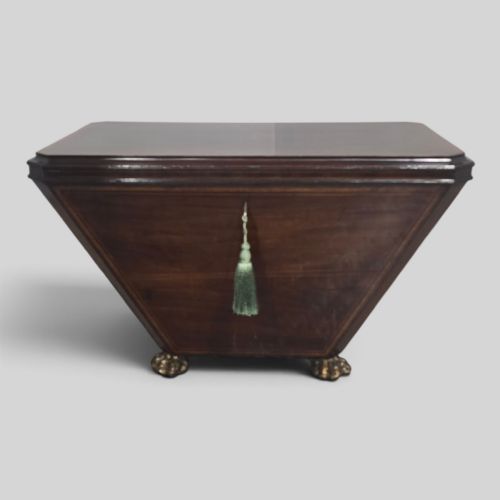
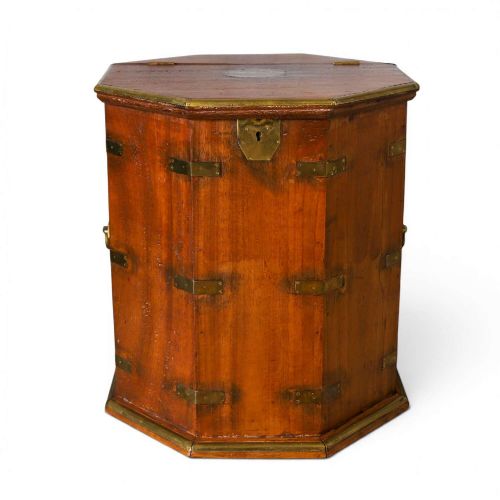
The most common examples you meet on this page are mahogany cellarettes featuring sarcophagus shapes or brass bound details. Such items frequently incorporate hinged lift-up tops and internal divisions tailored for wine storage.
Makers ranged from notable firms like Edwards and Roberts to regional cabinetmakers, utilising rich timbers to build functional furniture for affluent dining spaces. Pieces vary from understated campaign chests to heavily carved walnut designs.
How they were made
Carpenters constructed these pieces primarily from solid mahogany, walnut, and rosewood, often applying wood veneer over secondary woods. Timber selection dictated the structural integrity and visual warmth of the cabinet.
Metalwork played a vital role, with brass banding, campaign handles, and lock plates fitted securely to protect corners and aid transportation. Artisans also incorporated delicate satinwood inlay on select surfaces to elevate the ornamentation.
Victorian Wine Chest Retail Price Guide 2026
Typical asking prices for victorian wine chest among the pieces listed under this phrase on Sellingantiques today, from the lower quarter to the upper quarter. They describe what is for sale here now, not the wider market.
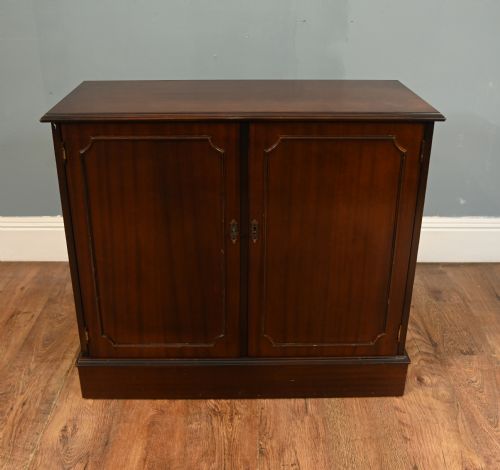
The inventory spans diverse forms including campaign chests, sarcophagus cellarettes, and Anglo-Indian designs.
What varies in quality
The standard of timber and cabinetmaking sets the finer examples apart from simpler utility pieces. Dense, well-figured mahogany and precise dovetail joints indicate superior workshop production.
Hardware quality distinguishes the output of prominent firms from standard commercial items. Heavy cast brass mounts and sophisticated internal partitioning reflect greater care during construction.
Edwards and Roberts·Freemans of Norwich·Maples and Co·Robert Strahan and Co
The Victorian Wine Chest Glossary
- Cellarette
- A lockable cabinet or box designed specifically for holding bottles of wine and spirits. These containers often featured lead linings to hold ice.
- Sarcophagus
- A monumental coffin-like shape with a convex lid, popular for nineteenth-century wine coolers. This classical form added architectural gravity to formal dining rooms.
- Campaign chest
- Portable furniture built in sections with recessed brass fittings for easy military transport. Such pieces prioritized sturdy construction and practical disassembly.
- Veneer
- A thin slice of decorative wood applied over a structural timber base. Cabinetmakers utilised this technique to display striking grain patterns.
- Brass bound
- Edges and corners reinforced with metal strips and secured with screws. This detailing protected high-impact areas during movement.
Victorian Wine Chest: Frequently Asked Questions
What is a victorian wine chest?
A victorian wine chest is a specialised piece of dining room furniture built to store, cool, and protect wine bottles. These items often feature divided interiors and secure locking mechanisms.
Craftsmen typically shaped them as cellarettes or sarcophagus coolers using dense hardwoods like mahogany and walnut.
How were they used originally?
Servants kept wine cool inside the chest by packing ice around the bottles within lead-lined compartments. They stood near the dining table for easy access during long meals.
Lockable lids ensured that expensive vintages remained secure from household staff.
Where should I place one?
These cabinets work well as side tables or statement pieces in dining rooms, living areas, or hallways. Their flat tops provide useful surface space for lamps or serving trays.
They also serve as functional storage for modern collections of bottles and glassware.
How do I spot quality?
Examine the weight and figure of the timber, alongside the precision of the joinery and internal fittings. Heavy brass hardware and intact lead linings suggest superior original craftsmanship.
Maker stamps or labels inside drawers provide definitive proof of origin.