

Victorian Whatnot
When you search for a Victorian whatnot, you seek multi-tiered open shelving built to display ornaments and hold books with nineteenth-century elegance.
Victorian Whatnot
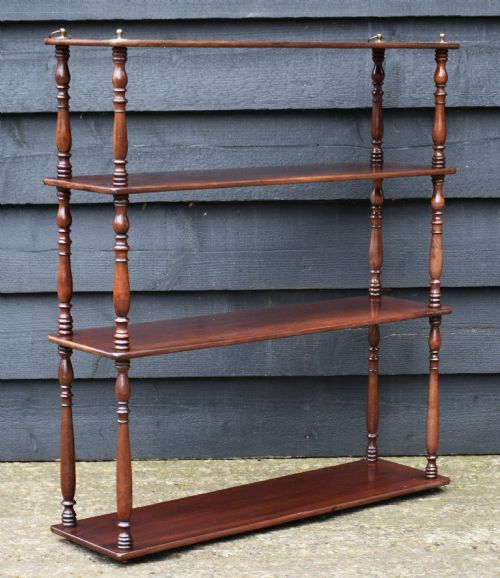
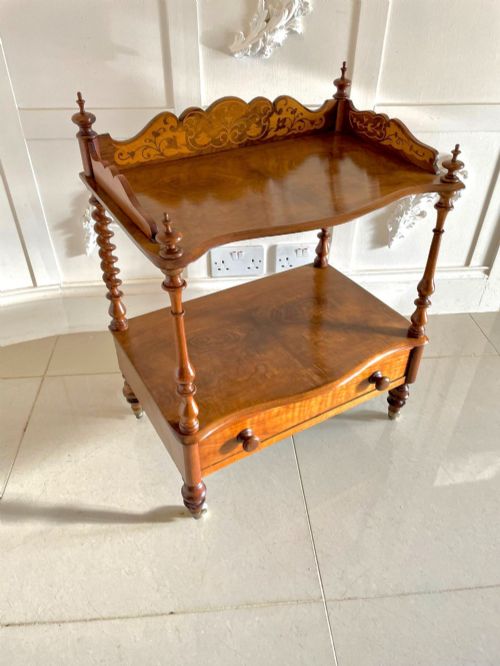
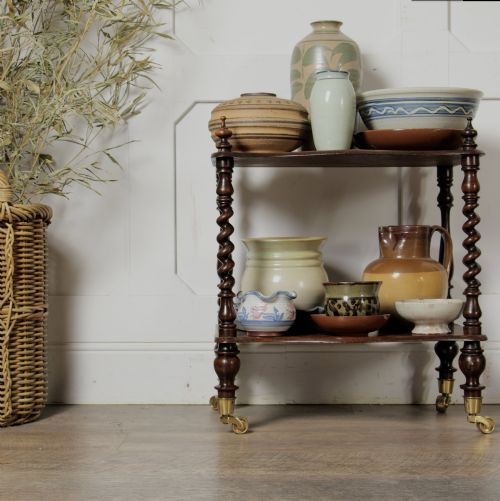
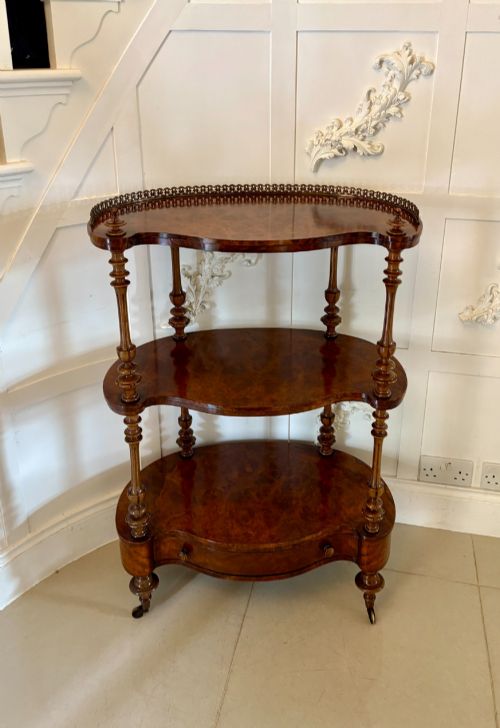
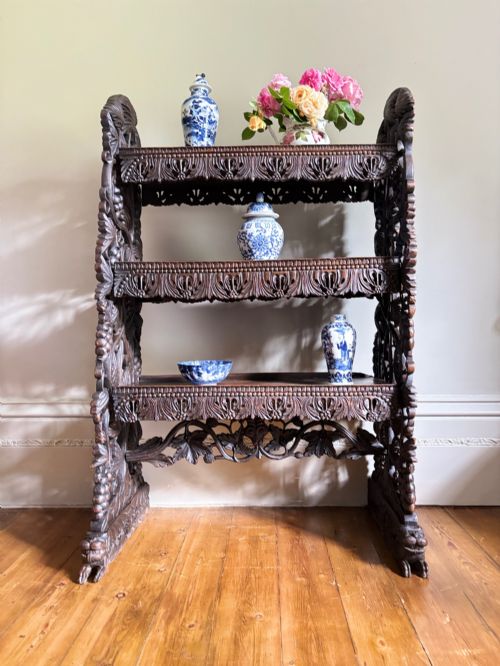
A Victorian whatnot is an open shelving unit designed primarily for display, featuring multiple tiers supported by slender uprights or columns.
The form developed to hold small decorative items, ceramics, and books in nineteenth-century drawing rooms and parlours.
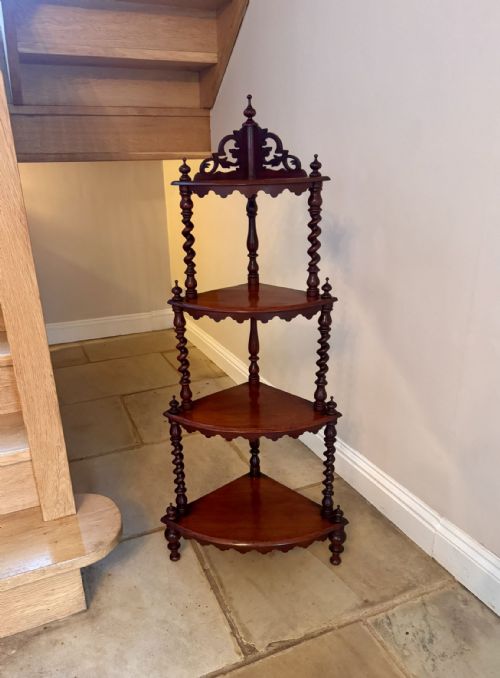
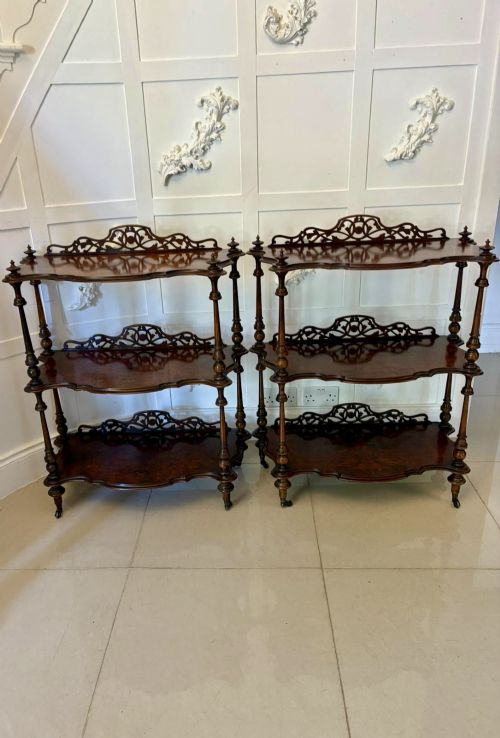
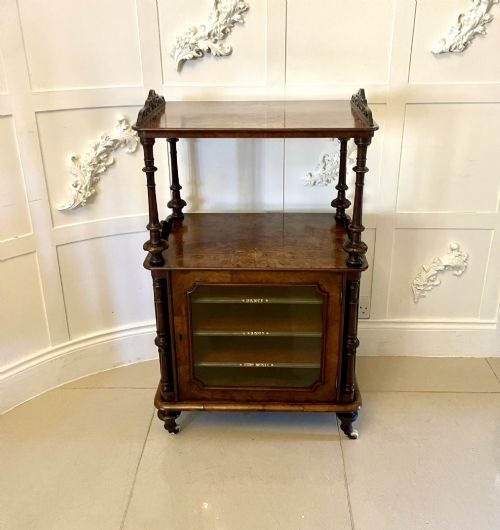
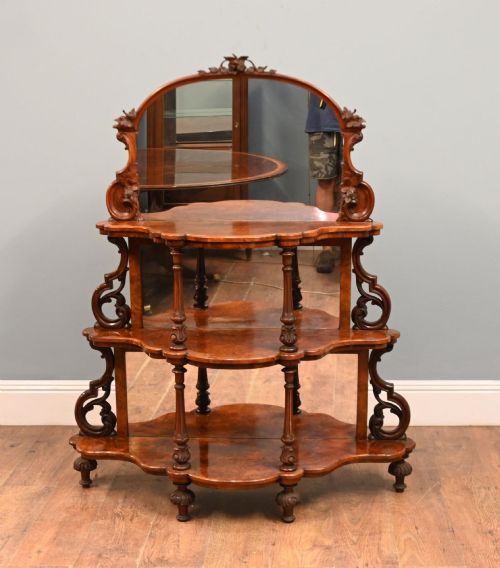
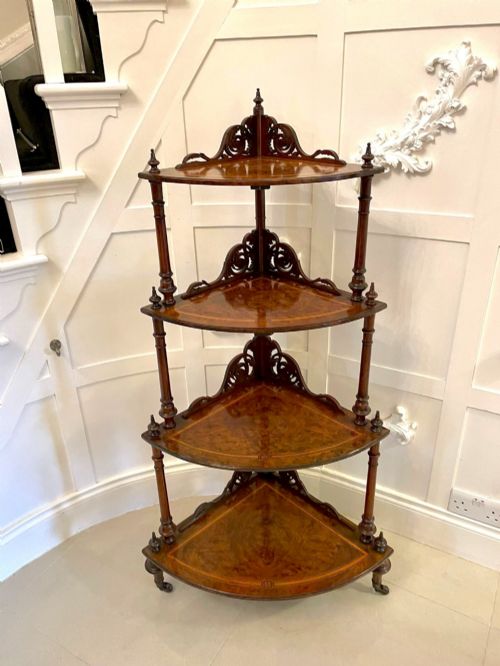
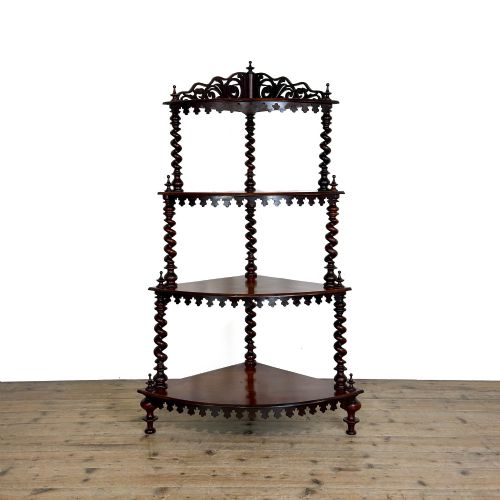
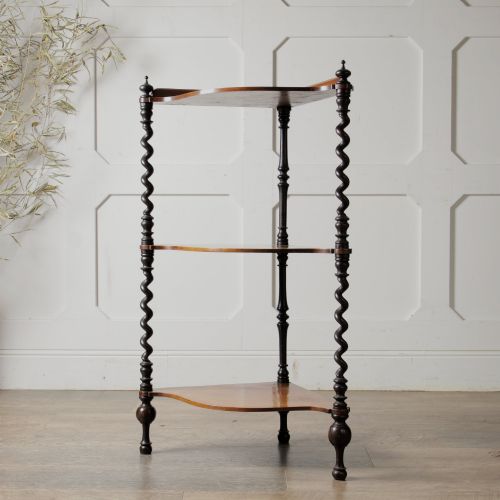
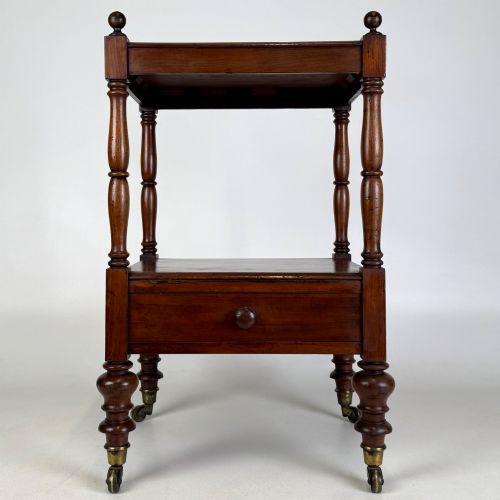
Freestanding central models and corner versions both appear frequently, alongside variants combined with cabinets, canterburies, or small tables.
Materials and construction
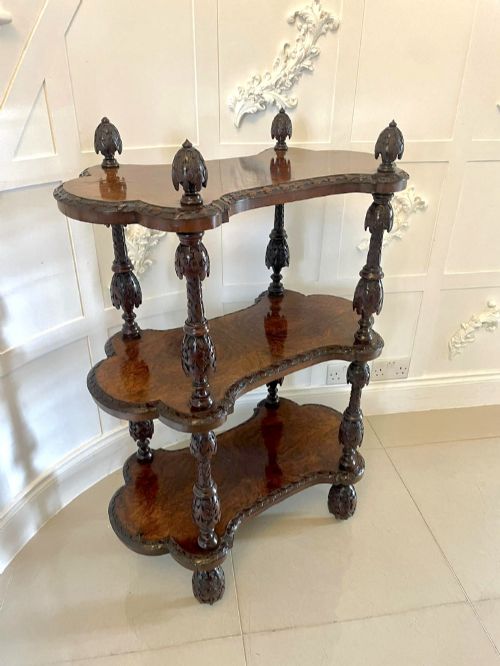
Cabinetmakers utilised rich timbers such as mahogany, rosewood, and burr walnut, frequently embellished with marquetry, inlay, or ebonised finishes.
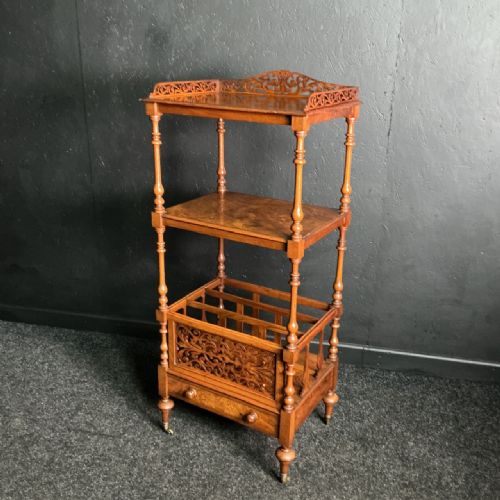
Supports range from simple turned posts to barley twist columns, brass details, and delicate pierced galleries.
Construction techniques include multi-tiered stacking secured by slender uprights, occasional brass mounting, and corner-fitting frames designed for stability.
Victorian makers designed some whatnots with hidden jewellery compartments and music racks, proving the Victorians loved hiding extra storage inside display furniture.
Factors of quality
Quality rests upon the selection of timber figure, particularly the richness of burr walnut veneers or dense grain in rosewood and mahogany.
The refinement of turned supports, such as crisply carved barley twists or detailed fretwork galleries, separates standard items from exhibition pieces.
Structural integrity matters deeply in multi-tiered pieces, where tight joints and well-balanced uprights ensure the shelves remain completely level.
Gillow and Co·Leonard Wyburd for Liberty and Co·Samson and Son
The Victorian Whatnot Glossary
- Whatnot
- A piece of furniture consisting of a set of open shelves for displaying small objects. The name playfully reflects the variety of items placed upon it.
- Étagère
- A set of open shelves for displaying ornaments, closely related in form to the whatnot. These pieces often feature French-influenced designs or ebonised finishes.
- Canterbury
- A low stand with partitioned sections for sheet music or books, frequently incorporated into the base of a whatnot. This dual-purpose form provides both storage and display.
- Barley twist
- A type of turned column resembling the spiral shape of barley sugar. It appears frequently on the vertical supports of nineteenth-century stands.
- Burr walnut
- A highly figured wood grain obtained from walnut tree growths. It provides a rich, mottled pattern prized by Victorian cabinetmakers.
Victorian Whatnot: Frequently Asked Questions
What rooms suit a Victorian whatnot best?
These open shelving units sit comfortably in living spaces, hallways, or dining rooms where vertical display space is needed without heavy bulk.
Corner versions make effective use of empty angles in smaller rooms while keeping floor space largely clear.
How were nineteenth-century whatnots originally used?
Households utilised the tiers to showcase prized porcelain, small sculptures, and collected curiosities within the principal entertaining rooms.
Some integrated lower compartments or canterbury sections specifically to keep sheet music and periodicals close at hand.
Can these shelves hold heavy books?
Most tiers are constructed for lighter decorative objects, ceramic collections, and slender volumes rather than heavy reference libraries.
Checking the rigidity of the upright supports and shelf joints helps determine whether a piece can safely manage heavier reading material.
How do corner models differ from freestanding ones?
Corner whatnots are engineered with right-angled backs specifically to fit snugly into room junctions and conserve central floor space.
Freestanding variants feature finished sides all around, allowing them to stand away from walls or act as room dividers.