





Victorian What Not
A Victorian what not is an open tiered display piece designed for the parlour, prized for its combination of vertical storage and elegance.
Victorian What Not
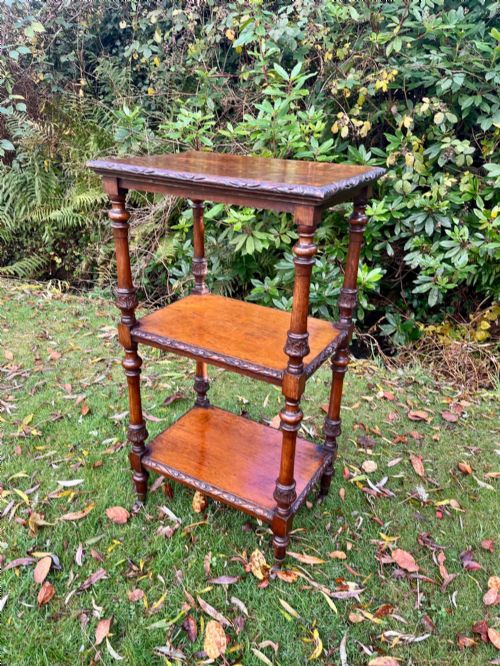
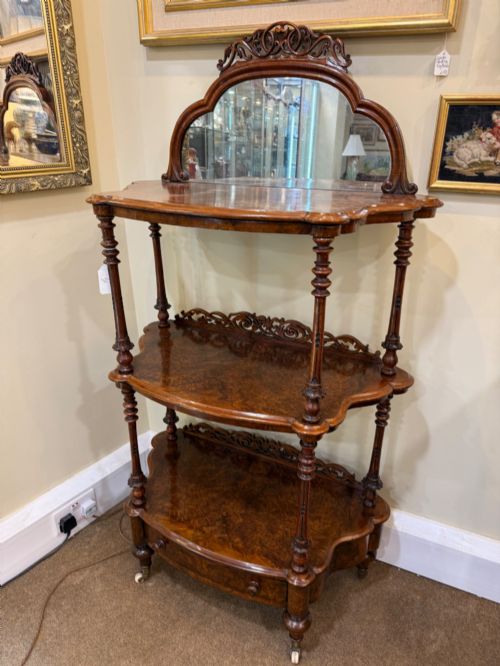
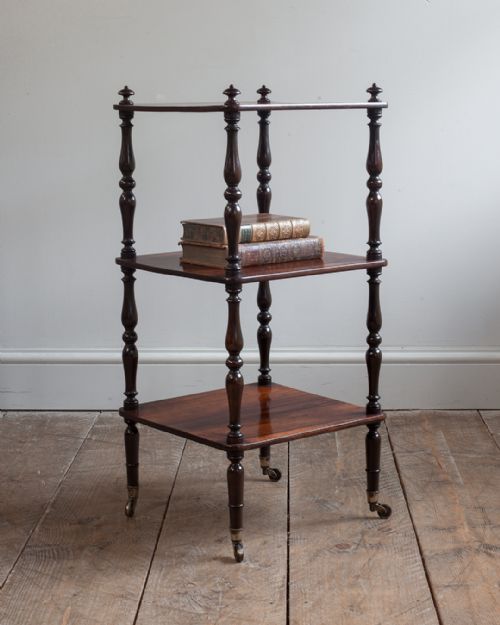
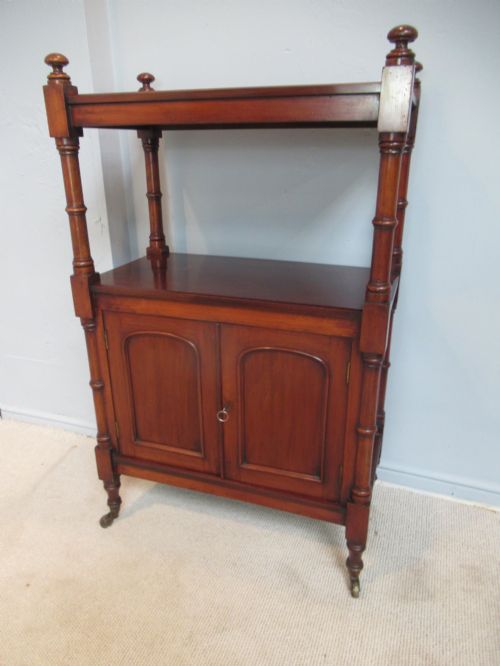
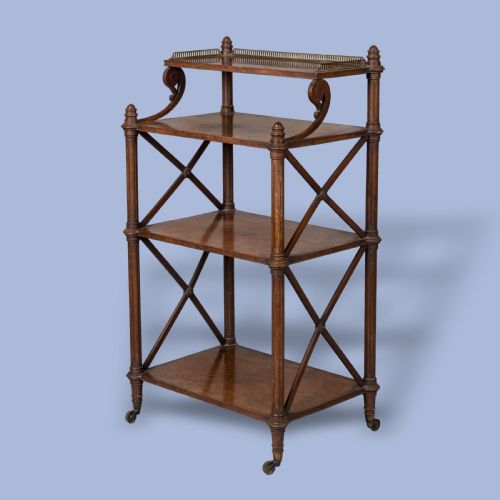
A Victorian what not serves as an open tiered shelf unit intended for displaying ornaments, books, and small personal possessions in the principal rooms of the house. These pieces rely on upright supports dividing multiple horizontal tiers, often terminating in turned finials or castors.
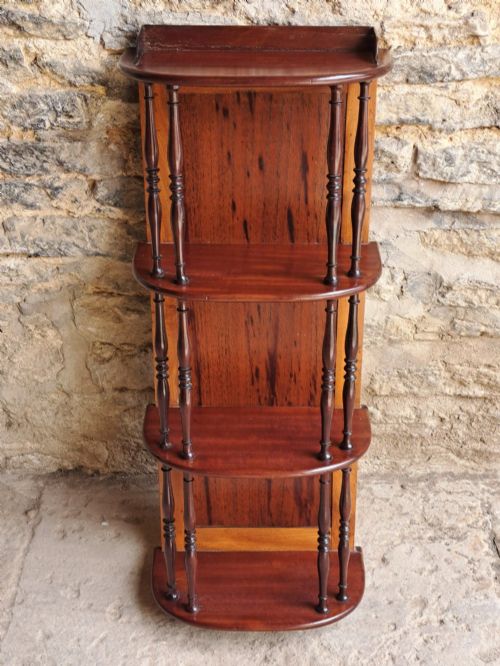
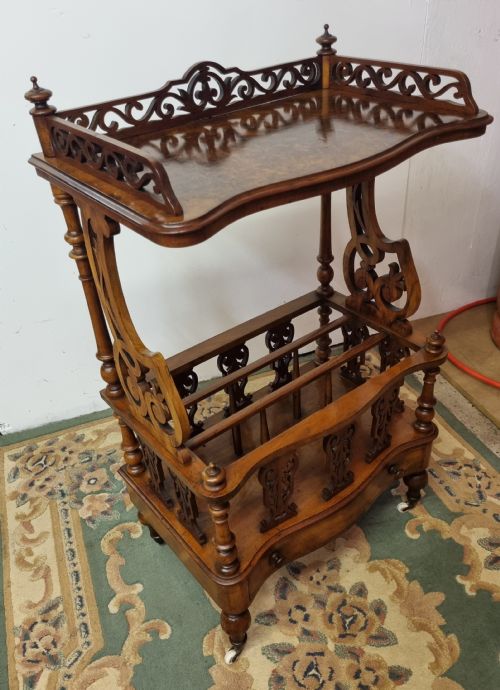
Origins span the nineteenth century, encompassing standard Victorian production alongside earlier William IV interpretations and later multi-functional variants. Forms range from corner units and wall shelves to freestanding oval and serpentine tables.
Materials and construction
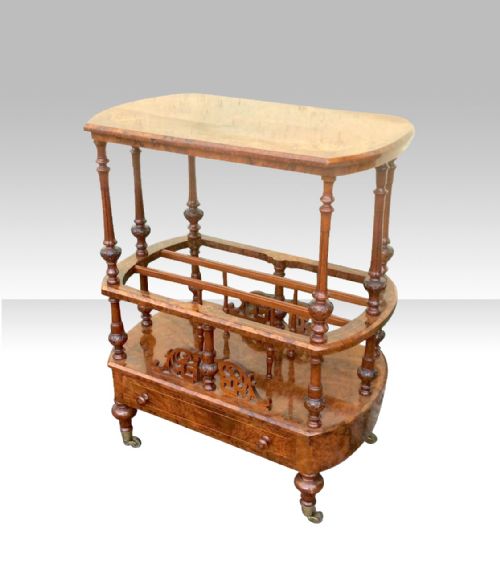
Cabinet makers utilised dense hardwoods including mahogany and rosewood for structural stability, alongside figured veneers like burr walnut to create decorative surfaces on top panels and tiers. Fretwork panels, marquetry inlay, and brass fittings appear frequently across the pieces.
Construction relies on precise joinery to support multiple open levels, often employing turned columns or delicate uprights to separate the shelves without encumbering the silhouette.
Victorian What Not Retail Price Guide 2026
Typical asking prices for victorian what not among the pieces listed under this phrase on Sellingantiques today, from the lower quarter to the upper quarter. They describe what is for sale here now, not the wider market.
Listings feature woods such as walnut, burr walnut, mahogany, and rosewood, alongside secondary materials like brass, ceramic, porcelain, and glass.
Judging quality in tiered furniture
Quality rests upon the selection of timber figure, particularly the richness of burr walnut veneers and the depth of grain in mahogany and rosewood. Superior examples display refined fretwork, crisp marquetry inlay, and harmonious proportions across every tier.
Execution of turning on the supporting columns and the integration of secondary functions, such as drawers or compartments, distinguish more ambitious workshop output from standard production.
Gillows·Holland & Sons
The Victorian What Not Glossary
- What not
- An open tiered shelving unit used for displaying ornaments and small objects. It originated in the eighteenth century and remained popular through the Victorian era.
- Canterbury
- A low piece of furniture featuring vertical partitions, originally designed for holding sheet music or folios. Many Victorian examples combine this storage function with open whatnot tiers above.
- Etagere
- A piece of furniture consisting of a set of open shelves for displaying small objects. The term is often used interchangeably with a whatnot.
- Marquetry
- Decorative veneer work formed by fitting together small pieces of wood, ivory, or shell to create pictorial or geometric patterns on furniture surfaces.
- Fretwork
- Open ornamental woodwork cut with a fretsaw, frequently employed to decorate the galleries and brackets of Victorian display shelves.
Victorian What Not: Frequently Asked Questions
What is a Victorian what not used for?
These tiered units were originally designed to hold small decorative objects, porcelain, and books within the Victorian parlour. Their open structure allowed owners to display collections safely while keeping them visible.
Today, they function well in modern interiors for holding plants, books, or decorative accessories without taking up excessive floor space.
Where should I place a corner what not?
Corner units fit directly into unused room angles, making them practical for smaller spaces where a freestanding rectangular shelf might block movement. They utilise vertical wall space effectively.
Position them in living rooms or hallways to display ceramics, framed photographs, or trailing plants.
How do I care for burr walnut veneer?
Burr walnut surfaces require gentle dusting with a dry cloth and protection from direct sunlight and excessive heat fluctuations. Harsh chemical polishes should be avoided to preserve the finish.
Applying a traditional beeswax occasionally helps nourish the wood and maintain the natural lustre of the grain.