






Victorian What Not Table
A victorian what not table is an open-tiered display piece that brings tiered shelving and practical surface space to nineteenth-century rooms.
Victorian What Not Table
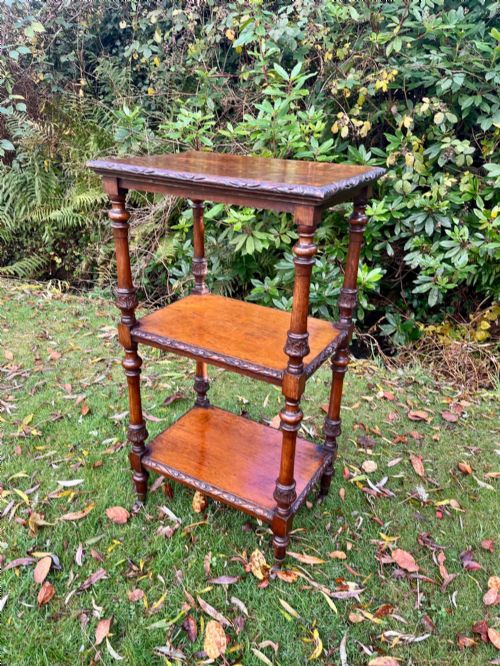
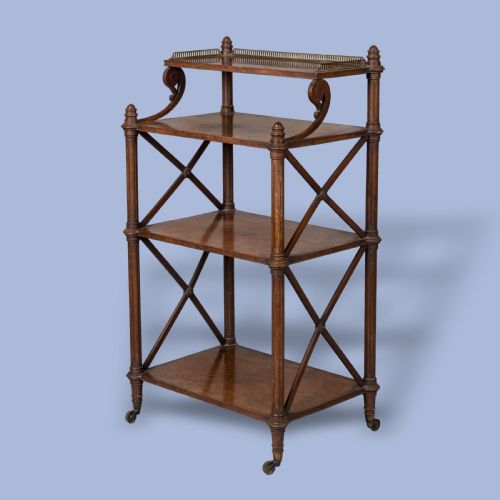
A victorian what not table is fundamentally a multi-tiered display stand designed to hold ornaments, books, and small decorative objects in nineteenth-century interiors. These pieces typically present two, three, or four open shelves supported by turned columns or upright posts.
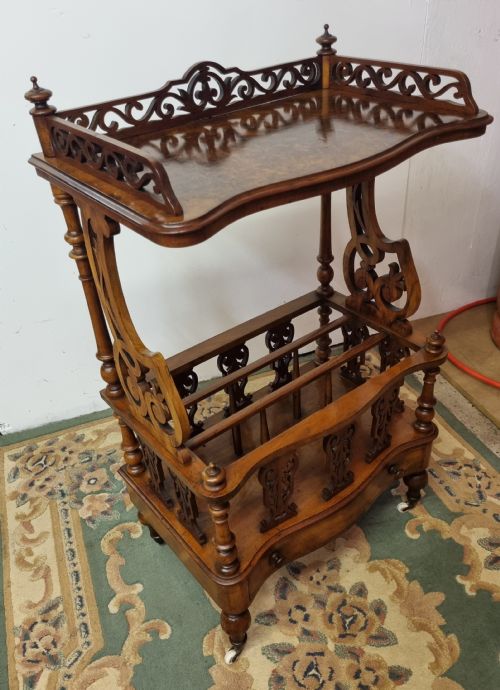
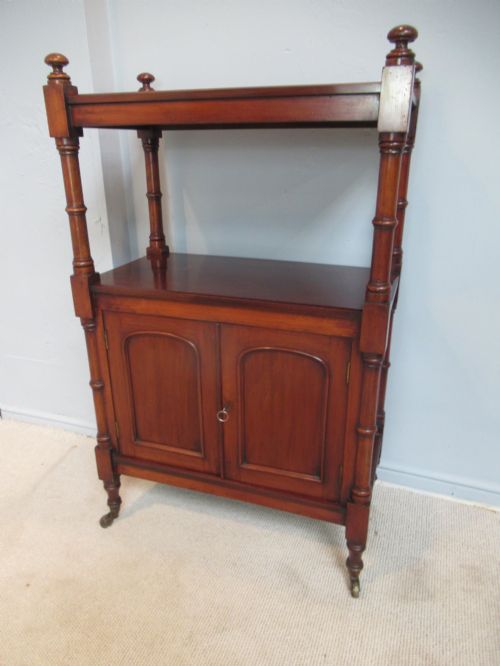
The version most commonly encountered on this page combines the open shelving of a whatnot with the compartmented base of a Canterbury or the enclosed surface of a side table. Walnut and mahogany predominate, often featuring burr veneers or marquetry details across the tiers.
Makers and cabinetmakers of the period also integrated music stands, folding tiers, and occasional table tops into these multi-functional designs. The resulting furniture ranges from diminutive corner stands to grand étagères intended for prominent reception rooms.
Distinguishing Quality
The distinction between standard production and top-tier pieces rests on timber selection, such as richly figured burr walnut or carefully matched rosewood veneers. Finer examples display crisp turning on the upright supports and precise marquetry rather than painted surface decoration.
Structural integrity in multi-tiered pieces depends on the rigidity of the joints connecting each shelf to the vertical columns. Superior construction ensures the tiers remain level and stable without excessive wobble under normal display use.
Victorian What Not Table Retail Price Guide 2026
Typical asking prices for victorian what not table among the pieces listed under this phrase on Sellingantiques today, from the lower quarter to the upper quarter. They describe what is for sale here now, not the wider market.
Some nineteenth-century tables thoughtfully combined a music rack and a washstand with your reading lamp shelf.
Gillows·Holland and Sons
The Victorian What Not Table Glossary
- Whatnot
- An open shelving unit with multiple tiers designed for displaying ornaments and small objects. It originated in the eighteenth century and remained popular throughout the Victorian period.
- Canterbury
- A low piece of furniture featuring vertical partitions or slats, originally designed to hold sheet music or folios. Many Victorian examples combine this storage base with topmost display tiers.
- Étagère
- A French term for a display piece with several open shelves rising in tiers. In Victorian furniture, it often serves the same decorative function as a whatnot.
- Marquetry
- The art of applying decorative veneer pieces of various timbers to a structured surface to create pictorial or geometric designs. It frequently decorates the top tier of walnut tables.
- Burr Walnut
- Timber taken from the abnormal growth of a walnut tree, producing swirling and highly figured grain patterns. Cabinetmakers prized it for high-status table tops and cabinet fronts.
Victorian What Not Table: Frequently Asked Questions
What is a Victorian whatnot table used for?
These pieces were originally designed to hold books, ornaments, and decorative objects in nineteenth-century drawing rooms and parlours. The multi-tiered structure allowed households to display collections without cluttering main tables.
Today, they serve a similar purpose in modern rooms as compact display stands or lamp tables. Their narrow footprint makes them useful for corners and spaces beside seating.
How do I tell a whatnot from an étagère?
The terms are often used interchangeably in nineteenth-century furniture, but an étagère leans toward decorative display with French stylistic influences. Whatnots frequently include functional additions like drawers, lower cabinets, or Canterbury compartments.
Both types rely on stacked open tiers supported by slender columns. Examining the lower section usually reveals whether the piece was built for general display or specific storage.
What woods were used for these tables?
Walnut and mahogany are the primary timbers found across these listings, alongside rosewood and oak. Cabinetmakers frequently utilised burr walnut veneers to create highly figured surfaces on the display tiers.
More decorative examples incorporate marquetry veneers and contrasting inlay woods. Brass and ceramic fittings appear on castors and structural supports.
How do I care for a burr walnut top?
Burr walnut veneers require protection from direct sunlight and excessive moisture to prevent warping and fading. Regular dusting with a dry, soft cloth maintains the polished finish without buildup.
Avoid placing damp items or uninsulated hot cups directly on the antique wood surface. Gentle application of appropriate furniture wax preserves the grain depth.