
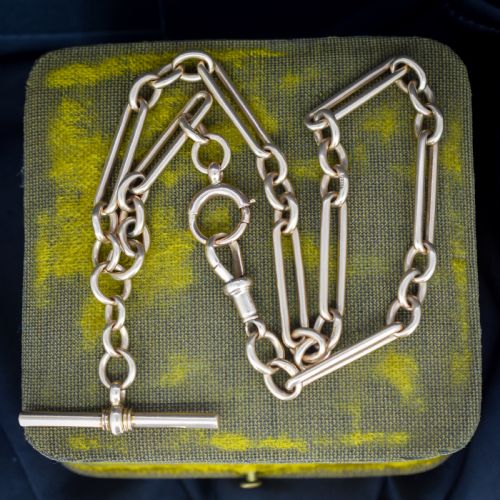
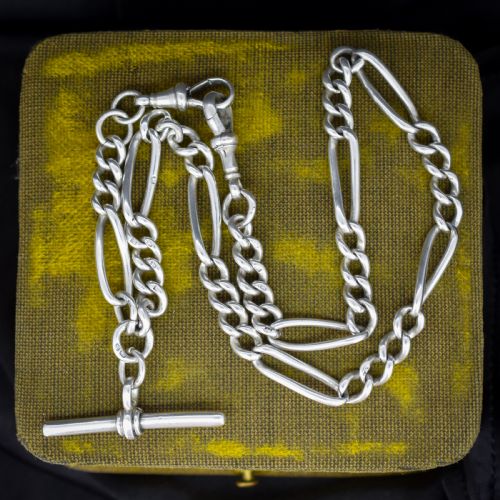

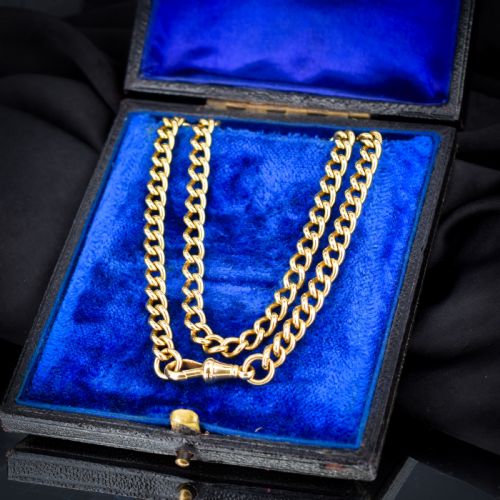
Victorian Watch Chain Necklace
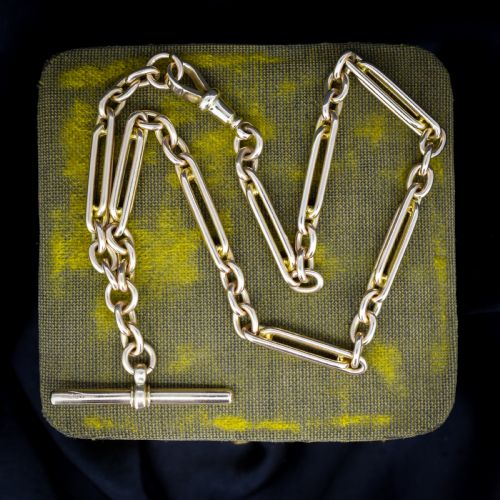
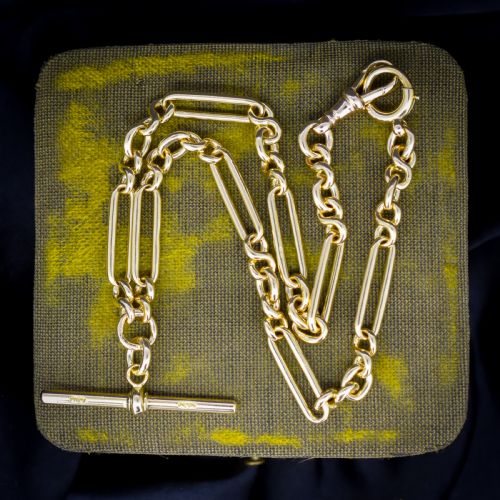
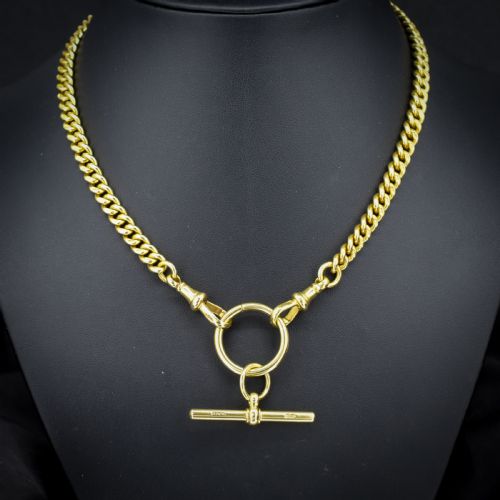
A victorian watch chain necklace adapts utilitarian pocket watch attachments into wearable neckpieces, combining solid gold or silver links with functional dog clips and T-bars.
Victorian Watch Chain Necklace
A victorian watch chain necklace originates from the functional chains worn to secure pocket watches to waistcoats during the nineteenth century. These pieces now function primarily as necklaces, often retaining their original structural hardware.
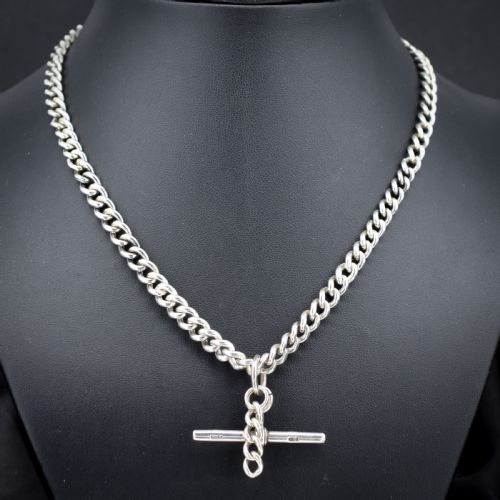
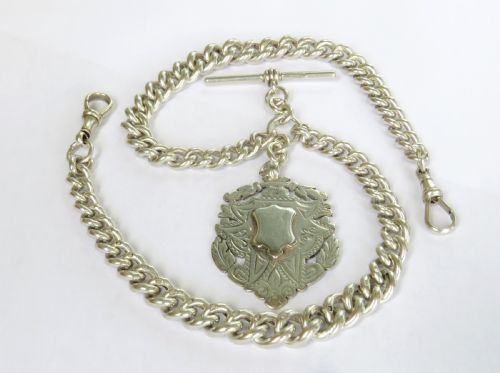
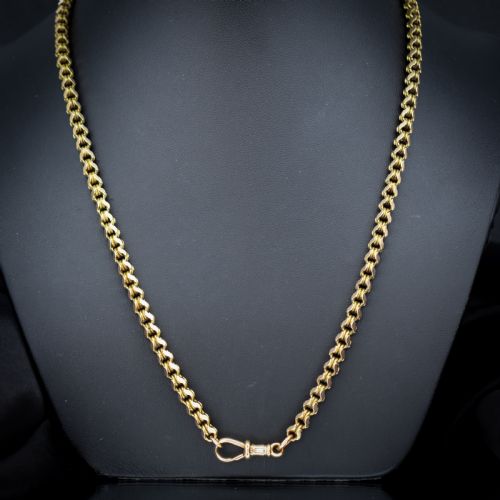
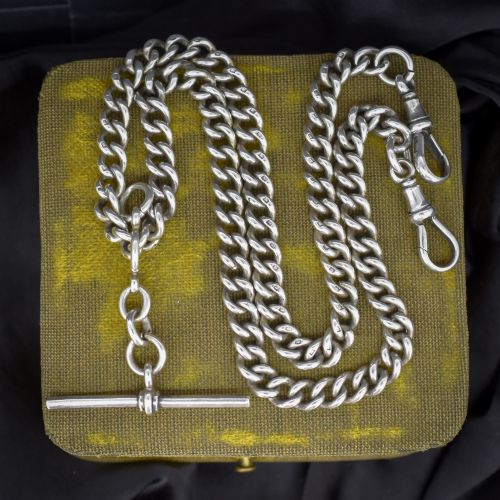
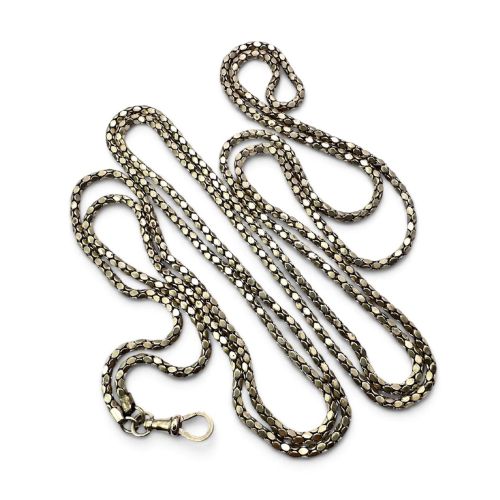
The versions most commonly met on this page are Albert chains and guard chains fashioned in yellow gold, rose gold, or sterling silver. They appear in lengths ranging from short choker styles to exceptionally long guard chains designed to loop multiple times.
Makers adapted pocket watch attachments into versatile neckwear by incorporating dog clips, swivel clasps, and T-bars directly into the design. Pieces span the Victorian, Edwardian, and early twentieth-century periods, reflecting shifting ornamentation styles.
Materials and construction
Goldsmiths and silversmiths utilised solid yellow gold, rose gold, and sterling silver alongside rolled gold to form the structural links of each chain. Purity grades span nine carat, fifteen carat, and eighteen carat gold, alongside Birmingham hallmarked silver.
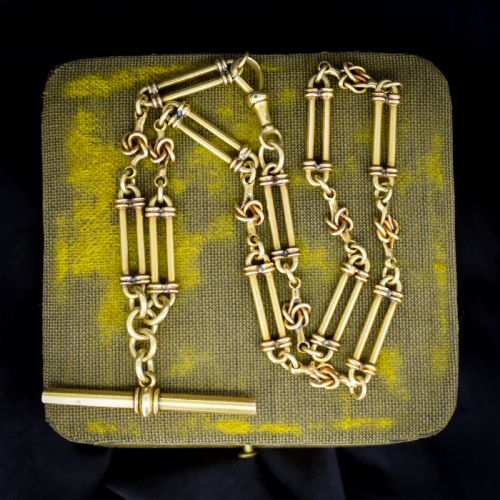
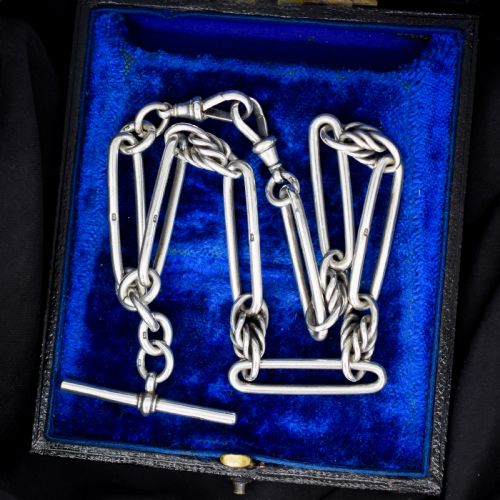
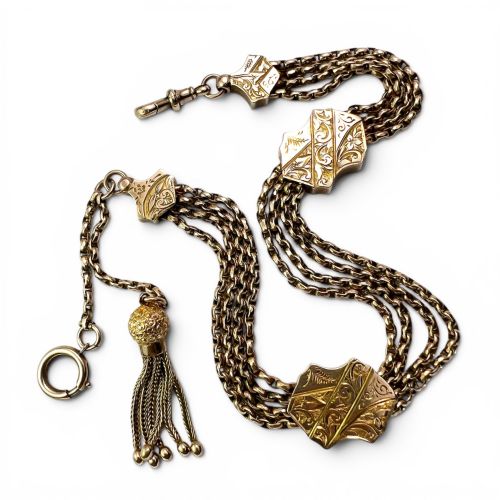
Links were meticulously fabricated by hand into distinct patterns such as curb, trombone, paper, fetter and knot, and fancy faceted configurations. These components were joined together to create flexible drapes capable of supporting suspended fobs, tassels, and keys.
Listings feature yellow gold, rose gold, and sterling silver across Victorian, Edwardian, and 1920s periods.
Assessing construction and weight
Quality rests upon the gauge of the metal and the structural integrity of the individual links, where substantial weight indicates robust manufacturing. Solid gold and heavy silver examples exhibit greater durability and retain crisp detail on their links compared to lighter or hollow alternatives.
The calibre of the piece is further determined by the complexity of the link geometry, such as alternating trombone and love knot patterns, and the originality of matching dog clips, swivel clasps, and T-bars.
The Victorian Watch Chain Necklace Glossary
- Albert chain
- A pocket watch chain designed to pass through a waistcoat buttonhole, featuring a T-bar at one end and a clip at the other.
- Dog clip
- A spring-loaded snap hook utilised to secure watch chains and charms, operating via an internal leaf spring mechanism.
- T-bar
- A short transverse bar attached to a watch chain, originally slid through a buttonhole to anchor the chain securely.
- Fob
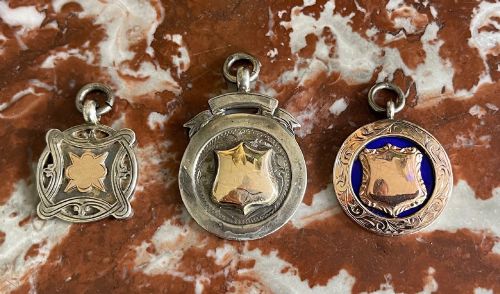
- A small ornament, seal, or medallion suspended from a watch chain by a short length of chain or swivel.
- Longuard chain
- An exceptionally long necklace chain, originally worn by women to secure pocket watches or lorgnettes in pockets or tucked into waistbands.
Victorian Watch Chain Necklace: Frequently Asked Questions
What is an albert chain necklace?
An albert chain necklace is a converted pocket watch chain featuring structural elements like dog clips and T-bars that are worn as neck jewellery.
These items repurpose nineteenth-century timekeeping accessories into versatile neckwear while preserving their original mechanical fastenings.
How were watch chains used?
Original owners attached pocket watches to one end of the chain while anchoring the T-bar through a waistcoat buttonhole or pocket.
Suspended fobs, keys, and charms added decorative weight and personal identification to the functional assembly.
Can you wear them as bracelets?
Shorter lengths and double-stranded configurations are frequently wrapped around the wrist to serve as substantial link bracelets.
Secure dog clips allow the chain to be fastened back onto itself at any desired link.
How do I identify gold purity?
English pieces often bear hallmarks denoting nine carat, fifteen carat, or eighteen carat gold standards stamped directly onto the links or dog clips.
Rolled gold and Continental silver variants rely on distinct stamps or surface testing to confirm their metallic composition.