



Victorian Walnut Tray
These pieces of victorian walnut tray furniture bring rich timber grain and practical surface area into everyday rooms.
Victorian Walnut Tray
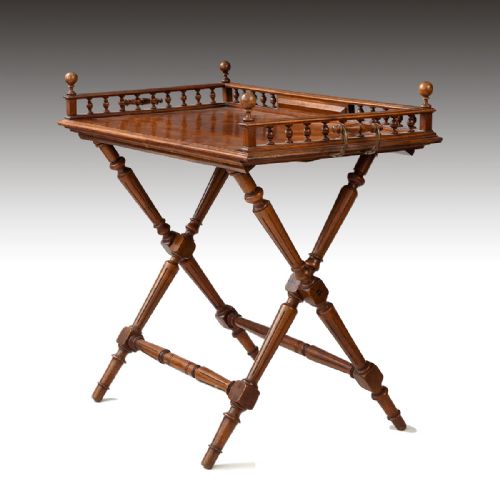
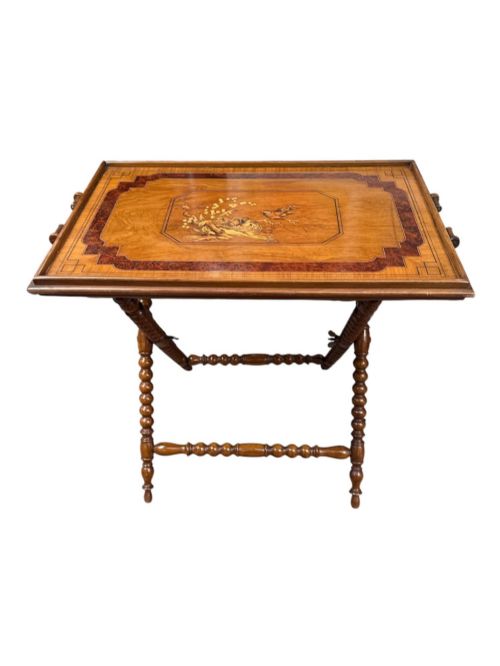
A victorian walnut tray takes several forms across this selection, appearing as folding tray tables on stands, butler trays, and desk accessories like inkstands. The timber shows the deep brown tones characteristic of the period, often enhanced by burr walnut figuring.
Most examples date from the nineteenth century, including pieces from eighteen sixty up to eighteen ninety. Makers applied various regional styles to the walnut ground, ranging from Sorrento marquetry to Black Forest carving.
Materials and construction
Makers utilised solid walnut and burr walnut veneer over secondary timbers, often selecting figured sections for the main display surfaces. Brass mounts, glass inserts, and zinc liners provided functional contrast and durability.
Surface decoration involved marquetry inlay, hand carving, and contrasting woods such as olivewood. Folding mechanisms and fitted stands relied on traditional joinery and metal hinges to support the tray tops.
Victorian Walnut Tray Retail Price Guide 2026
Typical asking prices for victorian walnut tray among the pieces listed under this phrase on Sellingantiques today, from the lower quarter to the upper quarter. They describe what is for sale here now, not the wider market.
Listings feature nineteenth-century walnut items incorporating brass, glass, and olivewood across styles from Sorrento ware to Gothic Revival.
Judging the standard
Quality rests upon the selection of the walnut timber and the precision of any marquetry or hand carving. Finely figured burr walnut and intricate Sorrento work mark out the better examples from plainer items.
The integration of original stands, brass mounts, and internal fittings dictates the overall integrity of each piece. Superior items retain their matching stands and original glass or metal components without later alterations.
The Victorian Walnut Tray Glossary
- Burr walnut
- A figured wood grain obtained from the growth growths of the walnut tree, prized for its swirling patterns. It forms the decorative surface on finer Victorian desk sets and trays.
- Marquetry
- The art of applying decorative pieces of veneer to a structure to form intricate pictorial designs. Sorrento ware pieces frequently employ this technique on walnut bases.
- Inkstand
- A fitted tray or stand designed to hold inkwells, pens, and blotting sand on a desk. Nineteenth-century examples often combine carved walnut with glass wells.
- Butler tray
- A portable wooden tray with raised sides, traditionally lifted off its stand for serving. Victorian variations often include folding stands for domestic convenience.
Victorian Walnut Tray: Frequently Asked Questions
What is a victorian walnut tray table?
A tray table combines a removable or folding wooden top with a supporting stand, designed for serving or display.
Nineteenth-century makers produced these in walnut, frequently incorporating folding mechanisms to save space when not in use.
How do I use a butler tray today?
These trays function well as low side tables, cocktail surfaces, or display stands in a modern living room.
The raised edges prevent items from sliding off, while the wooden stand keeps the surface at a convenient height.
What is Sorrento ware?
Sorrento ware refers to decorative wooden items featuring detailed marquetry and inlay from the Italian town of Sorrento.
Victorian craftsmen applied these pictorial wood mosaics onto walnut trays and occasional tables.
How do I date a walnut tray?
Dating relies on construction methods, timber selection, and style markers such as brass mounts or hand-carved details.
Pieces from the nineteenth century often show specific regional traits, like Black Forest carving or marquetry inlay.