



Victorian Walnut Fire Screen
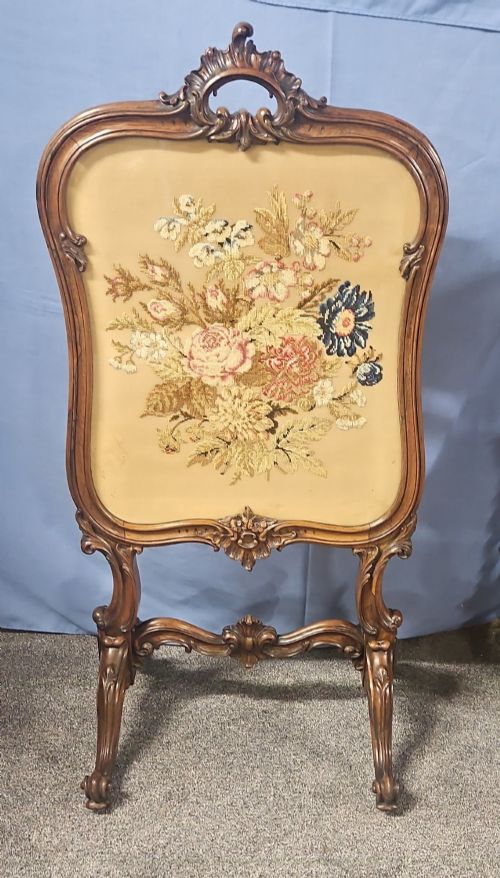
These Victorian walnut fire screens are decorative hearth furnishings that shield a room from excess heat and showcase needlework.
Victorian Walnut Fire Screen
A Victorian walnut fire screen stands near the hearth to block excessive heat from an open fire when the grate is unlit during warmer months. Buyers hunting for a Victorian walnut fire screen will encounter standing frames and pendant pole screens that position a textile panel at the centre of the room.
The pieces listed on this page span the nineteenth century, including early Victorian, Georgian, Regency, and later decades up to eighteen eighty. Forms range from carved baronial frames with needlework panels to adjustable bronze and etched glass designs.
How they were made
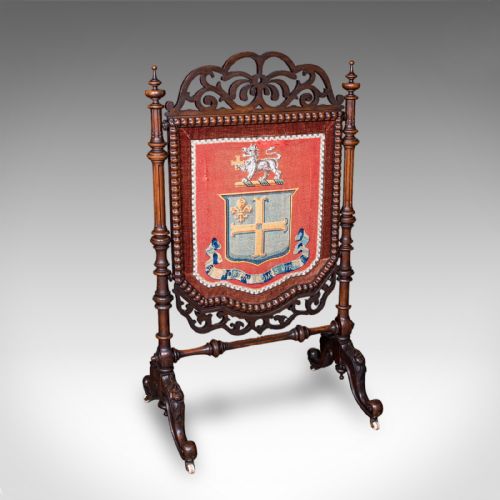
Makers shaped the structural framework using solid walnut and carved hardwood, often incorporating brass hardware or adjustable bronze mechanisms. Frames frequently support textile inserts such as woolwork, silk, hand-woven tapestry, and embroidered needlepoint panels.
Some configurations integrate etched glass within the carved wooden architecture, whilst pendant pole screens utilise vertical stands to suspend decorative panels at adjustable heights.
Victorian Walnut Fire Screen Retail Price Guide 2026
Typical asking prices for victorian walnut fire screen among the pieces listed under this phrase on Sellingantiques today, from the lower quarter to the upper quarter. They describe what is for sale here now, not the wider market.
Some screens feature adjustable doors and etched glass, ensuring your guests can peer through the hearth without singeing their eyebrows.
What varies in quality
Quality rests upon the execution of the carved walnut framework and the intricacy of the needlepoint, woolwork, or tapestry panel. Finer examples display meticulous hand-woven pictorial details and robust carved hardwood construction rather than simpler decoration.
The presence of specialised elements, such as adjustable doors, etched glass, or armorial embroidery, elevates the sophistication of an individual fireside screen.
The Victorian Walnut Fire Screen Glossary
- Walnut
- A dark hardwood utilised for the structural frames of nineteenth-century hearth furnishings. It provides a stable base for detailed carving.
- Needlepoint
- A type of canvas work embroidery found on the textile panels of these screens. It often depicts pastoral scenes or armorial motifs.
- Pole screen
- A standing fireside screen featuring a vertically adjustable panel mounted on a central pillar and base. This design allows the user to redirect radiant heat.
- Tapestry
- A form of textile art hand-woven with pictorial designs. These panels serve as the primary decorative shield within the wooden frame.
Victorian Walnut Fire Screen: Frequently Asked Questions
How were fire screens used?
Fire screens were positioned in front of domestic hearths when fires were unlit to protect occupants from lingering soot drafts and radiant warmth. They also served to shield delicate facial complexions from the intense heat of a dying coal fire.
In larger reception rooms, screens doubled as decorative furniture pieces that showcased domestic needlework skills. The adjustable panels allowed homeowners to control the height of the shield relative to the seating position.
What materials make up these screens?
The structural frames utilise solid walnut and carved hardwood, frequently complemented by brass fittings or bronze elements. Supporting stands often incorporate turned wooden pedestals and tripod bases.
The central panels feature textiles such as woolwork, silk, and hand-woven tapestry needlepoint. Some nineteenth-century variants replace fabric with etched glass panels and adjustable doors.
How do I identify a pole screen?
A pole screen is distinguished by a vertical wooden pillar supported by a sturdy base, typically a tripod foot. The decorative textile panel mounts onto a sliding collar that moves up and down the pole.
This design contrasts with fixed standing frames, allowing the user to adjust the height of the embroidered panel. They were typically placed beside armchairs rather than directly against the fireplace mantel.