




Victorian Walnut Escritoire
These walnut escritoire pieces, spanning the Victorian period and beyond, combine fine timbers and practical writing surfaces for daily correspondence.
Victorian Walnut Escritoire
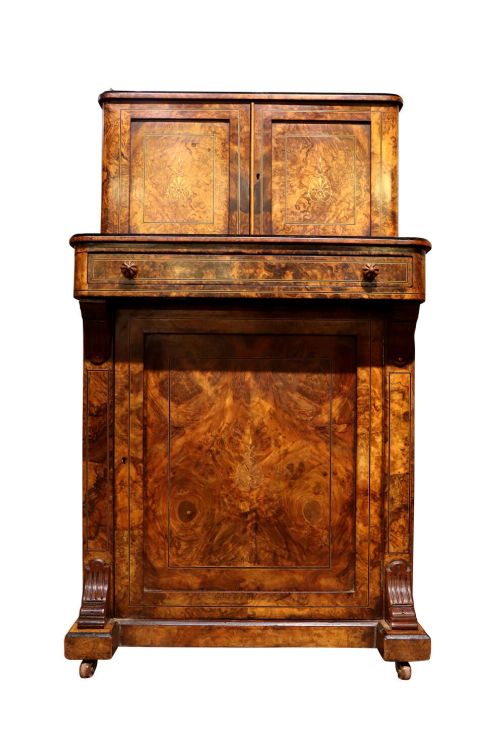
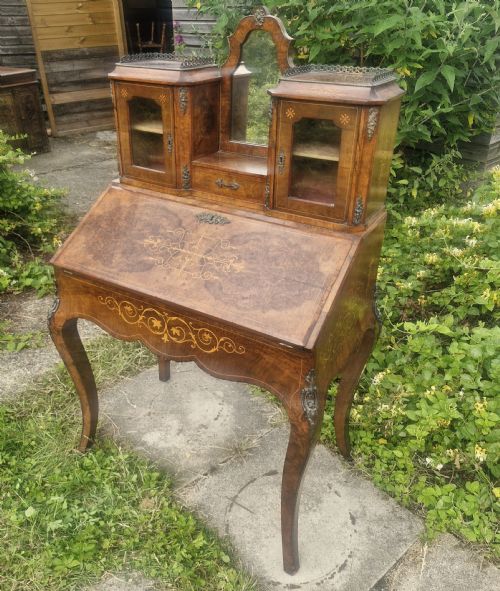
A Victorian walnut escritoire sits firmly within the broader category of nineteenth-century writing furniture, appearing here in forms such as the bureau de dame, bonheur du jour, and Davenport desk. These pieces serve primarily for correspondence and private paperwork, offering fitted interiors alongside a dedicated writing surface. Buyers searching for a Victorian walnut escritoire encounter variations shaped by French revival influences and traditional cabinet-making.
The materials recorded in these listings point directly to burr walnut, satinwood, and rosewood veneers, frequently set with brass or marquetry inlay. Cabinets span from the mid-nineteenth century through to the Arts and Crafts period, reflecting changing domestic tastes in writing furniture. Smaller lady's writing desks and writing cabinets dominate the forms, aligning with nineteenth-century interior scales.
How these pieces were constructed
Cabinet-makers relied on walnut and burr walnut timbers, often applied as finely figured veneers over secondary woods to create decorative grain patterns. Marquetry inlay, brass mounts, and satinwood banding provide surface enrichment across the desk fronts and writing slopes.
Internal compartments incorporate leather, baize, and glass elements to line writing surfaces and display sections. Structural framing makes use of traditional joinery techniques suited to nineteenth-century cabinet-making workshops.
Victorian Walnut Escritoire Retail Price Guide 2026
Typical asking prices for victorian walnut escritoire among the pieces listed under this phrase on Sellingantiques today, from the lower quarter to the upper quarter. They describe what is for sale here now, not the wider market.
Listings incorporate walnut, burr walnut, and satinwood across writing desks, bureaux, and bonheur du jour forms.
Judging quality in walnut writing furniture
Quality rests upon the selection and matching of the burr walnut veneer, where symmetrical grain patterns indicate superior timber choice. The crispness of the marquetry inlay and the precision of brass fitments separate standard production pieces from finer workshop outputs.
Interior organisation and the retention of original writing materials, such as leather or baize surfaces, influence the overall integrity of the escritoire. The refinement of secondary timbers and the execution of carved or ebonised details further distinguish better examples.
Gregory & Co. of London
The Victorian Walnut Escritoire Glossary
- Burr walnut
- A figured timber harvested from walnut tree growths, prized for its swirling, highly decorative grain patterns. It forms the primary visual surface on many nineteenth-century writing cabinets.
- Bonheur du jour
- A light lady's writing desk featuring a small cabinet or set of shelves above the main writing surface. The form gained popularity in France before spreading to British cabinet-makers.
- Escritoire
- A writing cabinet or desk fitted with a fall-front or slant-lid enclosing drawers and pigeonholes. The term encompasses various compact writing formats from the Georgian and Victorian eras.
- Marquetry
- Decorative patterns formed by the precise fitting of thin veneer pieces into a contrasting background timber. Floral and geometric motifs appear frequently on nineteenth-century desks.
- Davenport
- A compact desk featuring a sloping writing surface above a pedestal of drawers. The design originated in the early nineteenth century and remained popular throughout the Victorian period.
Victorian Walnut Escritoire: Frequently Asked Questions
What is a Victorian walnut escritoire?
A Victorian walnut escritoire is a compact writing cabinet or desk produced during the nineteenth century, typically veneered in burr walnut.
These pieces feature fitted internal compartments and drop-front or sloping writing surfaces designed for private correspondence.
How were these desks used?
Owners utilised these cabinets for writing letters, storing stationery, and keeping private records within domestic sitting rooms or bedrooms.
The fitted interiors and small drawers kept writing implements and documents organised.
How do I identify the period?
Dating relies on timber selection, decorative styles such as French revival or Arts and Crafts, and structural hardware.
Listings span from the Georgian era through to the late nineteenth century, showing shifts in veneer work and inlay.
What materials are typical?
Walnut and burr walnut predominate, frequently enhanced with marquetry inlay, brass fittings, and satinwood banding.
Writing surfaces often retain leather, baize, or glass components set within the timber framework.