



Victorian Walnut Dressing Box
A Victorian walnut dressing box is a fitted repository of personal vanity, prized for its richly grained timber and intricate brass or mother-of-pearl mounts.
Victorian Walnut Dressing Box
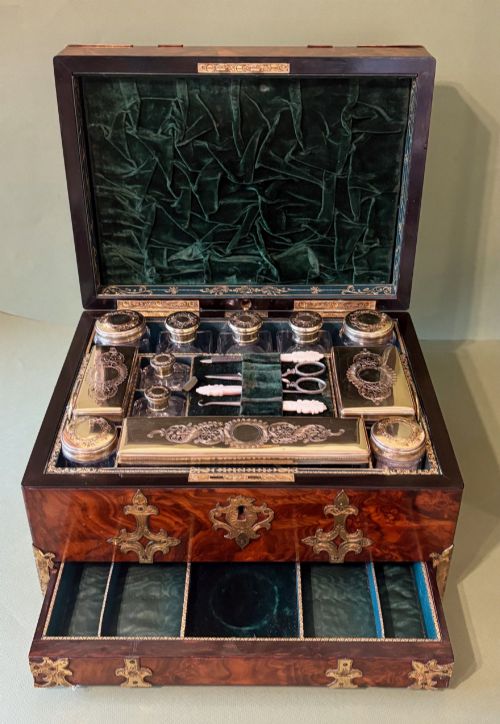
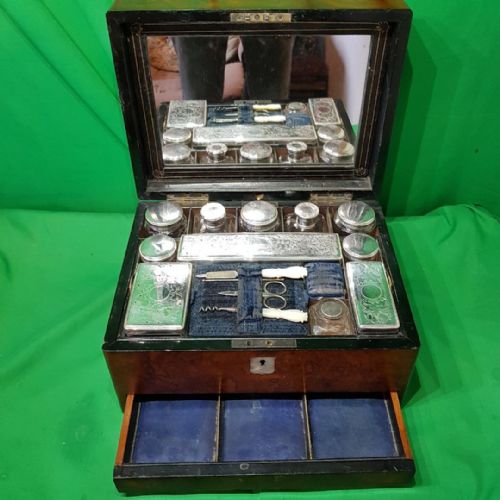
A Victorian walnut dressing box is primarily a desktop or travel case designed to hold trinkets, jewellery, and personal grooming implements. You will most frequently encounter burr walnut examples featuring fitted interiors, lift-out trays, and integrated mirrors suited to a lady's dressing table.
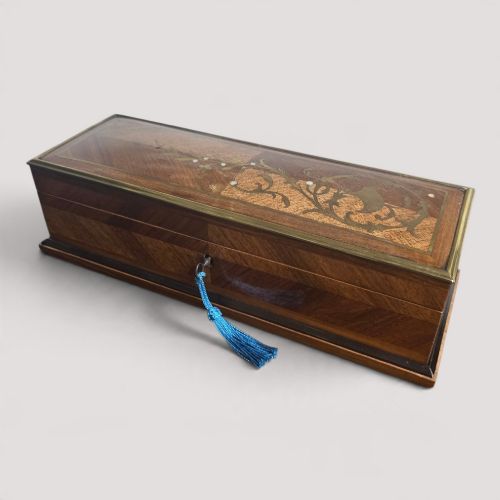
Beyond standard vanity cases, the selection encompasses related forms such as scent caskets, glove boxes, and swing dressing table mirrors. These objects span the nineteenth century, with particular concentration in the decades around eighteen eighty.
While the dominant aesthetic is Victorian, the materials and decorative motifs occasionally draw upon earlier Georgian influences or the Queen Anne taste. They function today as decorative storage pieces for modern jewellery and keepsakes.
How they were made
Carpenters built these boxes using solid walnut or applied highly figured burr walnut veneers over secondary timbers to achieve rich surface patterns. Marquetry, parquetry, and Tunbridge Ware decoration demonstrate skilled woodworking techniques of the period.
Metalwork played a structural and decorative role, with heavy brass banding, ormolu mounts, and pearl inlay embedded into the timber carcasses. Fitted interiors frequently combined glass bottles with silver or plated mounts and velvet-lined compartments.
Victorian Walnut Dressing Box Retail Price Guide 2026
Typical asking prices for victorian walnut dressing box among the pieces listed under this phrase on Sellingantiques today, from the lower quarter to the upper quarter. They describe what is for sale here now, not the wider market.
Some boxes conceal secret compartments beneath false bottoms designed to outwit curious guests.
What varies in quality
The sophistication of the internal fitments dictates much of the distinction between standard and superior pieces. Boxes containing original silver-topped glass bottles, secret drawers, and bevelled glass drop-front doors represent the upper tier of production.
The choice of timber and precision of external embellishment further separate ordinary examples from exceptional ones. Richly figured burr walnut veneers paired with flawless brass binding or intricate marquetry indicate higher workshop standards.
Parkins and Grotto
The Victorian Walnut Dressing Box Glossary
- Burr walnut
- A timber harvested from the wart-like growths on walnut trees, yielding highly swirled and mottled grain patterns. It was sliced into thin veneers for decorative furniture and boxes.
- Ormolu
- Gilded bronze or brass mounts applied to the exterior of boxes for decorative and protective purposes. The technique involves treating metal with a mercury-gold amalgam.
- Tunbridge Ware
- Small wooden boxes and objects decorated with intricate mosaic patterns made from tiny wood blocks of various natural colours. This meticulous craft originated in Kent during the nineteenth century.
- Parquetry
- Geometric mosaic woodwork formed by gluing small triangular or polygonal pieces of veneer onto a surface. It creates repeating patterns such as cubes or chequers.
- Bevelled glass
- Mirror or window glass with edges cut and polished at an angle. This treatment adds a refined optical border to the glass.
Victorian Walnut Dressing Box: Frequently Asked Questions
What is inside a dressing box?
These boxes typically house a fitted interior with velvet-lined compartments, lift-out trays, and sometimes secret drawers. Many also contain original glass jars, scent bottles with silver mounts, and folding mirrors.
Designed for personal grooming and jewellery storage, the internal layout ensured that personal effects remained organised during travel or upon a dressing table.
How do I date a walnut box?
Dating relies on stylistic clues, hardware construction, and materials such as brass mounts or mother-of-pearl inlay. Mid-century examples often feature robust brass banding, while later Victorian pieces might incorporate parquetry or bevelled glass.
Makers' marks or stamps inside the lid can sometimes provide a more precise timeline or identify the retailer.
Can I use these for modern jewellery?
These boxes serve as practical and decorative containers for contemporary rings, necklaces, and small accessories. The velvet trays and segmented compartments protect delicate items from scratching.
Placing them on a dressing table or chest of drawers allows you to integrate antique craftsmanship into daily use.
What is the difference between a vanity case and a dressing box?
While the terms often overlap, a vanity case generally emphasises travel and external brass mounts, whereas a dressing box frequently focuses on static table use with internal mirrors and compartments.
Both forms share similar construction methods using walnut timbers and luxury fitments tailored to nineteenth-century habits.