





Victorian Walnut Desk Castors
These Victorian walnut desk castors bring solid nineteenth-century timber and brass movement to your workspace, giving period writing furniture the smooth roll it needs.
Victorian Walnut Desk Castors
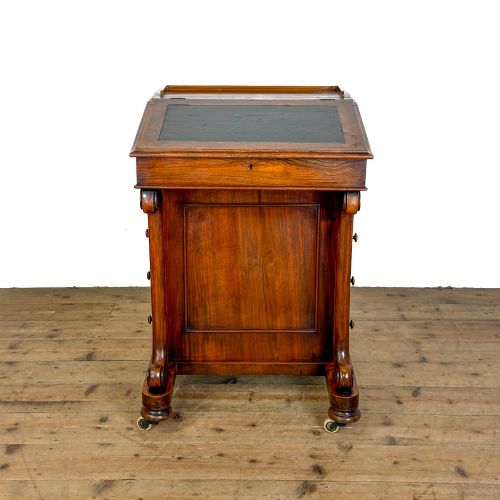
Victorian walnut desk castors anchor nineteenth-century writing furniture, appearing on Davenport desks, library tables, and partners writing tables across the period. You are most likely to encounter these fittings supporting walnut or burr walnut tables and desks from the nineteenth century.
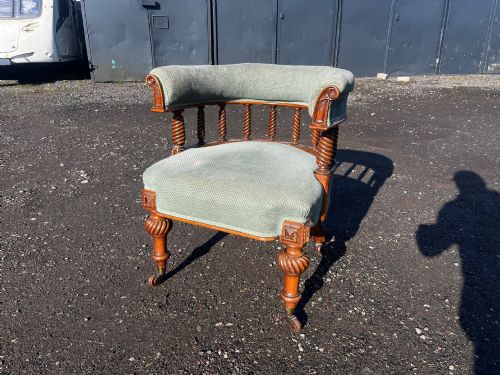
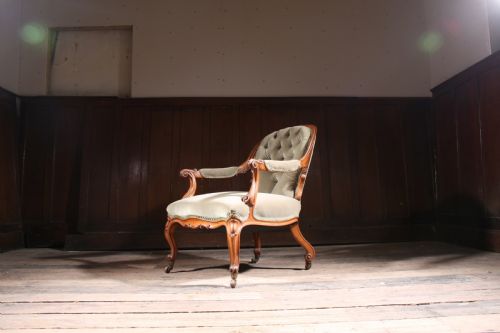
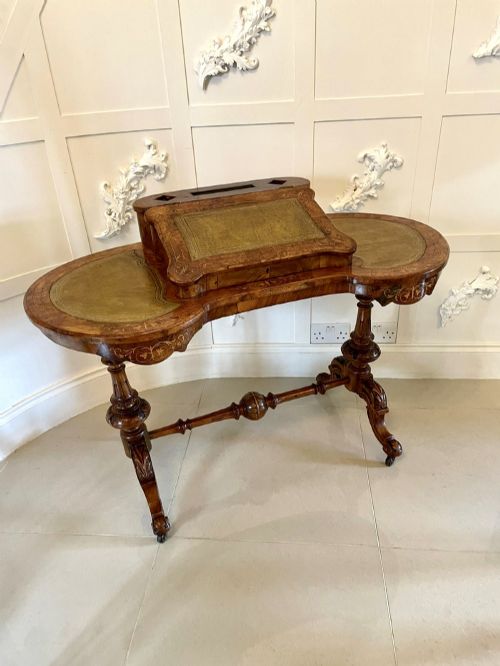
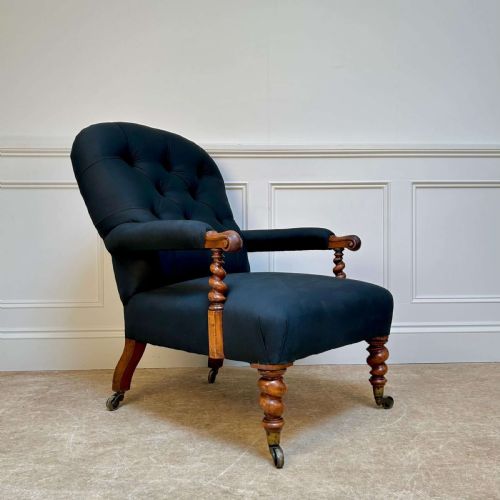
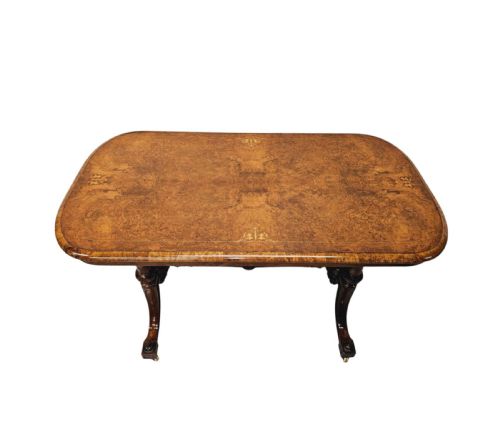
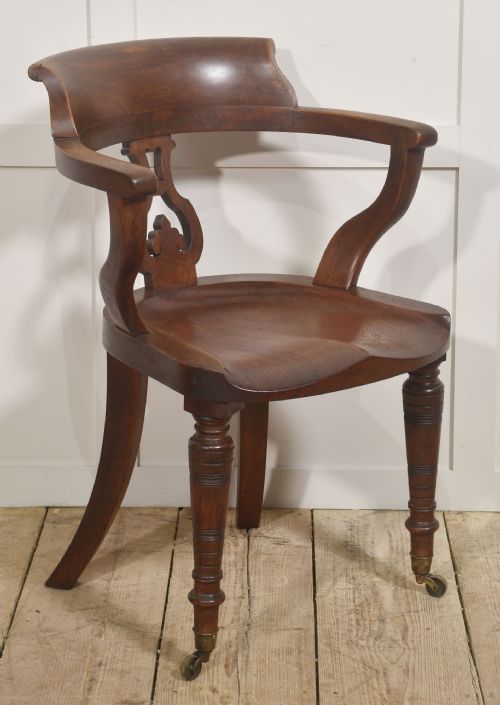
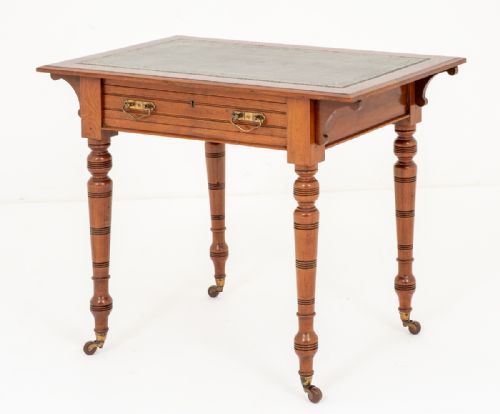
The listings show these castors associated with diverse walnut forms including writing desks, open armchairs, work tables, and centre tables. They provide mobility to heavy timber furniture designed for studies, libraries, and parlours.
Materials and Construction
Makers combined rich walnut and burr walnut timbers with robust brass for the wheel and socket mechanisms. Wood inlay and leather or velvet inserts frequently complement the primary timber structure of the associated desks and tables.
Carpenters shaped the walnut frames using traditional nineteenth-century joinery techniques, embedding metal castor fittings securely into the legs of heavy writing desks and library tables.
Victorian Walnut Desk Castors Retail Price Guide 2026
Typical asking prices for victorian walnut desk castors among the pieces listed under this phrase on Sellingantiques today, from the lower quarter to the upper quarter. They describe what is for sale here now, not the wider market.
Some nineteenth-century tables were built so heavily that even with brass castors, moving them required a stout heart and a willing footman.
Quality and Craftsmanship
The distinction between standard examples and superior pieces rests on the selection of figured burr walnut veneers and the precision of the wood inlay. Finer pieces demonstrate meticulous attention to timber matching across large writing surfaces and table tops.
The integration of the brass castor hardware into the walnut leg reveals the maker's hand, where tight fitting sockets and smoothly turning wheels distinguish higher grade library tables and desks from simpler utilitarian pieces.
Hindley & Sons·Waring & Gillow
The Victorian Walnut Desk Castors Glossary
- Castor
- A small wheel fixed to the bottom of a piece of furniture to allow easy movement. These brass and metal fittings are essential components for heavy nineteenth-century library tables.
- Burr Walnut
- A specialised wood veneer taken from the warted growth of a walnut tree. It produces highly figured, swirling patterns prized on Victorian writing desks and tables.
- Partners Desk
- A large double-sided writing table designed for two people to work opposite one another. These substantial pieces frequently require sturdy castors for repositioning.
- Davenport
- A compact Victorian writing desk featuring a sloping lid and side drawers. Many examples rest upon small wooden bases equipped with castors.
- Inlay
- A decorative technique where contrasting materials are inserted into recesses in the wood. This method adorns many of the walnut tables and desks seen in the listings.
Victorian Walnut Desk Castors: Frequently Asked Questions
What are victorian walnut desk castors used for?
These fittings attach to the base of nineteenth-century walnut desks and library tables to allow smooth movement across carpets and wooden floors. They support heavy timber writing furniture without damaging floor surfaces.
Historically, movable writing tables needed to shift position within a library or study for better light throughout the day. The castors provided the necessary mobility for these substantial pieces.
How do I identify a victorian walnut piece?
Look for dense, dark walnut timber and rich burr walnut veneers combined with nineteenth-century cabinetmaking methods. Many pieces also feature brass hardware and leather inserts.
The listings demonstrate that nineteenth-century desks and tables often incorporate intricate wood inlay alongside traditional structural joinery characteristic of the Victorian era.
Can I use these on modern furniture?
Antique castors are typically scaled and engineered for heavy nineteenth-century timber frames like Davenport desks and partners tables. Fitting them to modern pieces requires matching the shaft and socket dimensions carefully.
Because original castors were made to bear the weight of solid walnut and brass assemblies, checking the pin size ensures a secure fit for any restoration project.
How do I care for walnut and brass?
Keep walnut furniture away from direct sunlight and extreme humidity changes to prevent the wood and burr veneers from drying out. Periodic polishing maintains the natural lustre of the timber.
Brass castor wheels and mounts benefit from gentle cleaning to remove dust and prevent tarnishing without disturbing the surrounding walnut wood.