




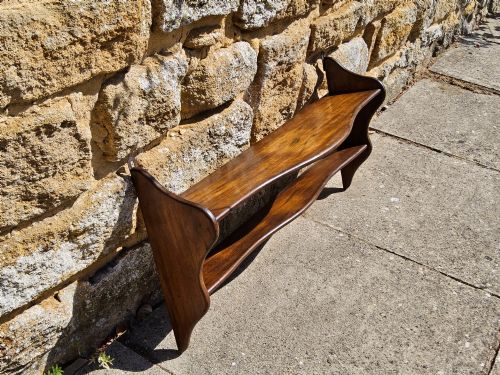
Victorian Wall Shelving
Victorian wall shelving organises domestic space with timber tiers and carved brackets designed to display books and ornaments.
Victorian Wall Shelving
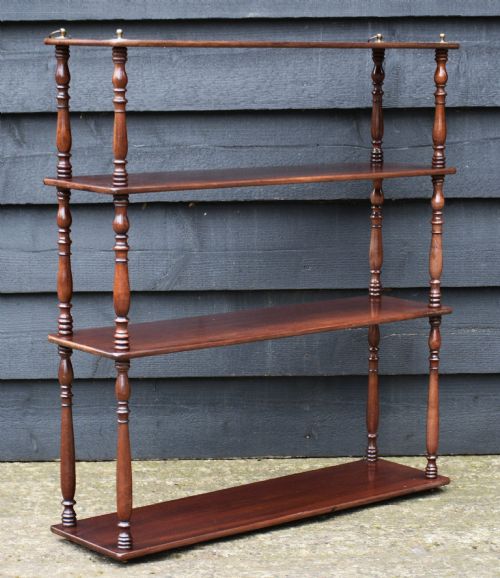
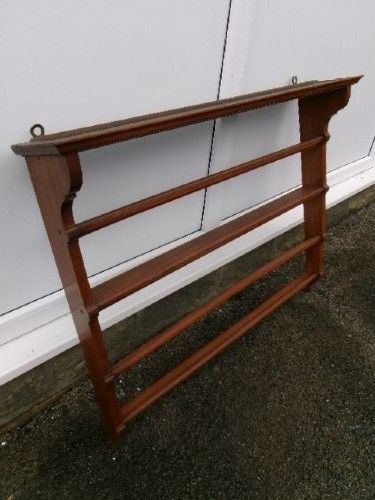
Victorian wall shelving spans open hanging racks, corner brackets, and small cabinets mounted directly to rooms. These pieces served practical display purposes in hallways, bedrooms, and parlours during the nineteenth century.
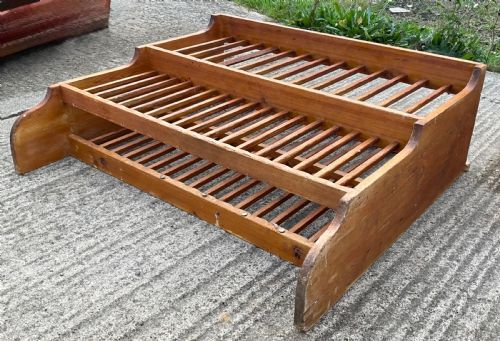
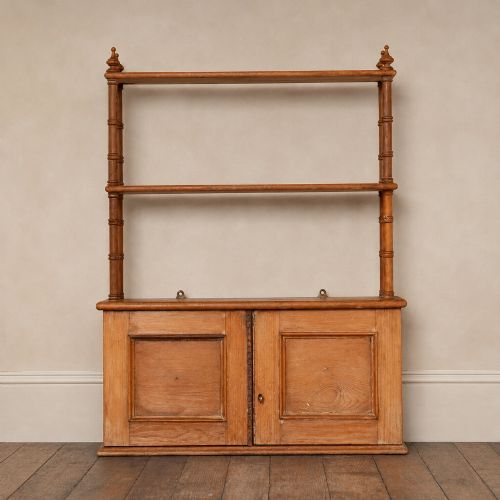
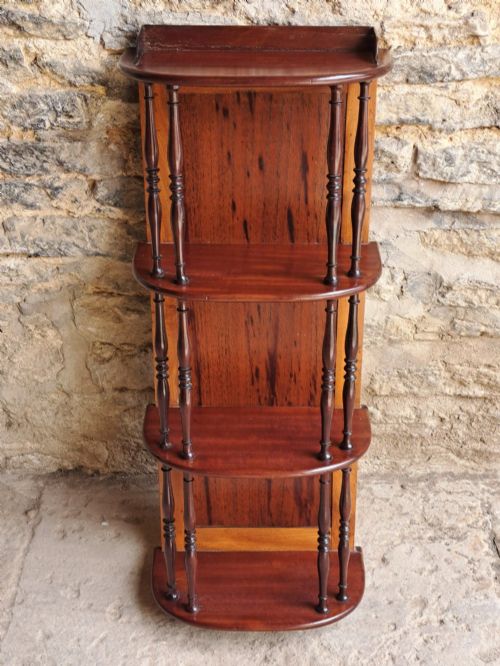
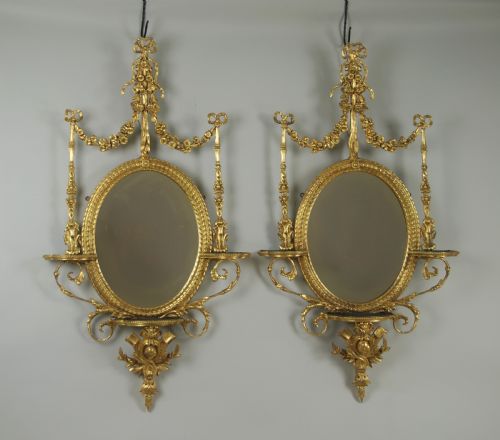
Mahogany and pine dominate the selection, appearing in forms ranging from plain kitchen racks to elaborate inlaid French walnut and satin birch tiers. Pieces from the period often combine display surfaces with small cupboards or mirrors.
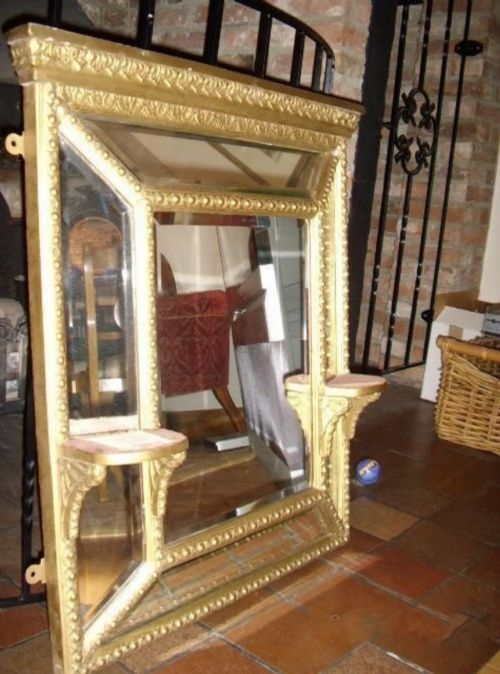
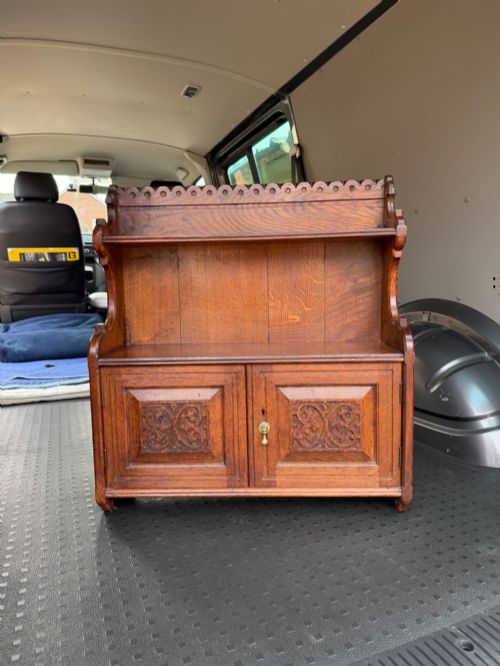
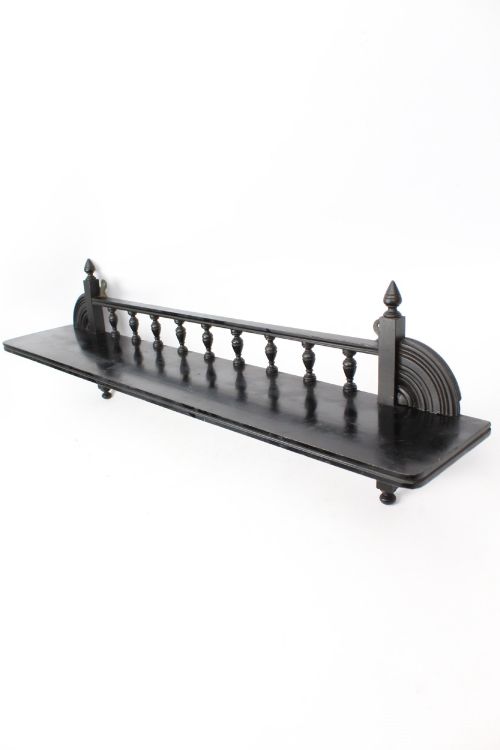
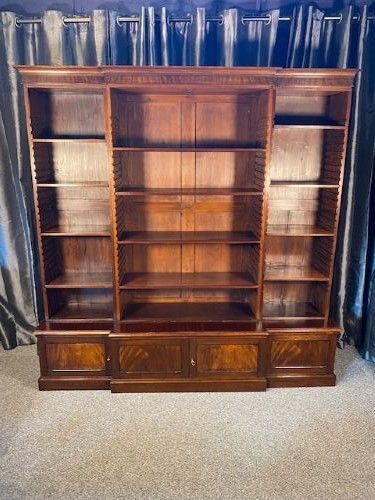
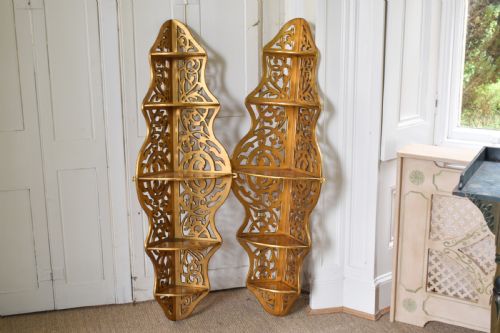
Design vocabulary stretches from austere Gothic Revival oak to ornamental Rococo Revival giltwood and Aesthetic Movement ebonised frameworks. Smaller hanging formats sit alongside taller bookcase units adapted for wall mounting.
Materials and construction
Cabinet makers utilised dense hardwoods like mahogany and walnut alongside softer timbers such as pine and oak for structural uprights and shelves. Joinery relied on mortise and tenon joints or simple screwed brackets to bear the weight of books and ceramics.
Surface ornamentation involved decorative veneers, hand carving, ebonising, and applied gesso or gilt details. Brass fittings, mirrors, and ceramic elements frequently integrated into the wooden framework for added visual effect.
Victorian Wall Shelving Retail Price Guide 2026
Typical asking prices for victorian wall shelving among the pieces listed under this phrase on Sellingantiques today, from the lower quarter to the upper quarter. They describe what is for sale here now, not the wider market.
Mahogany, walnut, and pine are the most frequently recorded timbers across nineteenth-century wall shelving listings.
Standards of manufacture
Quality rests in the selection of timber grain, the crispness of carved wooden details, and the integrity of the structural joints. Superior examples employ choice veneers, finely turned supports, and robust wall fixings.
Lesser items show simpler construction methods with plain pine or factory-cut mouldings intended for utilitarian service. The presence of delicate marquetry inlay or specialised finishes distinguishes higher workshops from standard domestic joinery.
Cottier and Co·George Edmund Street·Meissen
The Victorian Wall Shelving Glossary
- Giltwood
- Timber carved and coated with gold leaf or metallic paint. This finish catches candlelight and natural illumination in formal rooms.
- Bracket
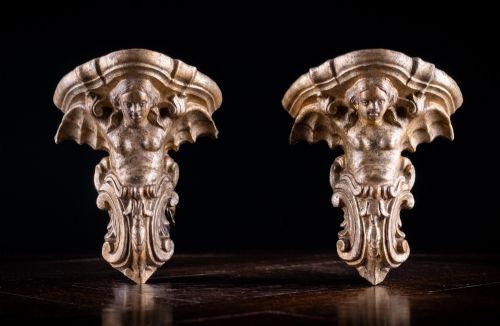
- A supporting projection from a wall that holds a shelf or ornament. These structural elements often display elaborate carvings or cast ornamentation.
- Ebonised
- Wood stained or painted black to imitate ebony. This technique gained popularity during the Aesthetic Movement.
- Marquetry
- Decorative veneer work forming patterns using various coloured woods. Craftsmen applied these precise geometric or floral motifs to cabinet doors and shelf backs.
- Corbel
- A structural piece of stone, wood, or porcelain jutting from a wall to carry a weight. In display furniture, these often take figurative forms.
Victorian Wall Shelving: Frequently Asked Questions
How do I hang antique wall shelves securely?
These pieces require solid wall fixings matched to the weight of the timber and intended load. Historic mounting points should be inspected and supplemented with modern concealed brackets if necessary.
Distributing weight evenly across the tiers prevents structural strain on antique joints and prevents the shelf from pulling away from plaster.
Were these shelves meant for books or ornaments?
Nineteenth-century wall shelving served both functions depending on depth and robust construction. Sturdier oak and mahogany formats held volumes, while lighter giltwood and mirrored tiers displayed ceramics.
Shallower ledges accommodated cabinet plates and small trinkets rather than heavy reading matter.
How can I date Victorian wall shelving?
Dating relies on timber choice, fastening methods, and stylistic cues such as Gothic revival carving or Aesthetic Movement ebonising. Nineteenth-century pieces often show hand-cut joinery marks and period screw types.
Comparing the decorative vocabulary with documented furniture styles helps narrow down the decade of manufacture.
Can I place these shelves in a modern room?
These wooden fixtures provide vertical storage and display space that suits contemporary interiors. Their compact footprint works well in hallways, kitchens, and living areas where floor space is limited.
Mixing period timber tones with modern decor adds texture and practical surface area to plain walls.