






Victorian Upholstered Vanity Chair
A victorian upholstered vanity chair offers low-slung comfort and period charm for dressing rooms, drawing its character from carved timber frames and rich textile coverings.
Victorian Upholstered Vanity Chair
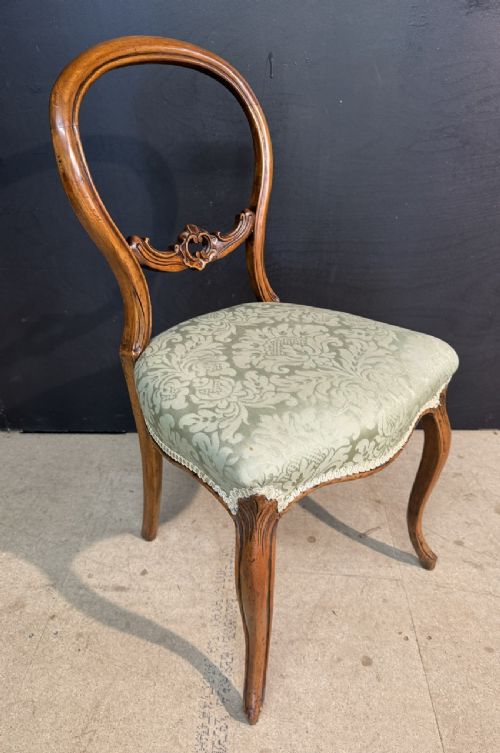
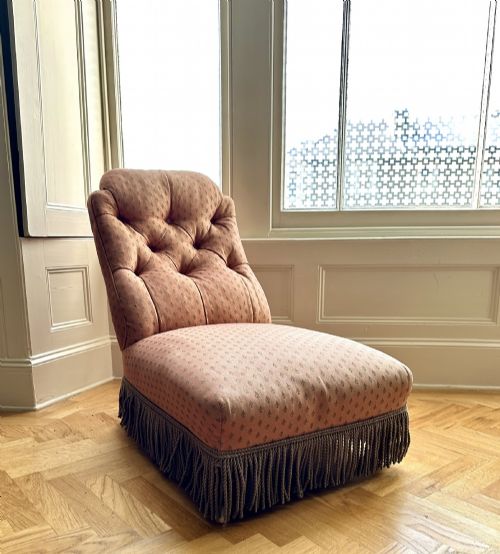
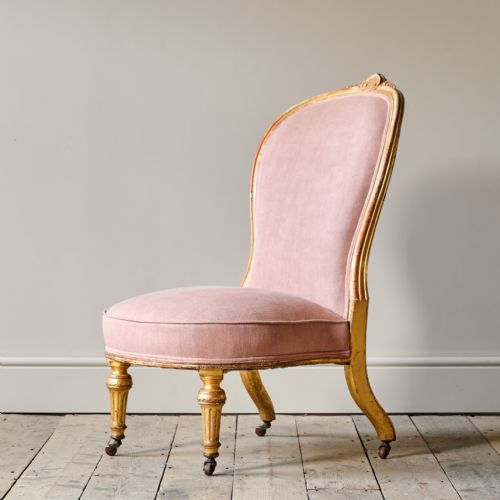
A victorian upholstered vanity chair encompasses a diverse group of low seating designed for dressing tables, bedrooms, and music rooms during the nineteenth century. Buyers searching this phrase most frequently encounter low-backed slipper chairs, nursing chairs, and dressing table stools supported by turned or cabriole legs.
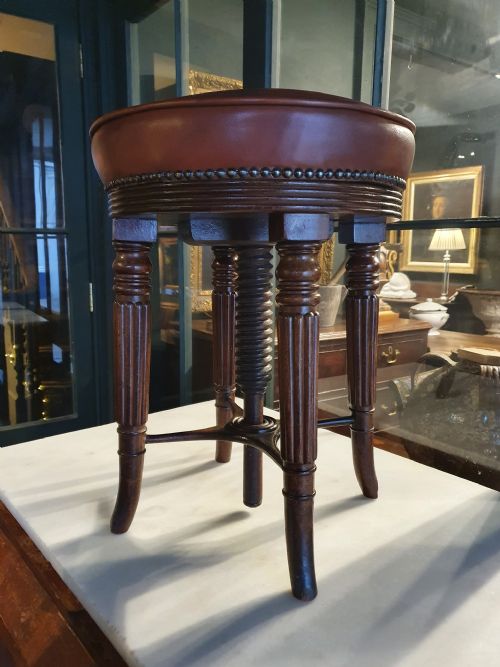
The selection ranges from mahogany and rosewood dressing table stools to revolving piano stools and walnut bedroom chairs. Styles stretch from Victorian Rococo Revival and Sheraton Revival to earlier Georgian influences adapted for nineteenth-century interiors.
Makers and workshops of the period utilised various woods including oak, mahogany, walnut, and rosewood, often pairing timber frames with fresh fabric, velvet, or vintage linen upholstery.
Judgments of quality
Quality rests upon the crispness of hand-carved woodwork on the frame and the structural integrity of timber joints in legs and backs. Rosewood and walnut examples with well-defined cabriole legs or functional rise-and-fall mechanisms represent finer production standards.
The choice of covering material and the fidelity of restoration work also divide standard examples from superior pieces. Original upholstery and hand-carved walnut backs distinguish the most notable specimens.
One revolving piano stool includes a built-in music rack beneath the seat for storing sheet music.
Lamb of Manchester·James Shoolbred
The Victorian Upholstered Vanity Chair Glossary
- Cabriole leg
- A furniture leg that curves out and then in, resembling the leg of an animal. This form appears frequently on Victorian stools and chairs.
- Slipper chair
- A low-seated upholstered chair originally designed for bedrooms. These pieces allow easy sitting while putting on shoes.
- Nursing chair
- A low upholstered chair designed to give comfort while holding an infant. They often feature sprung seats and padded backs.
- Revolving piano stool
- A seat with a top that spins to adjust height for keyboard players. Many examples use wooden screw mechanisms.
- Rise and fall
- A mechanical action allowing the seat height to be adjusted. These mechanisms appear on music and dressing table stools.
Victorian Upholstered Vanity Chair: Frequently Asked Questions
What is a victorian upholstered vanity chair used for?
These low seats function primarily in bedrooms and dressing areas where a compact profile is required. They provide comfortable seating next to dressing tables and mirrors.
Historically, specific forms also served musicians at pianos or mothers nursing infants. Today, they often act as accent seating in living spaces.
How do I date a victorian upholstered vanity chair?
Dating relies on timber choices, leg styles, and structural markers found across nineteenth-century examples. Rosewood and walnut frames with cabriole legs frequently point towards mid-century production.
Later Victorian pieces often incorporate machine turnings or different revival styles. Comparing leg profiles and wood types helps narrow down the decade.
Are these chairs suitable for daily use?
Most pieces handle everyday sitting if the underlying timber frame remains sound. Many survive from the nineteenth century with restored joints and fresh upholstery.
Buyers should check the stability of the legs and frame before placing the chair in high-traffic areas. Professional reupholstery ensures modern support.
What woods were used for these chairs?
Cabinetmakers utilised dense hardwoods including mahogany, walnut, and rosewood for sturdy frames. Oak also appears on certain dressing table stools.
Exotic woods like rosewood indicate finer production standards, while oak and mahogany provide robust everyday framing.