
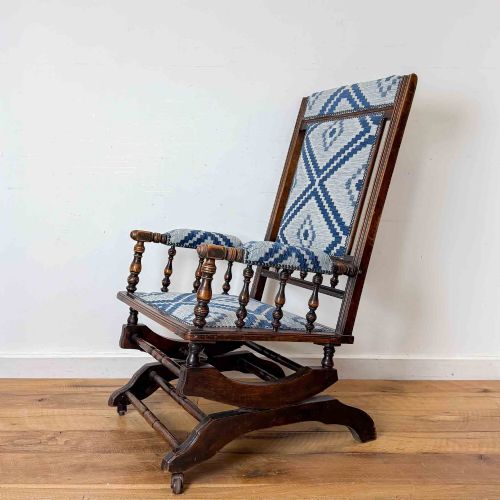


Victorian Upholstered Rocker
A victorian upholstered rocker brings immediate comfort and steady motion to any room, offering the classic charm of nineteenth-century seating.
Victorian Upholstered Rocker
When searching for a victorian upholstered rocker, you encounter nineteenth-century rocking chairs built for relaxation and everyday use. These seating forms appear across Victorian, Edwardian, and Shaker styles, reflecting the domestic habits of the period.
You are most likely to meet mahogany, walnut, fruitwood, and dark hardwood versions on this page, often fitted with fabric, leather, or woven seat coverings. Some examples cater to children, whilst others provide low-backed nursing seats.
The materials and frames span the nineteenth century, extending into nineteen hundred and twenty, showcasing regional American influences alongside traditional British and European cabinetmaking.
How they were made
Makers constructed these rocking chairs using solid timbers such as mahogany, walnut, beechwood, and fruitwood, paired with steel components where structural movement required extra reinforcement. Ebonised finishes and dark hardwoods also appear frequently among the surviving frames.
Upholstery techniques involved durable woven fabrics and leather pinned securely to the wooden framework, occasionally featuring traditional button-back padding on low rocking chairs designed for nurseries.
The listings here include 19th Century, Victorian, Edwardian, and 1920 periods.
What varies in quality
The distinction between standard and superior pieces rests on the choice of timber and the precision of the turning and joinery. Finer examples utilise dense hardwoods like mahogany and walnut, whereas simpler utilitarian items rely on fruitwood or beechwood.
The integrity of the original upholstery and the subtlety of the frame's carved or ebonised details separate ordinary seating from more refined specimens of the period.
The Victorian Upholstered Rocker Glossary
- Mahogany
- A dense, reddish-brown tropical hardwood prized by nineteenth-century cabinetmakers for its stability and fine grain. It lends strength to the structural frame of a rocking chair.
- Ebonised
- Wood treated with a dark stain or finish to imitate expensive ebony. This decorative technique was popular for nineteenth-century seating frames.
- Nursing chair
- A low-seated chair designed for feeding infants. These pieces often feature upholstered backs to provide comfort during long periods of use.
- Bentwood
- Wood heated and bent into curved structural shapes. It creates lightweight and resilient frames for rocking chairs.
Victorian Upholstered Rocker: Frequently Asked Questions
How do I date a rocking chair?
Dating relies on examining the timber species, construction methods, and stylistic cues present in the frame. Nineteenth-century examples often display hand-turned components and traditional joinery.
Changes in upholstery styles and materials also help narrow down the period of manufacture, moving from mid-century leather seats to later Edwardian button-backed designs.
What is American style rocking furniture?
American style rocking chairs feature distinct mechanical or structural proportions developed during the nineteenth century. These forms were imported or copied widely in Britain.
They often incorporate sprung mechanisms or deep seat profiles designed for enhanced relaxation.
How do I care for leather seats?
Leather seats require regular gentle cleaning and occasional conditioning to prevent the hide from drying out. Keeping the material away from direct heat sources preserves its suppleness.
Avoiding harsh chemical cleaners ensures the historic finish remains undamaged over time.