
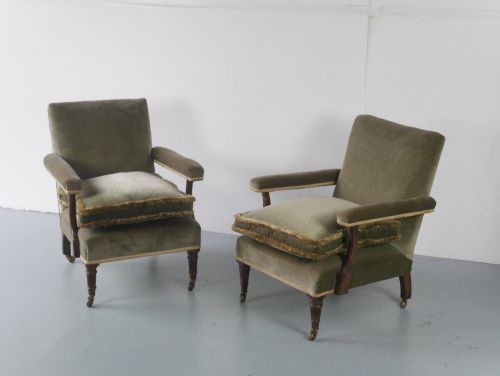
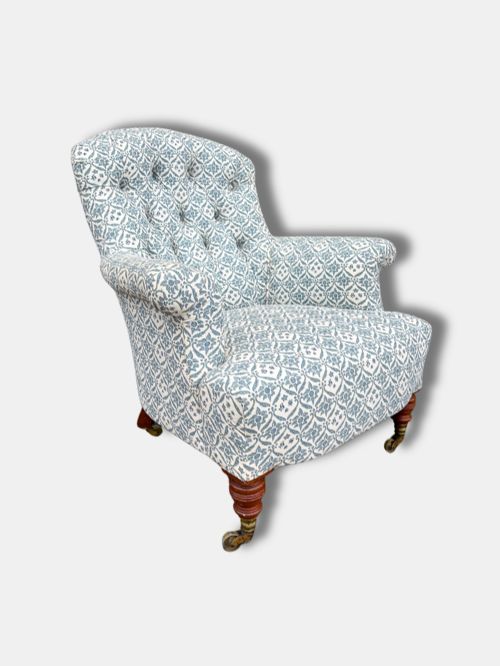
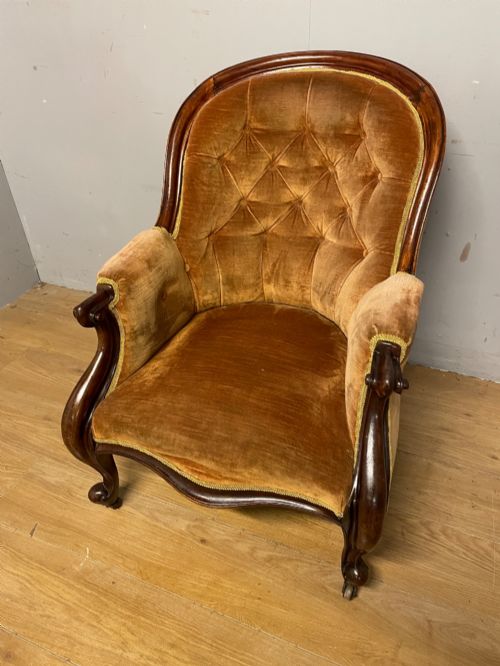
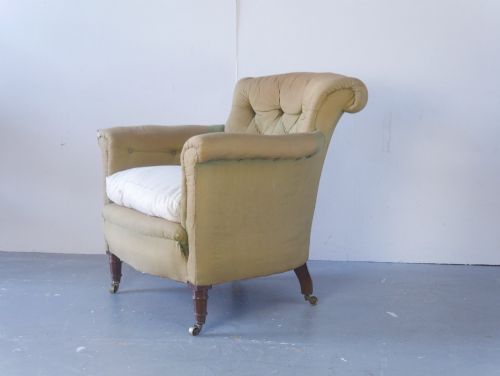

Victorian Upholstered Club Chairs
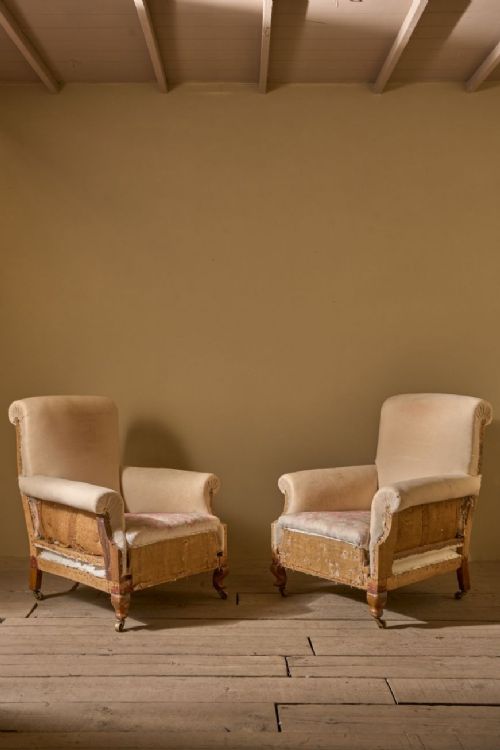
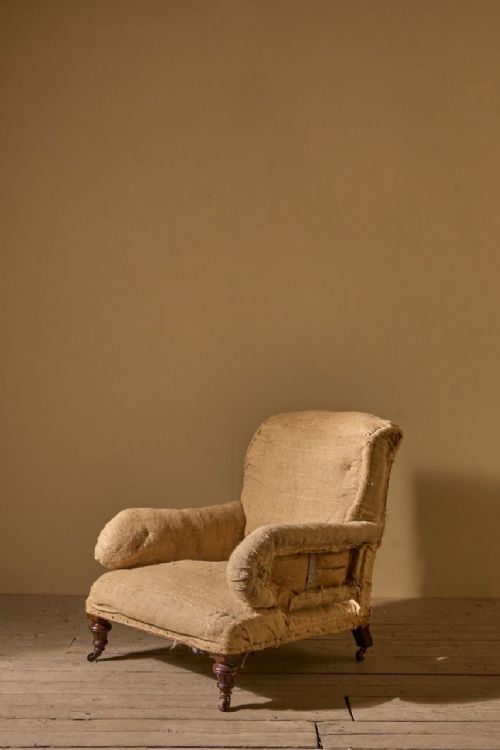
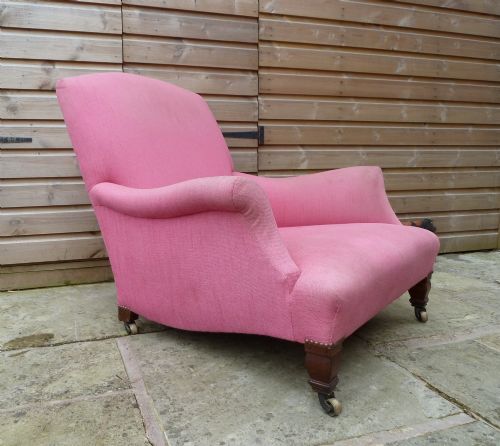
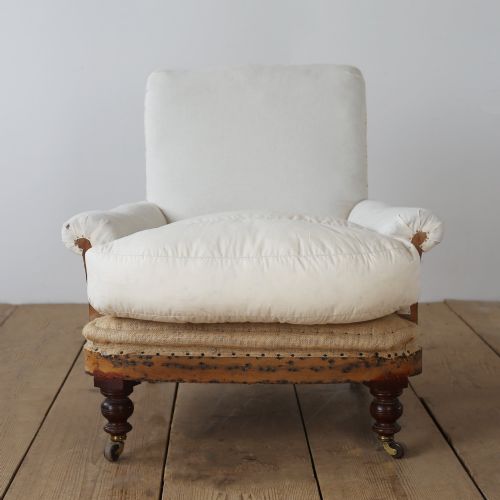
These victorian upholstered club chairs bring deep comfort and nineteenth-century craftsmanship directly into a sitting room.
Victorian Upholstered Club Chairs
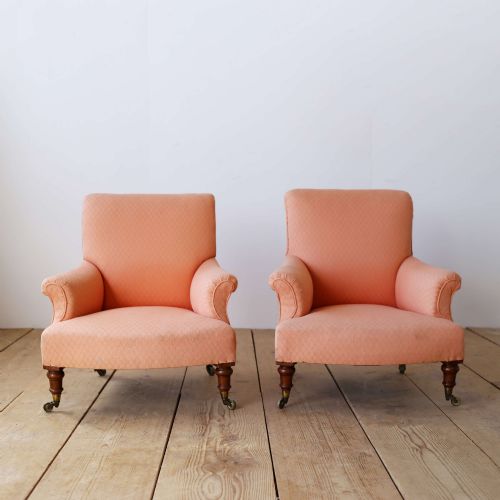
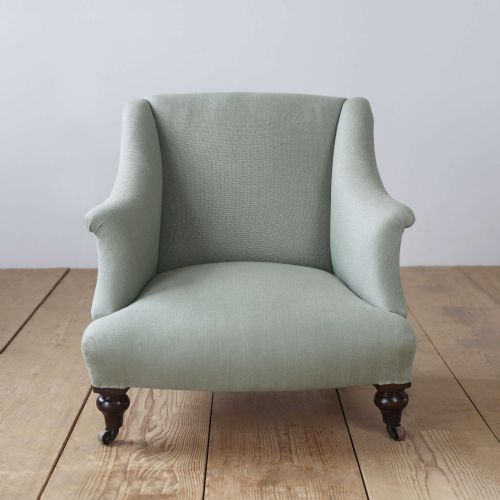
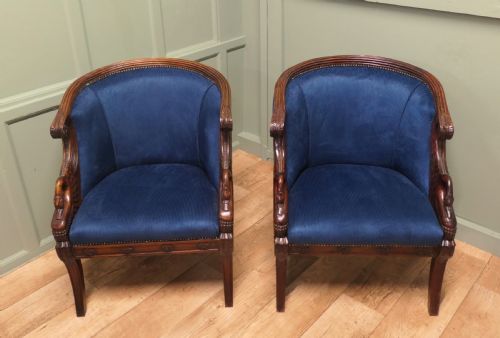
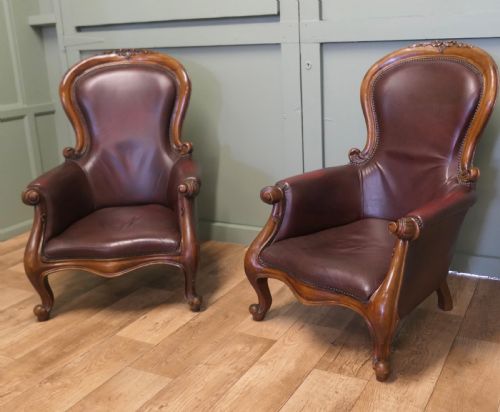
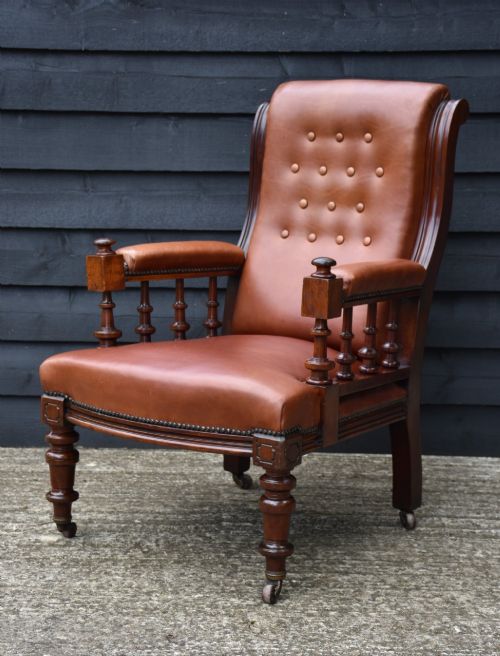
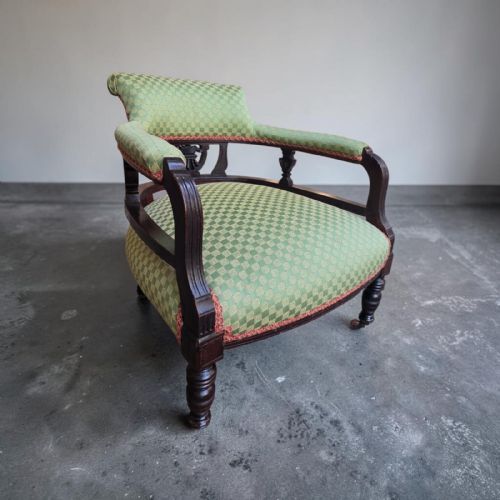
Victorian upholstered club chairs combine generous proportions with deep padding to create substantial seating designed for long hours of relaxation. When exploring victorian upholstered club chairs, buyers encounter forms ranging from low tub chairs and scroll back designs to library armchairs supported by mahogany or oak frames.
The pieces on this page span the nineteenth century and into the Edwardian era, encompassing styles such as English country house, Aesthetic Movement, and Gothic Revival. Makers and workshops of the period, including Howard and Sons, Holland and Sons, and Morris and Co., shaped the benchmark for these comfortable seats.
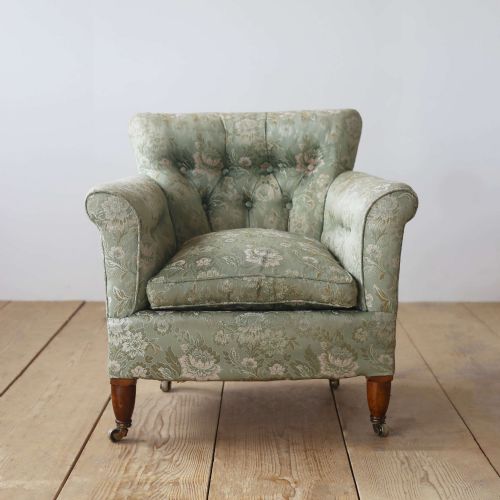
Many examples arrive upholstered in leather, velvet, or calico, while others retain carved wooden details, brass castors, and exposed timber legs. Whether searching for a single oversized armchair or a matched pair, collectors find considerable variety in the scale and specific silhouette of each piece.
Materials and Construction
The foundational frames of these chairs rely on sturdy hardwoods like mahogany, oak, and walnut, often shaped with carved details or turned supports. Joinery techniques from the period ensured stability under heavy daily use.
Upholstery materials include supple leather, rich velvet, and durable fabric or calico. Brass castors frequently finish the feet, allowing easier movement across heavy carpets and wooden floors.
Some Victorian tub chairs feature carved wooden swans flanking the seat, proving that nineteenth-century comfort could occasionally embrace a touch of wildlife.
Distinctions in Quality
The standing of a chair depends heavily on the integrity of its internal framing and the pedigree of its maker. Pieces originating from renowned workshops like Howard and Sons command distinct respect for their superior upholstery techniques and balanced proportions.
The selection of covering materials also marks the grade of an armchair. Heavy-grained leather, deep velvet, and precise button-back work demonstrate a higher level of initial investment than simpler fabric coverings.
Howard and Sons·Holland and Sons·Morris and Co·Mellier and Co
The Victorian Upholstered Club Chairs Glossary
- Tub Chair
- A deep-seated armchair with a continuous curved back and arms forming a single rounded enclosure. This form provides a particularly enclosed and supportive seat.
- Library Armchair
- A substantial seating form featuring upholstered arms and back, traditionally designed for reading rooms and studies. These chairs often incorporate leather upholstery and sturdy mahogany or oak frames.
- Scroll Back
- A chair back featuring an outward curving top rail that rolls downward in a spiral profile. This design adds a sculptural silhouette to nineteenth-century seating.
- Button Back
- An upholstery technique where buttons are pulled deep into the padding in a regular geometric pattern. This method secures the internal stuffing while creating a textured surface.
- Castor
- A small wheel mounted on a swivel assembly attached to the foot of a chair. These fittings allowed heavy nineteenth-century armchairs to be repositioned easily.
Victorian Upholstered Club Chairs: Frequently Asked Questions
How do I identify a Howard and Sons chair?
Look for stamped maker marks on the wooden frame or brass castors, alongside characteristic deep springing and specific model names written in ink on the webbing.
These chairs often feature understated turned legs and exceptionally comfortable proportions that distinguish them from standard nineteenth-century seating.
Where were these club chairs originally used?
They belonged primarily in the libraries, studies, and drawing rooms of large English country houses, where comfort took precedence during long hours of leisure.
Their robust construction was intended to withstand heavy daily use by family members and guests alike.
Are leather or fabric coverings more authentic?
Both materials appeared frequently during the Victorian period depending on the intended room. Libraries and smoking rooms favoured durable leather, while drawing rooms received velvet or printed fabrics.
Original upholstery remains scarce, meaning many pieces have undergone professional re-covering over the decades.
How do I distinguish Victorian from Edwardian pieces?
Victorian examples tend to display heavier proportions, darker woods, and more ornate carving, reflecting the tastes of the mid-to-late nineteenth century.
Edwardian pieces often introduce lighter frames, simpler lines, and brighter wood tones as interior aesthetics shifted toward airier spaces.