


Victorian Tufted Leather Sofa
A victorian tufted leather sofa anchors a room with deep buttoning and rich hides, offering enduring comfort and distinct period character.
Victorian Tufted Leather Sofa
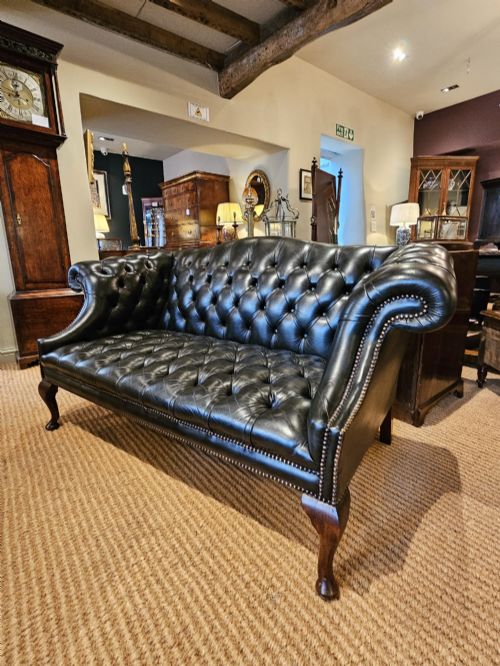
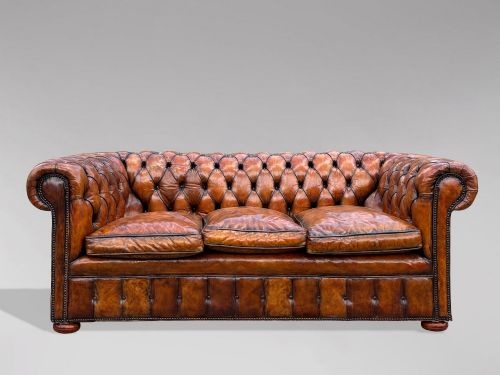
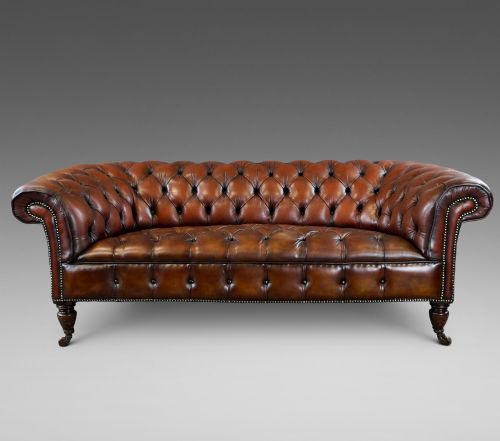
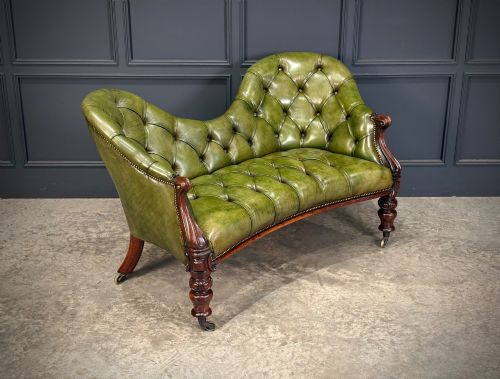
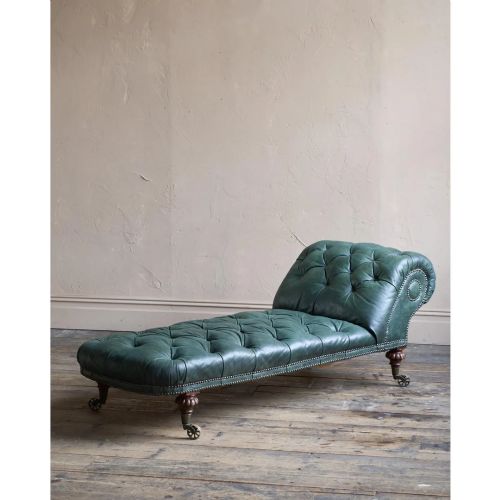
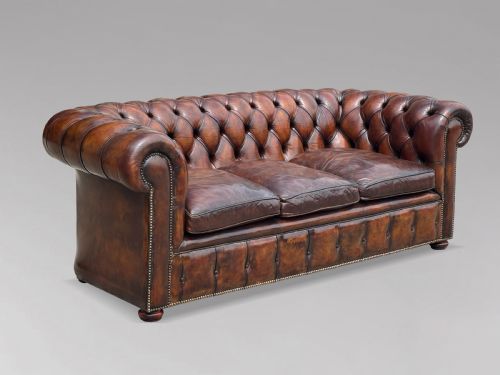
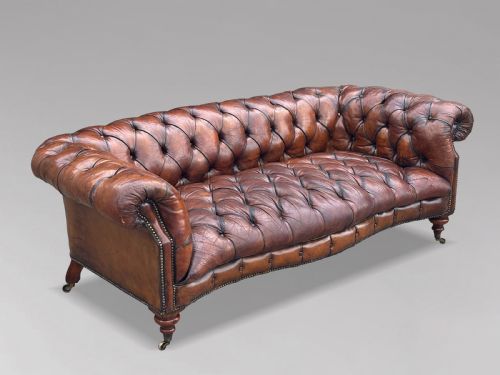
A victorian tufted leather sofa encompasses a range of seating forms primarily anchored by the iconic Chesterfield style alongside double spoon-back settees, chaise longues, and scroll end frames. These pieces emerge from the nineteenth century, with specific examples spanning from eighteen fifty through to nineteen thirty.
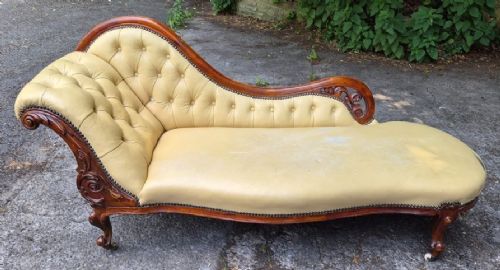
The most common variant encountered on this page is the traditional brown leather Chesterfield, featuring deep buttoning and generous proportions designed for three sitters. Alongside these robust forms appear mahogany and walnut framed chaise longues, corner sofas, and low benches originating from domestic interiors and public spaces alike.
Makers and workshops of the era employed durable timbers such as mahogany, walnut, and hardwood to construct the foundational carcasses that support the heavy leather upholstery. The resulting silhouettes range from serpentine fronts and barrel backs to open arm designs and conversational swivel configurations.
Assessing Quality and Execution
The distinction between tiers rests upon the integrity of the timber frame and the depth of the hand-carved detailing on show wood components like mahogany and walnut. Superior examples maintain rigid structural stability within the hardwood carcass, whereas lesser pieces suffer from looseness in the joints over decades of heavy use.
The quality of the leather upholstery dictates the upper echelon of these seating forms, with hand-dyed hides and original un-restored surfaces holding greater regard than heavily altered materials. Uniform tension across the deep buttoning and tufting demonstrates the precision of the original artisan.
Listings feature pieces spanning from eighteen fifty to nineteen thirty, utilising mahogany, walnut, brass, and timber.
Howard And Sons·Hampton And Sons Of Pall Mall
The Victorian Tufted Leather Sofa Glossary
- Chesterfield
- A traditional sofa style characterised by low armrests and backrests of the same height, featuring deep button tufting. This form remains the defining archetype of nineteenth-century leather seating.
- Chaise Longue
- An upholstered long chair designed for reclining, featuring a single raised backrest or end piece. These pieces often showcase carved mahogany or walnut show frames.
- Buttoning
- A upholstery technique where deep depressions are formed in the padding by stitching through to the frame, secured by leather-covered buttons. This method creates the characteristic tufted surface.
- Show Frame
- An exposed wooden structural framework, typically carved from mahogany or walnut, that surrounds the upholstered portions of a settee or sofa. It highlights the craftsmanship of the maker.
- Serpentine Front
- A curved sofa front edge that undulates inward and outward in a gentle wave. This shaping adds visual movement to the heavy proportions of period seating.
Victorian Tufted Leather Sofa: Frequently Asked Questions
How do I care for antique leather?
Maintain the hide by applying appropriate leather conditioners periodically to prevent drying and cracking. Avoid placing the sofa near direct heat sources or strong sunlight.
Keep the surface dust-free using a soft cloth and consult professional conservators for deep cleaning or restoration work.
Were these sofas used in homes?
These seating pieces served primarily in formal drawing rooms, libraries, and studies of nineteenth-century residences. Their robust construction also suited commercial spaces such as gentlemen's clubs and public houses.
Today, they adapt easily to modern living spaces, functioning as central statement pieces in studies or drawing rooms.
How do I identify a Howard and Sons piece?
Look for maker stamps on the wooden frame elements or the brass castors beneath the sofa. Original upholstery markings and specific construction signatures often confirm attribution.
Consult detailed maker archives to verify the exact period and workshop origin of stamped components.