



Victorian Style Stools
These victorians style stools bring domestic comfort and period character to a room, ranging from low footrests to grand centre pieces.
Victorian Style Stools
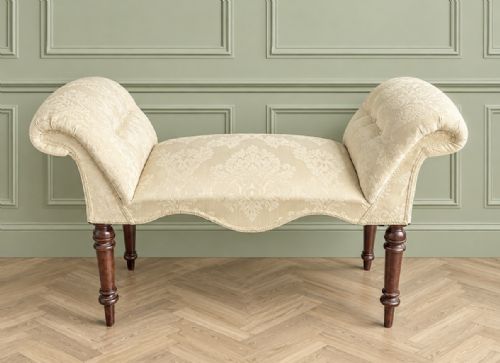
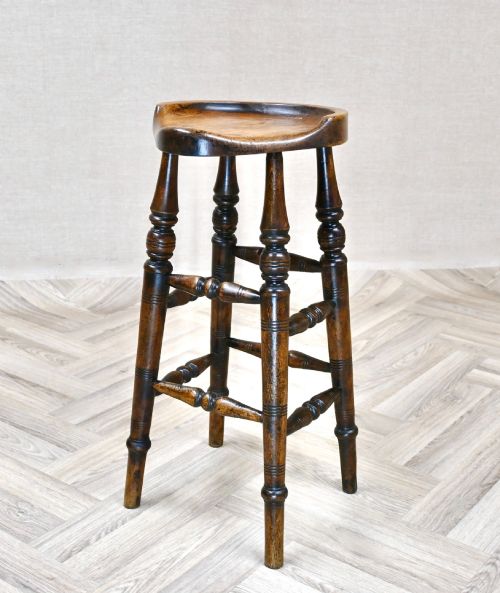
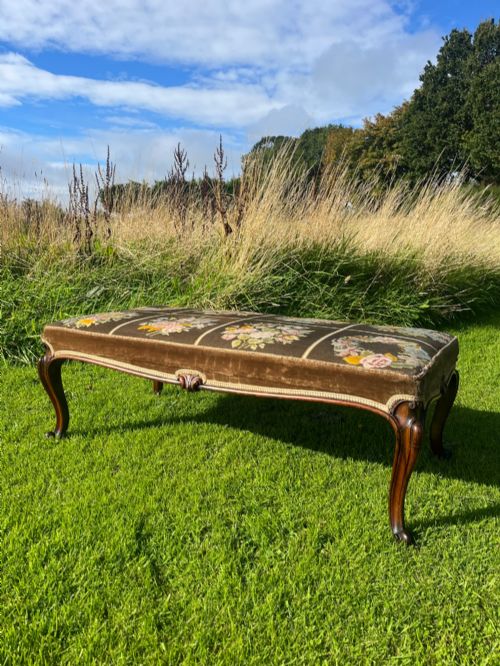
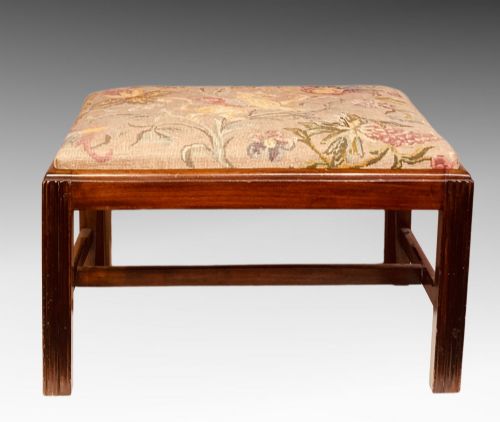
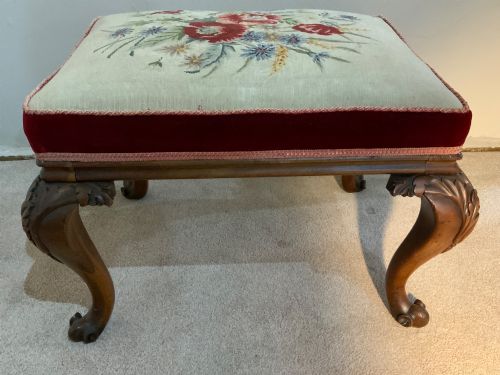
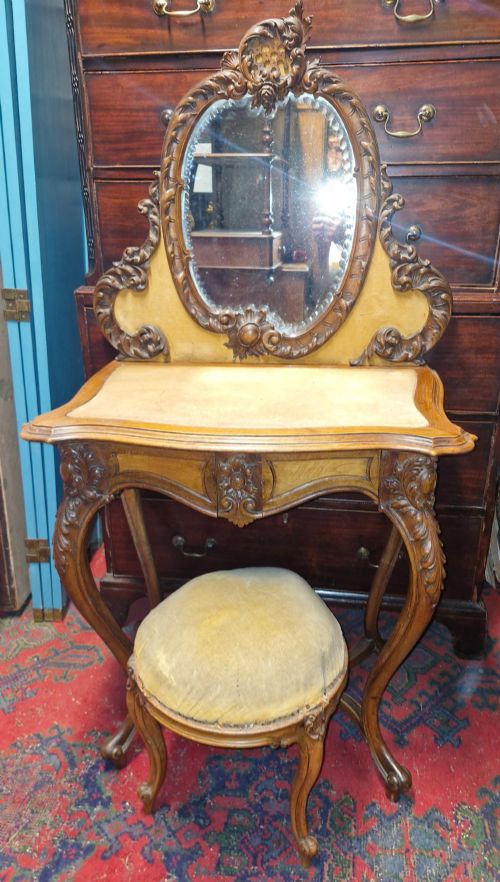
When searching for victorian style stools, buyers encounter a diverse selection of nineteenth century seating designed for utility and display in period interiors. The pieces span from low footstools and dressing table seats to long buttoned ottomans and occasional benches.
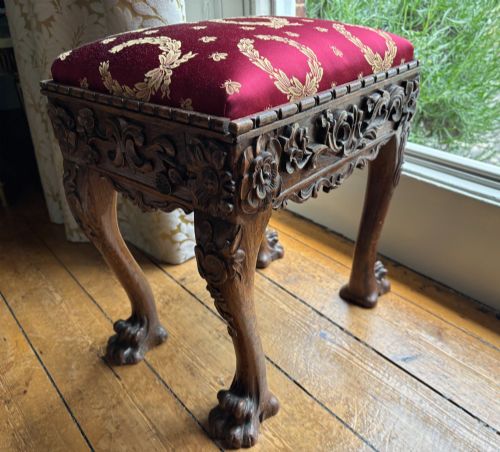
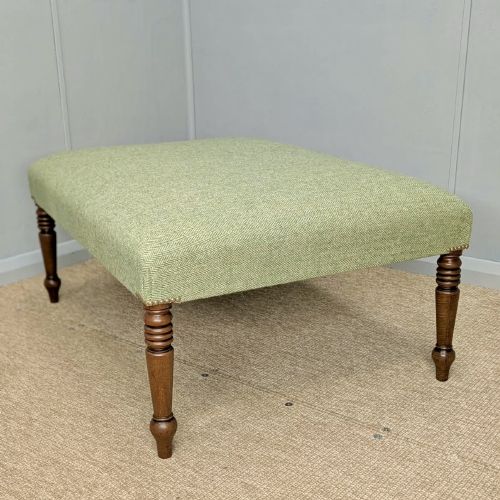
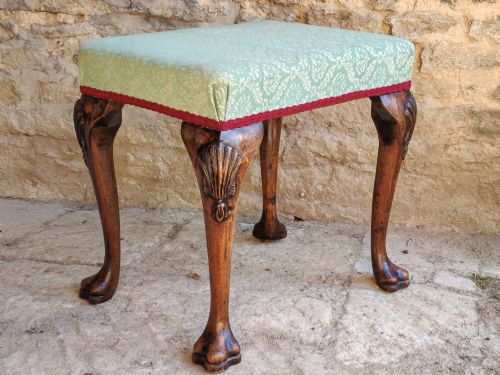
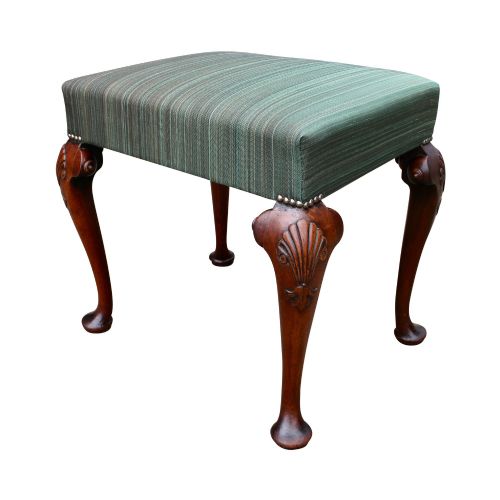
Mahogany and walnut form the structural backbone of these designs, often shaped with cabriole legs or carved frames reflecting revivalist tastes. Many examples incorporate period upholstery, ranging from buttoned leather and velvet to herringbone Harris Tweed and needlework textiles.
Materials and Construction
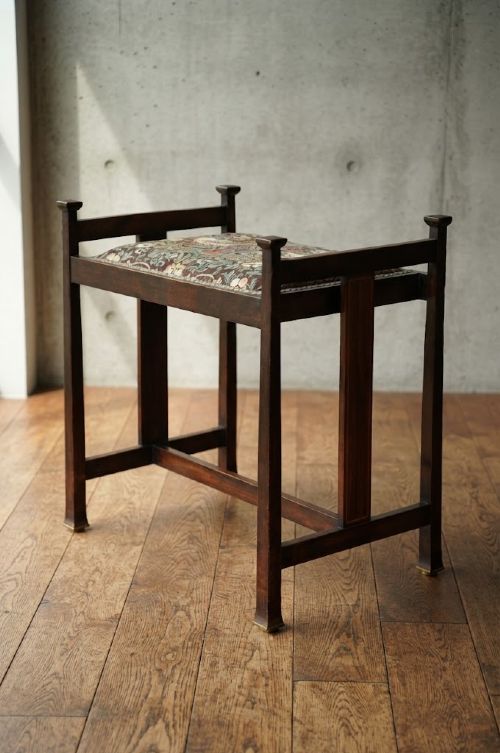
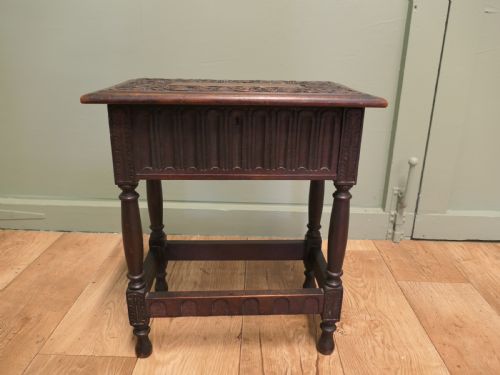
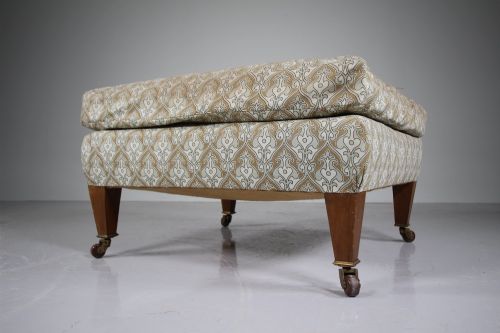
Cabinetmakers utilised hardwoods such as mahogany, walnut, oak and rosewood to build sturdy frames, employing traditional joinery techniques like mortise and tenon. Carved details on legs and aprons display meticulous hand-tooling, while structural additions such as brass castors provide mobility.
Upholstered surfaces rely on supportive interior webbing and stuffing, finished with textile coverings secured by close-nailing or buttoning. Materials span from durable leather and woven tapestries to soft velvet and contemporary replacement fabrics.
Victorian Style Stools Retail Price Guide 2026
Typical asking prices for victorian style stools among the pieces listed under this phrase on Sellingantiques today, from the lower quarter to the upper quarter. They describe what is for sale here now, not the wider market.
Design influences span from the Regency and Victorian eras through to Queen Anne and Rococo revival styles.
Evaluating Quality
The distinction between ordinary and exceptional pieces rests upon the crispness of the timber carving and the integrity of the frame construction. Solid walnut or mahogany frames with substantial weight and restrained, balanced proportions indicate superior craftsmanship.
Refinement in execution dictates value, where fluid cabriole legs and well-proportioned buttoning elevate a piece above standard utilitarian seating. The harmony between the original timber frame and the textile upholstery maintains the historical character.
Howard & Sons·Liberty & Co·Minton
The Victorian Style Stools Glossary
- Cabriole leg
- A furniture leg that curves outward at the knee and tapers inward toward the foot, mimicking animal limbs. This form is common on eighteenth and nineteenth century seating.
- Buttoning
- A method of upholstery where deep buttons are pulled tight through the padding to form a geometric grid of tufts. It secures the stuffing and creates a textured surface.
- Joint stool
- A sturdy wooden stool constructed with mortise and tenon joints rather than turned legs inserted into a seat. They date back to earlier centuries but were frequently revived later.
- Gout stool
- An adjustable footrest designed to elevate and support the foot or leg of someone suffering from joint pain. These often feature a mechanism to alter the angle of the incline.
- Centre stool
- A large, freestanding piece designed to sit in the middle of a room rather than against a wall. These substantial seats often match larger armchairs or drawing room suites.
Victorian Style Stools: Frequently Asked Questions
What distinguishes a footstool from an ottoman?
Footstools generally provide a compact surface designed to support feet while sitting in an armchair. Ottomans offer larger proportions and frequently function as centre pieces or extra seating within a room.
Both forms utilise period textiles and timber frames, but their scale dictates how they integrate into domestic layouts.
How do I identify a revival style?
Revival styles appropriate decorative motifs from earlier centuries, such as Queen Anne cabriole legs or Rococo carved scrollwork, executed using nineteenth century woodworking techniques. Makers combined these historical references with contemporary comfort.
Examining the timber ageing and construction methods helps separate genuine revival pieces from later reproductions.
Were these seats used in bedrooms or reception rooms?
Stools served multiple domestic functions across different rooms, including dressing tables, hallways, and drawing rooms. Smaller pieces accompanied washstands and vanities, while larger leather or velvet examples anchored central spaces.
Their placement depended entirely on the scale of the frame and the material of the upholstery.
How should I care for antique upholstery?
Preserving textile surfaces involves gentle vacuuming with a soft attachment and protection from direct sunlight to prevent fading. Leather elements benefit from regular conditioning to maintain flexibility in the hide.
Keeping frames away from intense heat sources prevents timber shrinkage and protects the structural joints.