



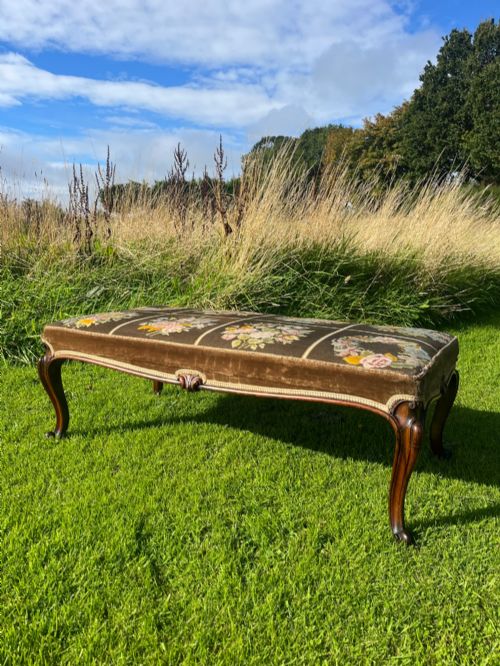
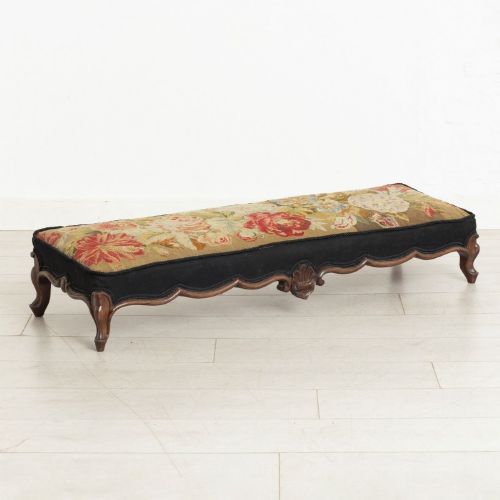


Victorian Style Long Bench
These Victorian style long bench examples bring extended seating with period character into a hallway or living space.
Victorian Style Long Bench
A victorian style long bench encompasses extended seating forms, window seats, and long stools originating from the nineteenth century. The examples met on this page span several decades from the mid to late nineteenth century, including specific dates across the 1860s, 1870s, and 1880s.
These pieces appear in various configurations such as long oak stools, mahogany window seats, and walnut hall benches. Many feature upholstered surfaces covered in textiles ranging from beige linen and navy Liberty William Morris velvet to tapestry and traditional upholstery fabric.
How they were made
Makers constructed these benches using solid timbers such as mahogany, walnut, and oak. These woods provided the structural strength required for extended seating frames and supportive legs.
Upholstered elements rely on traditional textile applications including linen, velvet, and tapestry. Frameworks often incorporate decorative woodwork styles such as cabriole legs, fluted supports, and revival motifs.
Victorian Style Long Bench Retail Price Guide 2026
Typical asking prices for victorian style long bench among the pieces listed under this phrase on Sellingantiques today, from the lower quarter to the upper quarter. They describe what is for sale here now, not the wider market.
Materials recorded across these pieces include mahogany, walnut, oak, linen, velvet, and tapestry.
What varies in quality
The refinement of the timber framework and the execution of carved details separate standard examples from finer pieces. Structural choices like cabriole legs or fluted supports demonstrate the maker's attention to proportion and stylistic detail.
The selection and preservation of textiles also influence the character of each piece. Original fabrics or careful recoveries using materials like Liberty velvet contribute significantly to the visual integrity of the seating.
The Victorian Style Long Bench Glossary
- Cabriole leg
- A furniture leg that curves outward and then tapers inward, typically ending in a pad or scroll foot. This form draws inspiration from animal legs and appears frequently on nineteenth-century seating.
- Window seat
- A long, narrow bench designed to fit into the recess of a window. These forms often feature upholstered tops and sturdy wooden frames.
- Gothic Revival
- An architectural and decorative style drawing inspiration from medieval design. Pieces in this style often incorporate pointed arches and heavy timber construction.
- Rococo Revival
- A nineteenth-century design movement favouring asymmetrical curves, naturalistic ornamentation, and elaborate scrollwork. It builds upon earlier eighteenth-century French aesthetics.
Victorian Style Long Bench: Frequently Asked Questions
Where do you place a long bench?
These pieces suit placement in a hallway, at the foot of a bed, or beneath a window. Their extended proportions provide practical seating without dominating the room.
Consider the surrounding furniture styles and timber tones to ensure the piece integrates naturally into your interior scheme.
How do you identify nineteenth-century woodwork?
Examine the timber species, construction joints, and overall weight of the frame. Nineteenth-century pieces frequently utilise solid mahogany, walnut, or oak with traditional joinery.
Stylistic markers such as cabriole legs or revival motifs further help place the piece within the Victorian era.
Are these benches comfortable for sitting?
Many examples feature padded tops upholstered in textiles like linen or velvet. The level of cushioning depends on whether the piece is a traditional low footstool or an extended window seat.
Upholstery materials range from retained period fabrics to more recent textile recoveries.
What is a window seat used for?
A window seat provides a low, elongated platform positioned specifically near natural light. Historically, they offered a comfortable spot for reading or needlework.
Today, they serve a similar functional purpose while adding architectural interest to a room.