


Victorian Style Bronze Lamp
A victorian style bronze lamp brings heavy metal and classical design into a room, offering warm illumination through cast ornamentation.
Victorian Style Bronze Lamp
A victorian style bronze lamp encompasses table lamps, floor standards, and oil lamps cast from copper alloys during the nineteenth and early twentieth centuries. These pieces draw on neoclassical, rococo revival, and french chateau design motifs.
The selections here range from petite floral designs to large urn-shaped figures and column lamps mounted on marble bases. Many items combine metalwork with porcelain components or opaline glass pendants.
Makers adapted older decorative objects into lighting, turning bronze statuettes and ewers into electrified fixtures. The assortment includes both English and French manufacture from various decades.
Materials and technique
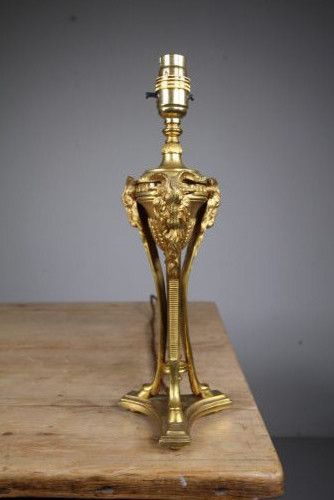
Foundries utilised bronze, brass, ormolu, and gilt metal, casting intricate figures like cherubs, putti, eagles, and rams heads. Artisans applied mercury gilding or modern electroplating to achieve the bright golden finishes seen on ormolu mounts.
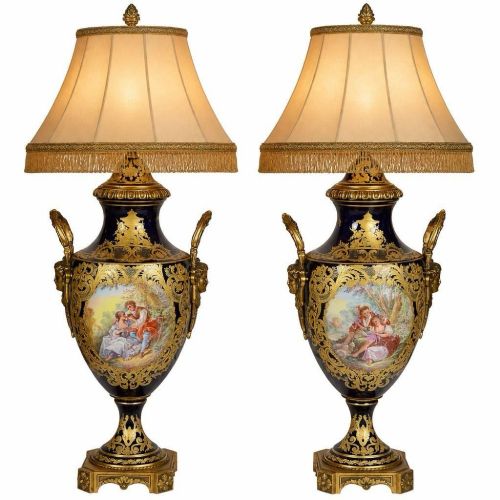
Many lamps incorporate secondary materials including white marble bases, hand-painted porcelain panels in the style of Sevres, and blue glass or opaline glass bodies. Structural components often feature turned mahogany or walnut columns alongside metal mounts.
Quality variations
The choice of secondary materials marks the difference between standard production and top-tier work. Solid white marble plinths, hand-painted porcelain inserts, and heavy gauge bronze elevate an object far above hollow spelter alternatives.
Perry & Co·Gillows
The Victorian Style Bronze Lamp Glossary
- Ormolu
- Gilded bronze, usually produced by applying a mercury and gold amalgam to a bronze base and heating it until the mercury evaporates. This technique creates a durable, bright golden surface found on many French lamps.
- Champlevé
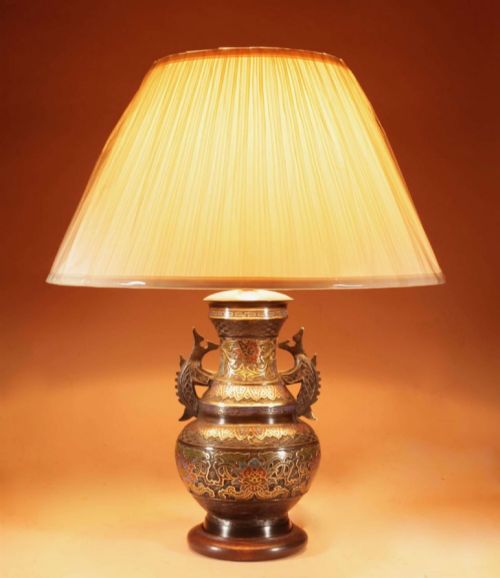
- An enamelling technique where troughs or cells are carved into the surface of the bronze and filled with vitreous enamel powder before firing. Japanese decorative lamps frequently utilise this colourful method.
- Sevres style
- Ceramic decoration imitating the soft-paste porcelain produced by the royal French manufactory, typically featuring painted scenes surrounded by rich blue grounds and gilded borders.
- Spelter
- A zinc alloy used as a cheaper substitute for bronze in decorative metalwork. It is lighter in weight and softer than true bronze.
- Ewer
- A large jug with a wide spout and handle, frequently converted into a lamp body during the nineteenth century.
Victorian Style Bronze Lamp: Frequently Asked Questions
How do I clean a bronze lamp?
Dust the metal gently with a soft dry cloth to protect the original patination and gilt surfaces. Avoid using commercial brass polish or abrasive cleaners, which strip away the thin layer of gold or antique finish.
For porcelain sections, wipe carefully with a barely damp sponge. Keep moisture away from any electrical wiring or fabric components.
Are these lamps safely wired?
Many antique lighting fixtures retain old wiring or have been converted at different points in their history. Buyers should have a qualified electrician inspect and rewire vintage lamps before regular domestic use.
This ensures the internal cord and lamp holder meet modern safety standards while preserving the exterior antique components.
What is the difference between bronze and ormolu?
Bronze is a copper and tin alloy that forms the dark foundational metal of the sculpture or lamp base. Ormolu refers specifically to the gilded finish applied to that bronze.
Objects described simply as bronze retain their natural dark metallic patina, whereas ormolu pieces shine with a bright golden lustre.
Where were these lamps placed originally?
Table lamps and oil lamps sat upon side tables, occasional tables, or desks in grand nineteenth century drawing rooms and parlours. Floor standard lamps provided ambient light in corners next to seating arrangements.
Their heavy marble and metal construction provided stability on wooden furniture without tipping easily.