





Victorian Stone Brooch
These victorian stone brooch pieces combine carved minerals, metals, and gems into wearable miniatures of nineteenth-century craftsmanship.
Victorian Stone Brooch
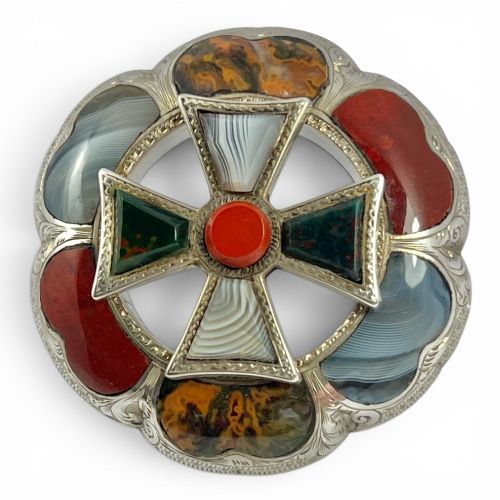
A victorian stone brooch encompasses wearable ornaments fashioned from minerals, agates, and hardstones during the nineteenth century. These items manifest in various forms, from Scottish pebble designs to carved lava cameos and malachite settings.
The pieces on this page span the Victorian era alongside related Edwardian and later nineteenth-century examples. Buyers encounter silver and gold mounts securing gemstones, paste, and natural minerals.
Forms include traditional bar brooches, crescent pins, floral baskets, and convertible pendant brooches. Many pieces reflect regional revivals, including Scottish pebblework and Italian Grand Tour cameos.
Materials and Construction
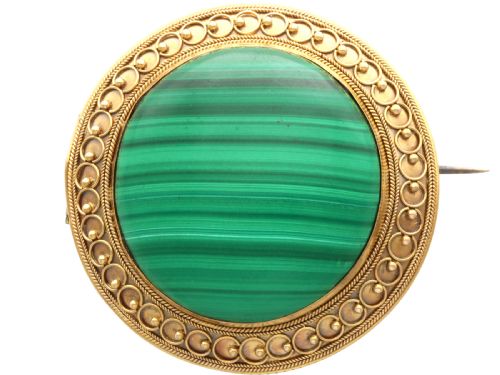
Craftsmen utilised silver, 9ct gold, and 18ct yellow gold to mount diverse stones such as agate, malachite, chalcedony, and lava. Metalwork incorporates gilt surfaces, Etruscan Revival wirework, and secure collet settings.
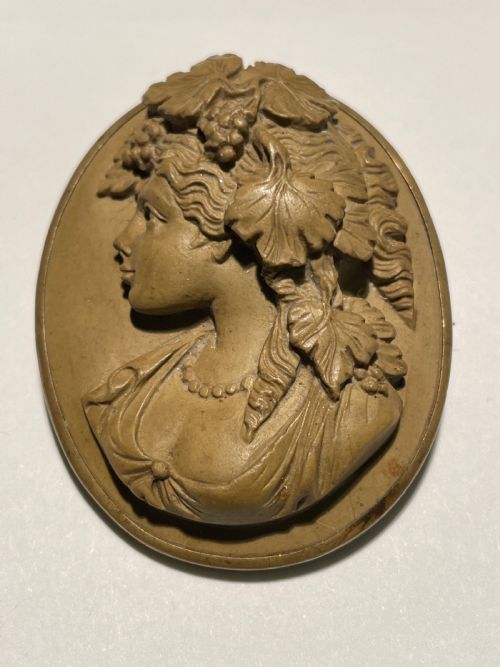
Carvers shaped volcanic lava and hardstones into classical figures like Demeter, while lapidaries cut and polished Scottish pebbles and banded agates. Assemblages frequently integrate paste stones or diamonds to accent the primary mineral elements.
Victorian Stone Brooch Retail Price Guide 2026
Typical asking prices for victorian stone brooch among the pieces listed under this phrase on Sellingantiques today, from the lower quarter to the upper quarter. They describe what is for sale here now, not the wider market.
Demeter occasionally turns up carved in volcanic lava, keeping an eternal watch over twentieth-century coat lapels.
Assessing Craftsmanship
Quality rests upon the precision of the stone carving and the crispness of the mineral polishing. Fine examples display detailed relief work in lava cameos or meticulously matched sections of banded agate and malachite.
The integration of the metal mount dictates the refinement of the piece, with substantial silver or gold work properly securing the stone without obscuring its natural patterns. Maker attention to reverse sides and functional pin mechanisms also separates standard examples from superior items.
The Victorian Stone Brooch Glossary
- Agate
- A form of chalcedony displaying natural banding or colour variations, frequently polished into flat sections for Scottish pebble jewellery. These stones were gathered and shaped to highlight earthy tones.
- Paste
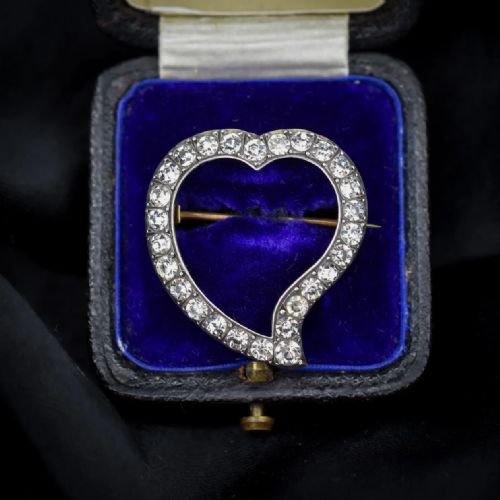
- Faceted glass created to imitate gemstones, set into silver or gold mounts during the Victorian period. High-grade paste is hand-cut and foiled to enhance brilliance.
- Lava Stone
- Porous volcanic rock utilised by Italian carvers to create Grand Tour cameos depicting classical figures and mythology. Artisans carved these grey or brown materials while soft before they hardened.
- Giardinetti
- A style translating to little garden, depicting flower pots or baskets filled with assorted stones and paste gems. These floral compositions date back to the Georgian era and continued through the Victorian period.
- Etruscan Revival
- A Victorian design movement inspired by ancient archaeological discoveries, characterised by applied wirework and granular gold decoration. Jewellers utilised these classical motifs to adorn stone and paste brooches.
Victorian Stone Brooch: Frequently Asked Questions
How do I wear a victorian stone brooch?
These pieces affix securely to heavy fabrics like wool coats, lapels, and structured scarves using traditional pin stems. Their substantial weight requires sturdy textiles to support the metal and mineral components.
Convertible versions featuring integrated loops can also suspend from chains as pendants. This dual functionality allows flexibility in how you display the jewellery.
What is a Scottish pebble brooch?
Scottish pebble brooches utilise locally gathered agates, jaspers, and granites mounted in silver settings, popularised during the nineteenth century. They often feature intertwined geometric or Celtic-inspired motifs.
These accessories gained prominence during Queen Victoria's visits to Balmoral. They remain distinct markers of regional nineteenth-century lapidary work.
How do I care for my brooch?
Clean stone and metal components gently with a soft, dry cloth to remove dust and skin oils. Avoid submerging porous materials like lava stone or soft minerals in liquids.
Store each piece separately in a lined box to prevent scratches between the metal mounts and polished agates. Regular checks of the pin mechanism ensure secure closure during wear.
What is a Grand Tour cameo?
Grand Tour cameos are carved lava stone or shell miniatures purchased by travellers visiting Italy during the nineteenth century. They typically portray classical deities, mythological scenes, or ancient architecture.
Mounted in silver or gold frames, these items served as wearable souvenirs of European travel. They represent the cultural interests of the Victorian era.