



Victorian Stone Bridge Painting
These Victorian stone bridge painting works capture nineteenth-century landscape scenes with river crossings, offering a glimpse into British and European pastoral topography.
Victorian Stone Bridge Painting
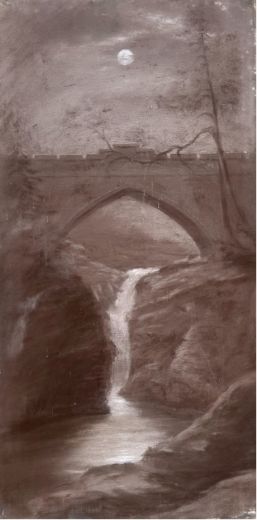
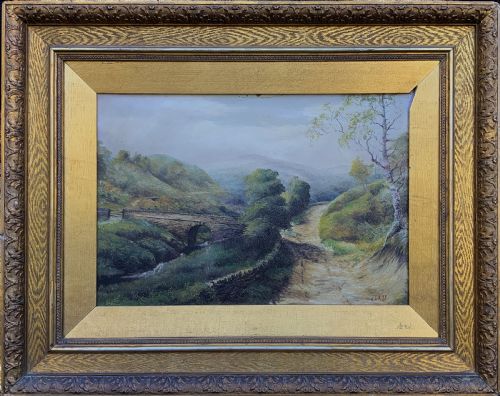
A victorian stone bridge painting portrays architectural spans set across rivers, streams, and Highland waterways. These scenes emerge from nineteenth-century landscape traditions, depicting British, Scottish, and Italian locations.
The selections on this page encompass works from the nineteenth century, including specific dates such as 1850, 1880, 1890, and 1920. Viewers encounter compositions ranging from British school landscapes to Norwich school studies.
Artists record rural infrastructure using different artistic approaches, balancing architectural precision with atmospheric surroundings. Figures often appear near riverbanks or crossing structures, adding human scale to the compositions.
Materials and construction
Creators apply oil paint and watercolour paint onto canvas, wood panels, and paper supports. Gilt frames and gilt metal accents frequently enclose these compositions.
Support mediums dictate the surface texture and handling of pigment, with wood panels and stretched canvases supporting heavier oil applications while paper holds fluid watercolour washes.
Victorian Stone Bridge Painting Retail Price Guide 2026
Typical asking prices for victorian stone bridge painting among the pieces listed under this phrase on Sellingantiques today, from the lower quarter to the upper quarter. They describe what is for sale here now, not the wider market.
Artists frequently added small human figures crossing stone bridges, perhaps to remind viewers of the sheer scale of rural engineering.
Evaluating quality
Differentiation lies in the handling of light, atmospheric depth, and topographical accuracy within the landscape. Works displaying confident brushwork and balanced tonal contrasts stand apart from simpler renderings.
Signatures, dated inscriptions, and identifiable geographic locations elevate historical context. The relationship between the stone bridge structure and the surrounding natural elements determines compositional success.
Thomas Lound·J Barclay·H Wallace·James H Hulse·H Church
The Victorian Stone Bridge Painting Glossary
- Watercolour paint
- Pigments suspended in a water-soluble binder, applied to paper to create translucent washes.
- Oil paint
- Pigments mixed with a drying oil, traditionally linseed, allowing for rich blending and textured application on canvas or wood.
- Norwich school
- A regional group of artists influenced by Dutch landscape painting, active during the nineteenth century.
- Victorian nocturne
- A painting style capturing night scenes or atmospheric dusk effects under subdued light.
Victorian Stone Bridge Painting: Frequently Asked Questions
What periods do these paintings represent?
These works date primarily from the nineteenth century, with specific examples originating around 1850, 1880, 1890, and 1920.
Such dates reflect Victorian artistic production and subsequent early twentieth-century interpretations of the pastoral landscape tradition.
What surfaces support these artworks?
Painters utilised canvas, wood panels, and paper as substrates for their watercolours, charcoal, and oil compositions.
Each material responds differently to pigment, influencing the final texture and preservation requirements of the piece.
Where do the depicted locations originate?
Represented settings include Scottish landscapes, North Wales, and Italian countryside views featuring traditional stone architecture.
Topographical details often reference specific geographical sites noted by the artists within the titles or inscriptions.
How should I frame these works?
Original gilt frames or compatible period mouldings complement the nineteenth-century aesthetic of these oil and watercolour paintings.
Proper framing protects the edges of canvas supports and paper works from environmental exposure.