





Victorian Sterling Silver Goblet
A victorian sterling silver goblet brings the tactile weight and formal ceremony of nineteenth-century dining directly to the modern table.
Victorian Sterling Silver Goblet
A victorian sterling silver goblet encompasses drinking vessels, presentation cups, trophies, and chalices produced during the nineteenth century. These objects served functional dining roles, religious communion services, and commemorative sporting presentations.
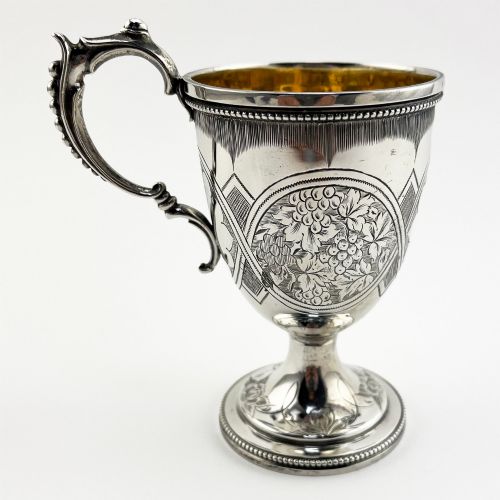
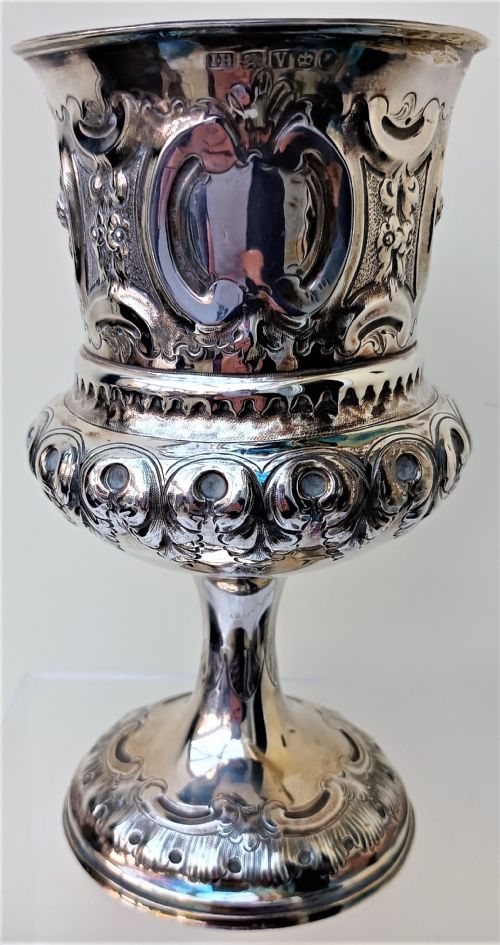
The version most commonly encountered on this page is the wine goblet, standing between five and twelve inches high on a slender stem and circular foot. Many examples bear period inscriptions, fern engravings, or arabesque motifs.
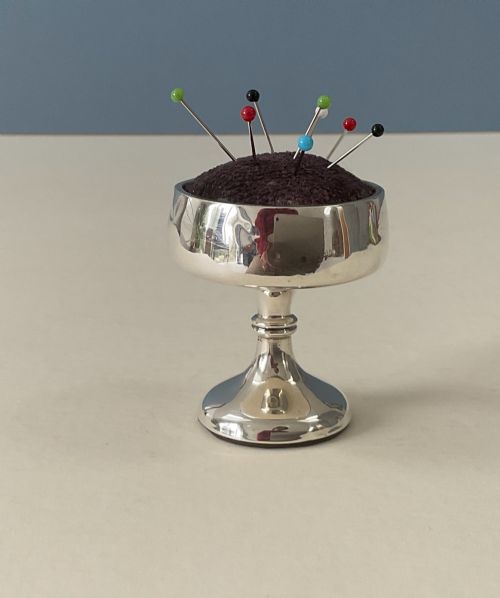
Makers also adapted the form into novelties, including pin cushions and wager cups, alongside related christening mugs and beakers mounted in silver. The predominant style is Victorian, with occasional pieces showing Gothic or neoclassical revival influences.
Materials and technique
Silversmiths constructed these vessels primarily from sterling silver, occasionally applying gold gilt to the interior bowl to protect the metal from acidic wines. Techniques combined raising the main body from a flat sheet of silver with cast components for the stem and foot.
Decoration relied on hand engraving, including ferns, floral wriggle-work, and geometric arabesque motifs cut directly into the silver surface. Certain pieces integrate alternative media, such as stoneware bodies mounted with silver rims and bases.
Victorian Sterling Silver Goblet Retail Price Guide 2026
Typical asking prices for victorian sterling silver goblet among the pieces listed under this phrase on Sellingantiques today, from the lower quarter to the upper quarter. They describe what is for sale here now, not the wider market.
Several Victorian goblets double as pin cushions for sewing tables.
Evaluating craftsmanship
Quality rests on the crispness of the hand engraving and the structural balance between the bowl, stem, and foot. Superior pieces display deep, sharply defined botanical or geometric patterns that remain clear across the curved surface of the silver.
The weight of the metal and the integrity of the maker's mark stamped into the silver dictate the standing of the piece. Presentations with fitted leather cases or retaining their original parcel gilt interiors command closer attention from collectors.
George Unite·John Hunt and Robert Roskell·Henry Tatton and Son·D and J Wellby·Charles Hougham·Henry Holland·Walker and Hall
The Victorian Sterling Silver Goblet Glossary
- Sterling silver
- A silver alloy containing 92.5 percent pure silver by weight, combined with other metals for durability. This standard is verified by hallmark stamps.
- Parcel gilt
- Silver that has been partially gilded with a thin layer of gold on the interior surface. This technique protected the silver from corrosion caused by alcoholic beverages.
- Wager cup
- A double-cup novelty drinking vessel designed for use in historical drinking games. One pivoting cup balances above a larger main vessel.
- Chalice
- A large stemmed cup used in religious communion services. Victorian examples often display Gothic revival details and religious inscriptions.
- Wriggle-work
- An engraving technique executed by rocking a flat chisel back and forth across the metal without lifting the tool. This produces a zigzag line often seen on mid-century vessels.
Victorian Sterling Silver Goblet: Frequently Asked Questions
Were these goblets used for drinking wine?
Many wine goblets saw active service at nineteenth-century dining tables, functioning both as everyday vessels and formal tableware. Their solid silver construction kept beverages cool during long meals.
Heavier examples served alternative purposes, such as shooting trophies, sports prizes, or christening gifts, rather than regular dining use.
How can I date a silver goblet?
British silver bears hallmarks stamped directly into the metal, usually near the rim or upon the foot. These marks include assay office symbols, date letters, and maker marks that pinpoint the exact year of manufacture.
Stylistic clues also help narrow the period, as fern engravings belong predominantly to the mid-Victorian decades, while heavy neoclassical forms appeared later in the century.
What is parcel gilding on a goblet?
Parcel gilding refers to the application of a thin layer of gold to specific areas of an object, most commonly the interior of the bowl. This prevents wine acids from tarnishing the silver and imparting a metallic taste.
Collectors often examine the interior gilt to determine if the vessel has been re-lined or heavily polished over time.
Why do some goblets have inscriptions?
Inscriptions record the original presentation purpose, such as a sports victory, a retirement gift, or a personal christening. Names, dates, and club titles frequently appear engraved in cursive script below the rim.
These contemporary notes provide a documented history of the object and tie the silver directly to nineteenth-century social life.