





Victorian Sterling Candlesticks
Victorian sterling candlesticks bring the heavy brilliance of nineteenth-century silversmithing to the table, offering a functional glow that anchors a room.
Victorian Sterling Candlesticks
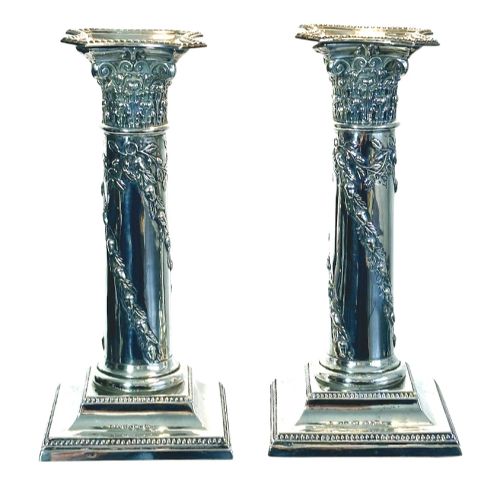
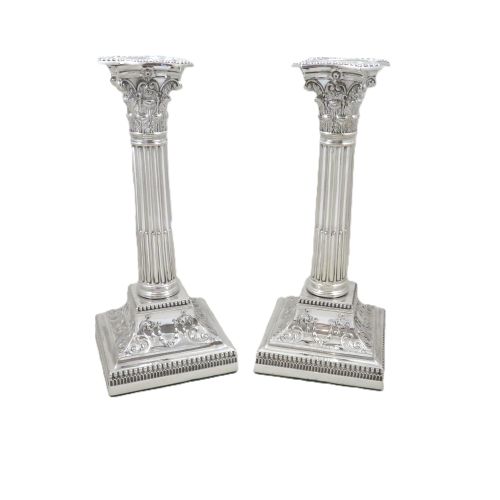
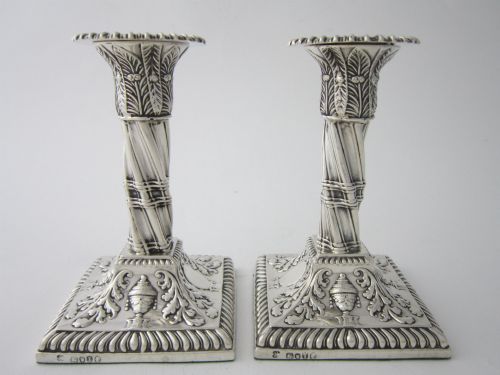
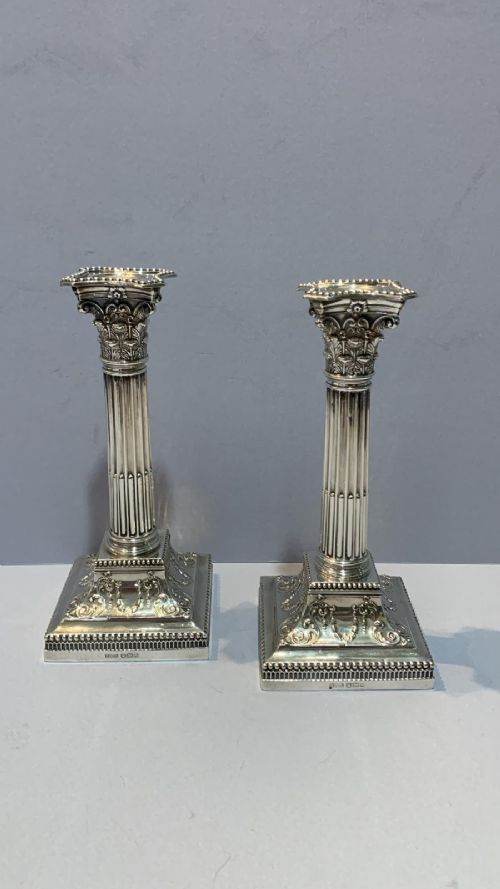
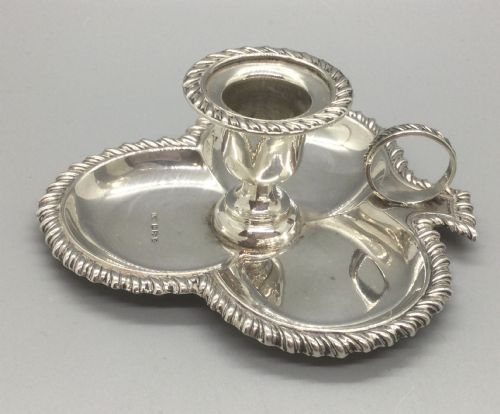
Victorian sterling candlesticks span the nineteenth century and early twentieth century, taking the form of pairs, single stems, chambersticks, and two-light candelabra. These domestic lighting items served both practical daily use and formal dining requirements across the period.
The selection here encompasses several distinct configurations, including Corinthian column table lamps, figural designs, and naturalistic chamber sticks. Makers worked within Victorian, Neoclassical, Rococo Revival, and Victorian Classical Revival styles to shape the metal.
Assay offices in Birmingham, Sheffield, London, and Chester marked the sterling silver, while makers such as the Goldsmiths and Silversmiths Company added their stamps. Base materials frequently include baize underneath to protect furniture surfaces.
Materials and construction
Silversmiths utilised sterling silver and silver gilt, shaping the metal through casting, hammering, and assembly. Many examples incorporate weighted bases lined with baize to provide stability when holding tall candles.
Decoration relied on period stylistic revivals, translating neoclassical columns, rococo curves, and naturalistic motifs into solid silver forms. Goldsmiths punched town marks, date letters, and maker marks directly into the metal.
Victorian Sterling Candlesticks Retail Price Guide 2026
Typical asking prices for victorian sterling candlesticks among the pieces listed under this phrase on Sellingantiques today, from the lower quarter to the upper quarter. They describe what is for sale here now, not the wider market.
Several chambers include tiny conical extinguishers designed to snuff out the flame without sending melted wax flying.
Markers of distinction
The sophistication of the chasing and the complexity of the style separate standard production from superior work. Figural pieces and naturalistic chamber sticks require detailed hand-finishing that elevates the object beyond plain columns.
Clarity of the assay marks and the integrity of the original weighted bases influence the standing of an example. Complete pairs matching in date and maker hold greater cohesion than mismatched assemblies.
Goldsmiths·Goldsmiths and Silversmiths Co
The Victorian Sterling Candlesticks Glossary
- Sterling silver
- A silver alloy containing 92.5 percent pure silver and 7.5 percent other metals, usually copper, ensuring durability for domestic items.
- Chamberstick
- A low-profile candlestick featuring a small pan and a handle, designed for carrying a candle through a house at night.
- Candelabra
- A branched candlestick holding multiple lights on a single centralized base, appearing frequently in Victorian dining arrangements.
- Baize
- A coarse woollen material glued to the underside of candlesticks to prevent scratching wooden tabletops.
- Silver gilt
- Sterling silver that has been coated with a thin layer of gold on the surface, creating a rich yellow sheen.
Victorian Sterling Candlesticks: Frequently Asked Questions
How do I date Victorian sterling candlesticks?
Dating relies on the hallmarks stamped directly into the silver, which include assay office symbols and specific date letters.
Matching these marks against official records reveals the exact year and town of manufacture.
What is a chamberstick used for?
A chamberstick provided portable illumination before electric lighting, allowing individuals to carry a flame down corridors or up stairs.
The wide saucer base caught dripping wax while the attached handle kept fingers safely away from the heat.
Are these candlesticks filled with weight?
Many nineteenth-century candlesticks contain a weighted interior substance to provide stability and balance for tall tapered candles.
A green or brown baize fabric typically covers the bottom of this weighted base.
How do I polish sterling candlesticks?
Cleaning requires a soft cloth and a dedicated silver polish designed to remove tarnish without harming the underlying metal.
Avoid aggressive scrubbing around detailed chasing or engraved hallmarks.