

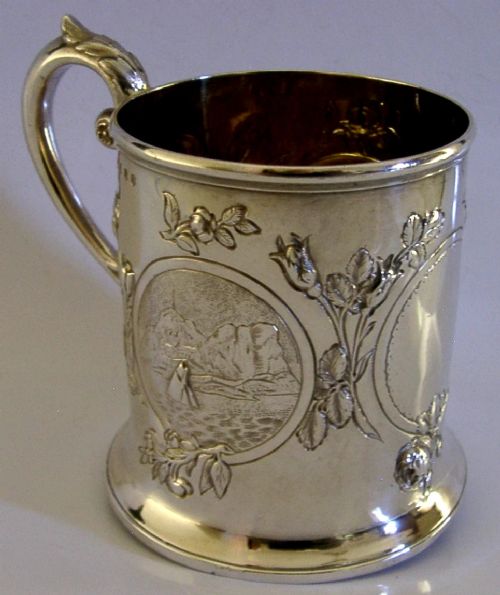


Victorian Sterling Beaker
These pieces of victorian sterling beaker span sturdy drinking vessels and christening mugs forged in precious silver across the nineteenth century.
Victorian Sterling Beaker
When searching for a victorian sterling beaker, a buyer encounters a diverse range of drinking vessels, christening mugs, and spirit flasks produced primarily during the Victorian and Edwardian periods. The selection on this page is dominated by silver christening mugs and beakers, featuring forms such as baluster, tapering, and cylindrical shapes.
Makers utilised sterling silver alongside unexpected combinations of cut glass, leather, velvet, stoneware, and horn, mounted with silver rims or collars. Styles span from plain utilitarian forms to elaborate Rococo Revival scrolls, Aesthetic Movement engravings, Chinoiserie motifs, Art Nouveau lines, and Anglo-Indian ornamentation.
Origins include English assay offices alongside Australian and Anglo-Indian workshops, reflecting the broad reach of nineteenth-century silversmithing. Buyers frequently meet pieces marked with specific dates from the mid-to-late nineteenth century, alongside broader nineteenth-century and Edwardian examples.
What varies in quality
Quality rests in the crispness of hand-engraved motifs, the weight of the sterling silver sheet, and the balance of applied handles like Rococo scrolls. Thicker metal resists denting and retains structural integrity better over generations of handling.
The sophistication of secondary materials - such as the clarity of cut glass, the curing of horn, or the precision of silver mounts fitted to stoneware - distinguishes standard production from finer workshop output. Crisp, legible hallmarks and well-preserved internal gilding further elevate a piece.
Victorian Sterling Beaker Retail Price Guide 2026
Typical asking prices for victorian sterling beaker among the pieces listed under this phrase on Sellingantiques today, from the lower quarter to the upper quarter. They describe what is for sale here now, not the wider market.
The Victorian Sterling Beaker Glossary
- Sterling Silver
- An alloy comprising ninety-two point five percent silver by mass, with the remainder being copper or other metals. This standard has governed British silver production for centuries.
- Hallmark
- A series of official marks stamped on items made of precious metals in the United Kingdom. These marks certify the purity of the metal, the assay office, and the year of production.
- Baluster
- A vertical architectural form with a swelled lower portion, frequently adapted for the bodies of drinking mugs and tankards. This shape provides a stable base and a comfortable grip.
- Silver Gilt
- Silver that has been coated with a thin layer of gold on its surface, often applied to the interior of beakers and mugs to protect the metal from acidic drinks.
- Chinoiserie
- A decorative style in Western art reflecting Chinese artistic influences, appearing on nineteenth-century silver through scenic and floral motifs.
Victorian Sterling Beaker: Frequently Asked Questions
What is a silver christening mug?
A christening mug is a small handled vessel traditionally presented to an infant to mark a baptism or birth. These pieces served as personal drinking cups intended to last a lifetime.
Over the nineteenth century, silversmiths decorated them with floral engravings, rococo scrolls, and plain polished surfaces. Today they function as cabinet pieces or decorative displays.
How do I care for sterling silver?
Sterling silver requires regular, gentle cleaning with a soft cloth to remove tarnish and prevent the accumulation of dust in engraved crevices. Avoid harsh abrasive cleaners that can wear away thin metal or surface gilding.
Store vessels in dry environments away from direct sunlight and rubber materials, which accelerate tarnishing. If fitted with horn, leather, or glass components, keep those specific materials dry during cleaning.
How can I tell the date?
Dating relies on the network of stamped hallmarks, which typically include a specific letter corresponding to an assay office's year cycle. Stylistic clues such as Aesthetic Movement engraving or Art Nouveau curves also point to specific decades.
Comparing the form and manufacturing techniques against documented nineteenth-century examples helps confirm the period of production.
Were collapsible beakers used for travel?
Collapsible beakers featured telescoping ring sections designed to nest inside compact leather or metal travel cases. Victorian travellers utilised them for impromptu drinks while on the move.
The nesting mechanism allowed gentlemen and ladies to carry a personal cup within a pocket or travelling bag.
What is an Anglo-Indian beaker?
Anglo-Indian silver items were produced in the Indian subcontinent during the British colonial period, often combining local decorative motifs with European vessel forms. These pieces display distinctive regional hand-carved or embossed ornamentation.
They reflect the cross-cultural exchange of silversmithing techniques and aesthetic preferences during the nineteenth century.