


Victorian Spool Turned Chair
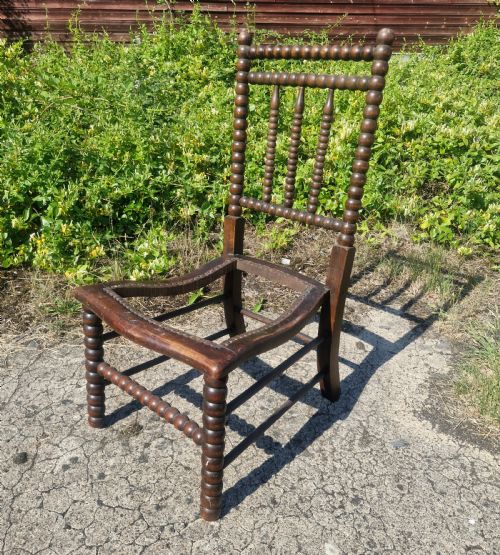
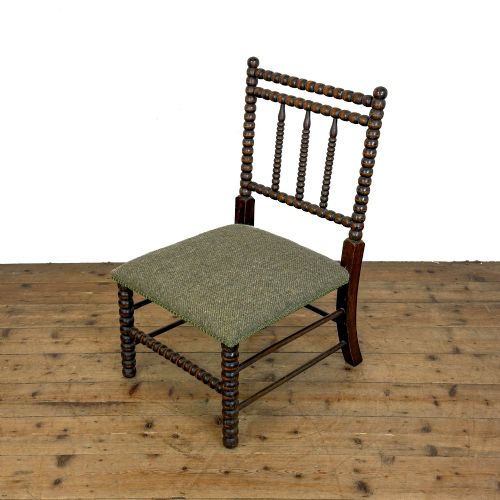
These Victorian spool turned chairs offer the distinctive charm of turned bobbin framing, combining nineteenth-century vernacular seating with strong decorative presence.
Victorian Spool Turned Chair
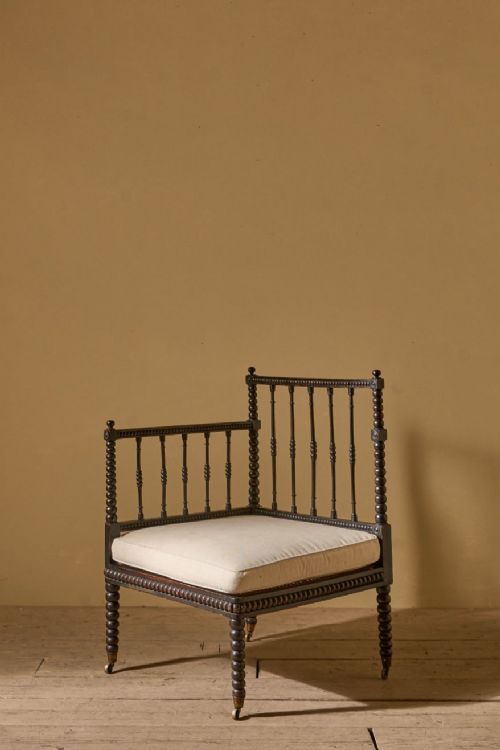
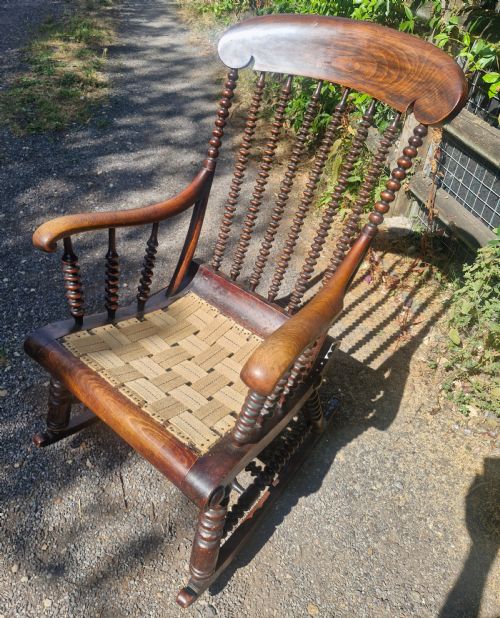
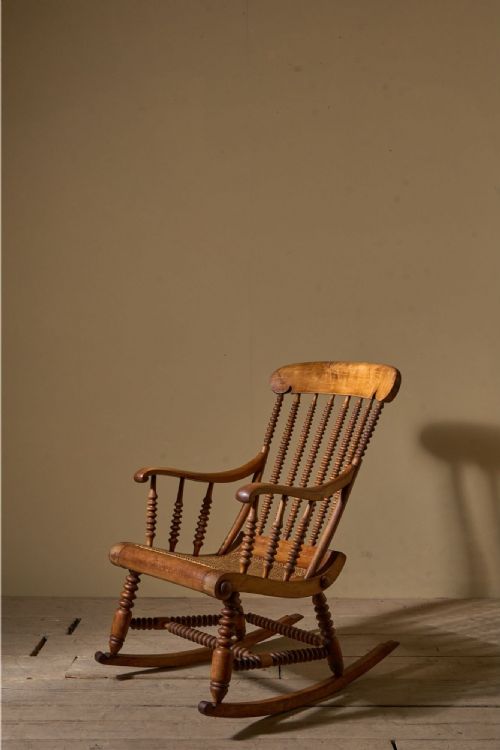
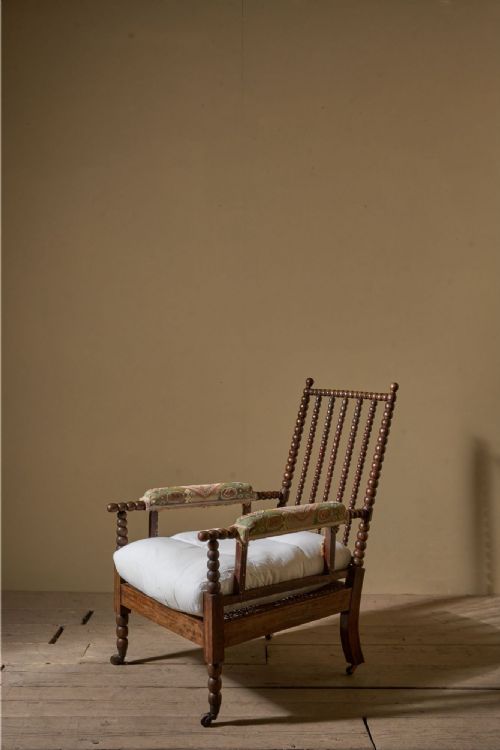
When you search for a victorian spool turned chair, you encounter nineteenth-century seating characterised by rhythmic, bobbin-turned or spool-turned wooden framing. These pieces appear across various forms from the period, including armchairs, rocking chairs, corner chairs, and daybeds, spanning dates from the mid-nineteenth century up to nineteen hundred.
You are most likely to meet ebonised wood or simulated rosewood finishes among these listings, alongside English country and Scottish vernacular examples. The forms range from low seat bedroom chairs and slipper chairs to open armchairs fitted with cane seats and cushions.
The aesthetic draws on Jacobean Revival influences while remaining firmly rooted in Victorian domestic interiors. Makers utilised hardwoods such as oak and walnut, creating compact side chairs as well as larger rocking chairs.
How they were made
The defining technique relies on lathe-turning solid wood into a continuous series of rounded spheres or bobbins, creating the characteristic spool framing. Workshops then ebonised the timber or applied simulated rosewood finishes to mimic more expensive exotic woods.
Framing was constructed from hardwoods like oak and walnut, frequently incorporating cane work for seats or integrating textile cushions and fabric upholstery. Joinery techniques from the nineteenth century ensured the repetitive turned members remained structurally sound under daily use.
Recorded forms include armchairs, daybeds, rocking chairs, and corner chairs reflecting English country and Scottish vernacular styles.
What varies in quality
Quality rests primarily in the crispness and regularity of the spool turning along the frame. Finer examples display cleanly cut bobbin profiles that maintain their geometric precision throughout complex curves and structural joints.
The choice of secondary materials also elevates a piece, such as the survival of original cane work, high-grade hardwood frames beneath ebonised surfaces, and well-executed upholstery or cushions that complement the turned woodwork.
The Victorian Spool Turned Chair Glossary
- Bobbin turning
- A woodworking technique using a lathe to produce a series of rounded, spool-like shapes along a wooden spindle or leg. This method creates the signature textured silhouette seen on nineteenth-century frames.
- Ebonised wood
- Timber treated with a dark finish to imitate the appearance of expensive ebony. It is a common surface treatment found on Victorian decorative seating.
- Corner chair
- A seating form designed to fit neatly into the corner of a room, typically featuring a square seat set diagonally with a curved back rail supported by turned posts.
- Vernacular furniture
- Everyday objects made by local craftsmen using regional styles and readily available materials, rather than high-fashion pieces designed for metropolitan salons.
- Slipper chair
- A low-seated bedroom chair traditionally used by ladies while dressing, allowing the sitter to put on shoes comfortably without high armrests getting in the way.
Victorian Spool Turned Chair: Frequently Asked Questions
What is a spool turned chair?
A spool turned chair is nineteenth-century seating featuring frames shaped on a lathe into repeating rounded bobbin forms. These pieces date from the Victorian era and encompass various seating types.
The style reflects revival movements of the period, offering distinct visual texture through turned wooden spindles.
How old are these chairs?
The pieces listed date from the nineteenth century, with specific examples recorded from eighteen fifty up to nineteen hundred. Most originate from the Victorian period.
Craftsmen produced these designs across English country workshops and Scottish vernacular traditions during this timeframe.
Were they used in bedrooms?
Many examples served as bedroom seating, including low seat chairs and slipper chairs designed for dressing areas. Their compact dimensions suited private quarters.
Larger variants like armchairs and rocking chairs functioned as general domestic seating in parlours and living spaces.
What woods were used?
Carpenters utilised various hardwoods including oak and walnut for the structural framework. Many pieces feature ebonised wood or simulated rosewood finishes.
Seats were constructed from solid timber, woven cane, or upholstered with fabric textiles and cushions.