



Victorian Spirit Frame
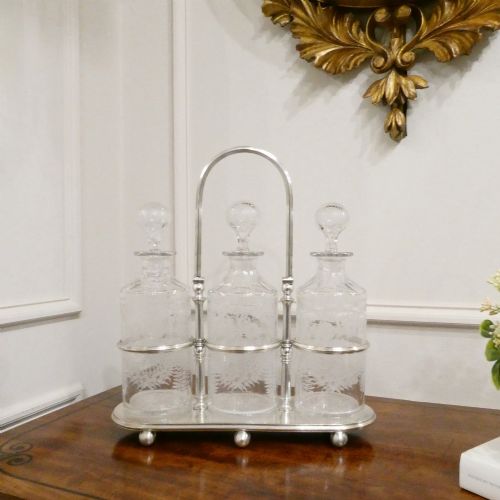
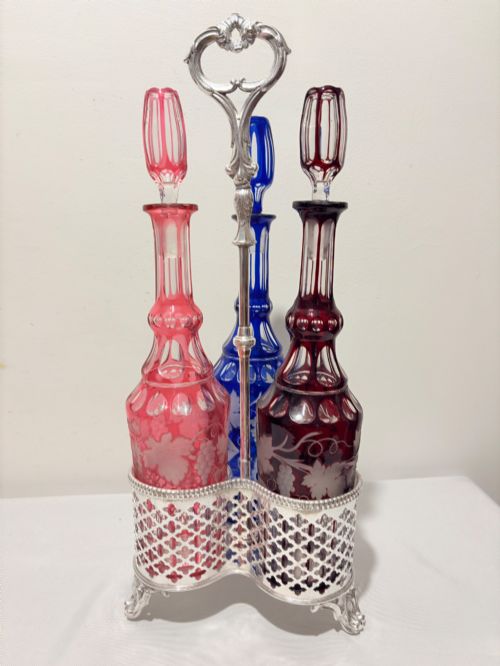
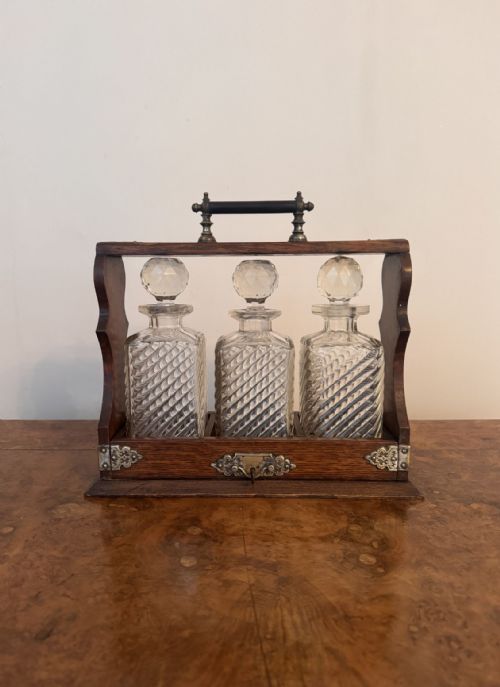
These Victorian spirit frame pieces combine heavy oak, coromandel, and silver plate to securely display your finest crystal decanters.
Victorian Spirit Frame
A Victorian spirit frame, commonly encountered as a tantalus or decanter stand, holds beverage bottles within a protective metal or wooden structure. You will frequently find these configured to hold two or three decanters, often featuring secure locking mechanisms.
The objects span from the 1850s into the Edwardian era, predominantly appearing in solid oak or silver plated frames. Decanter sets and stands range from open bottle holders to elaborate cased boxes designed for the sideboard.
Makers and retailers of the period housed cut glass and crystal decanters inside ornate metal frameworks. These barware pieces served formal hospitality spaces in Victorian and Edwardian dining rooms.
How they were made
Craftsmen utilised heavy timber such as oak and walnut for the bases and cases, frequently incorporating inlaid details and locking bars. Metal components rely on silver plate over base metals, combined with cast brass fittings and hinges.
Bottles were formed from cut glass and cut crystal, shaped to fit precisely within the silver plated or metal frames. The manufacturing process joined cabinetry with silversmithing to create secure locking barware.
Victorian Spirit Frame Retail Price Guide 2026
Typical asking prices for victorian spirit frame among the pieces listed under this phrase on Sellingantiques today, from the lower quarter to the upper quarter. They describe what is for sale here now, not the wider market.
Listings feature pieces spanning from the 1850s through to the Edwardian era, constructed in silver plate, oak, coromandel, and cut crystal.
What varies in quality
The weight of the silver plating and the depth of the glass cutting separate standard items from superior examples. Thicker plating on the frame and heavier crystal bottles indicate finer manufacture.
Cabinetry detail defines the upper tier of the range, seen in the choice of hardwoods like coromandel and the precision of inlaid woodwork. Maker attribution also elevates certain pieces above unmarked productions.
The Goldsmith Co.·Hukin and Heath·Philip Ashberry
The Victorian Spirit Frame Glossary
- Tantalus
- A locking beverage stand that holds decanters securely within a frame to prevent unauthorised access while displaying the bottles.
- Silver Plate
- A thin layer of silver fused to a base metal to provide the appearance of solid silver at a lower manufacturing cost.
- Coromandel
- A dense, dark timber imported from Asia used for high-end Victorian cabinetwork and decorative boxes.
- Cut Crystal
- Glass containing lead oxide that is faceted by grinding and polishing to create brilliant light reflections.
Victorian Spirit Frame: Frequently Asked Questions
What is a spirit frame?
A spirit frame is a tabletop stand or cased box designed to hold and display multiple decanters of liquor.
These pieces typically combine metalwork and woodwork to present the bottles securely on sideboards.
How does a tantalus lock?
A tantalus utilises a metal bar that swings down over the stoppers of the decanters, secured by a functional lock at the end.
When the bar is locked in place, the stoppers cannot be removed and the decanters cannot be lifted from the frame.
How do I date these pieces?
Dating relies on stylistic clues, framing materials, and occasional maker marks or registry numbers stamped into the metal.
Oak and coromandel cases with heavy silver plating generally point to production between the mid-nineteenth century and the Edwardian period.
How do I clean the metal?
Silver plated frames require gentle cleaning with a specialised soft cloth to avoid wearing through the thin silver layer.
Harsh abrasive dips should be avoided to preserve the original plate and any patination on the base metals.