
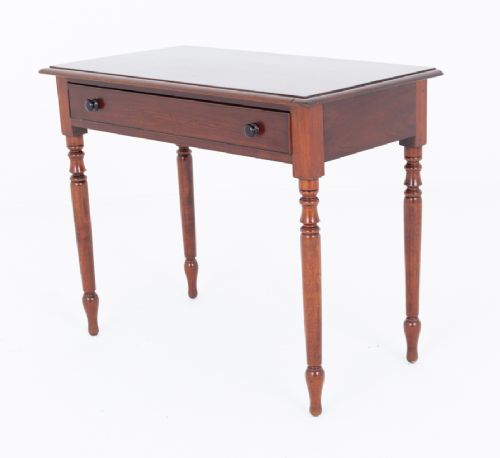
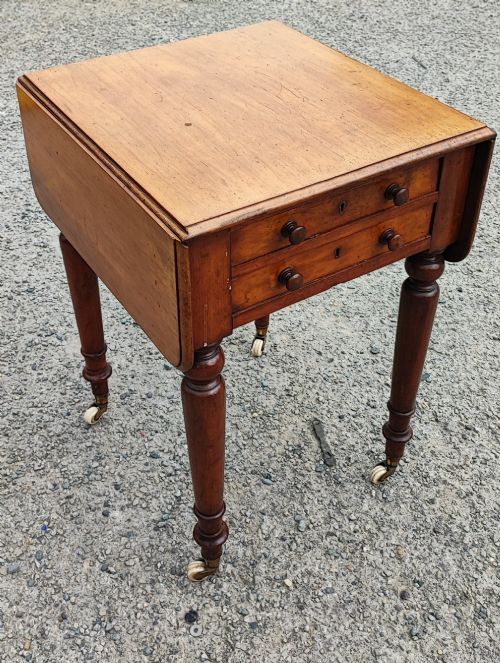

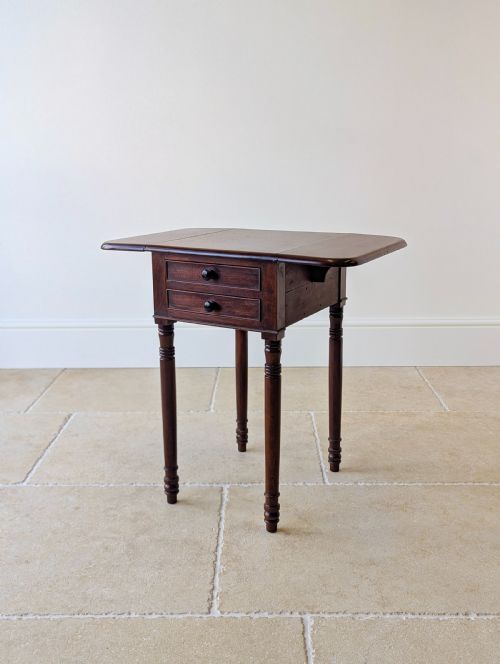


Victorian Sofa End Table
A victorian sofa end table brings compact timber proportion and drop leaf versatility to a tight sitting room space.
Victorian Sofa End Table
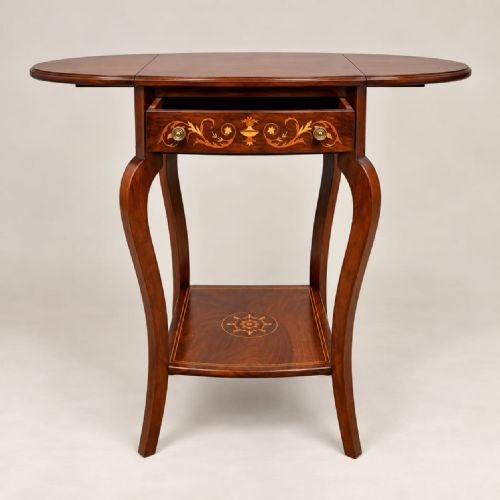
A victorian sofa end table encompasses a practical group of small tables designed to sit beside upholstered seating, drawing primarily from nineteenth-century forms. The items appearing under this heading take various shapes, including side tables, occasional tables, centre tables, and drop leaf formats such as Pembroke and Sutherland tables.
Buyers meet pieces originating mainly from the Victorian and Edwardian eras, alongside earlier Regency and William IV examples that share similar proportions. Woods such as mahogany, rosewood, and walnut dominate the selection, often featuring drop leaves or single drawers suited to domestic utility.
Makers and workshops of the period utilised durable timbers to construct functional surfaces that adapted easily to changing room layouts. The selection ranges from plain mahogany side tables to more decorative burr walnut and satinwood pieces.
How they were made
Cabinetmakers constructed these tables using dense hardwoods like mahogany, rosewood, and walnut, frequently selecting figured veneers such as burr walnut and satinwood for top surfaces. Turning, marquetry inlay, and drop leaf hinges formed the primary mechanical and decorative techniques applied across side and centre tables.
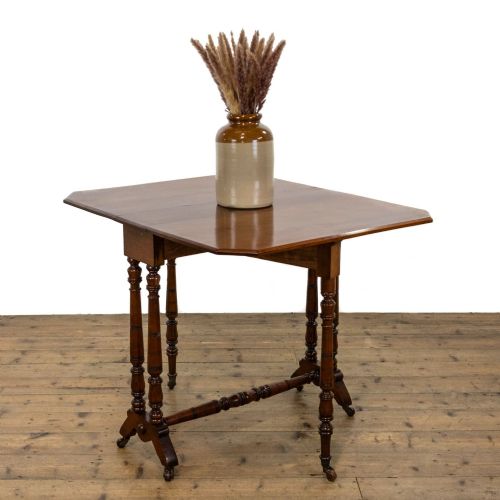
Makers integrated structural elements like stretcher rails and gate leg actions to support folding flaps and heavy timber tops. Brass fittings and ceramic castors often appeared on legs to assist mobility on carpets.
Listings feature 19th Century, Victorian, and Edwardian periods alongside Regency and William IV examples.
What varies in quality
The choice of timber grain and veneer selection dictates much of the visual merit, with richly figured burr walnut or satinwood sitting above plain utility timbers. Crispness in turned supports, smooth operation of drop leaf hinges, and refined joinery mark out superior workshop output.
Proportion and structural balance separate standard production items from finer pieces attributed to notable makers. The integration of functional drawers, crisp marquetry inlay, and well-executed stretcher frames elevates the execution.
Gillow·James Winter and Sons
The Victorian Sofa End Table Glossary
- Pembroke table
- A small table with hinged drop flaps on either side, often fitted with a single drawer. It was designed for occasional use and easy movement around a room.
- Sutherland table
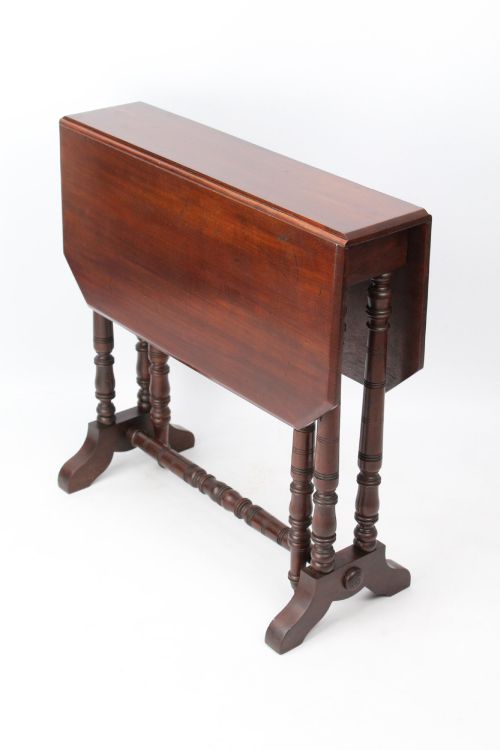
- A narrow drop leaf table where the leaves fold down almost vertically, supported by swinging gate legs. This design minimises floor space when the table is closed.
- Sofa table
- A rectangular occasional table traditionally placed against the back of a sofa, typically featuring drop leaves at each end. They frequently incorporate end drawers for storage.
- Stretcher table
- A table featuring horizontal wooden bars connecting the legs for added stability. These rails often intersect near the base to strengthen the frame.
- Centre table
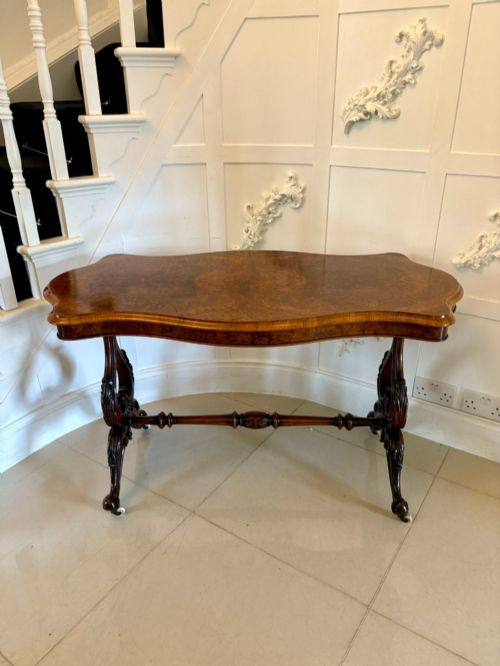
- A freestanding piece finished on all sides to stand in the middle of a room. These larger tables often display decorative timber veneers.
Victorian Sofa End Table: Frequently Asked Questions
What is a victorian sofa end table used for?
These tables served various domestic functions beside seating, holding lamps, books, or tea services within easy reach.
Their compact size and movable leaves allowed them to expand when needed and tuck away beside upholstery.
How do I identify a sutherland table?
Sutherland tables feature exceptionally narrow central tops and two large drop leaves supported by pivoting gate legs.
When folded down, the leaves hang almost vertically to create a very slender profile.
What woods are common on these tables?
Mahogany, rosewood, and walnut appear most frequently across these nineteenth-century pieces.
Finer examples incorporate decorative veneers like burr walnut or satinwood on the main surfaces.
How do drop leaf tables work?
Hinged flaps on either side of the main top lift upward to increase the available surface area.
Swinging wooden brackets or gate legs rotate out from the base to support the extended leaves.