




Victorian Slipper Tub
A Victorian slipper tub offers deep-sprung comfort and enclosed seating, making it a compact addition to a bedroom or corner.
Victorian Slipper Tub
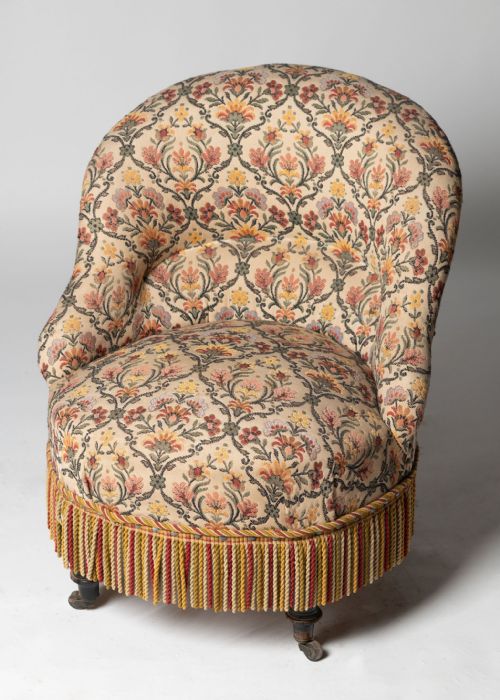
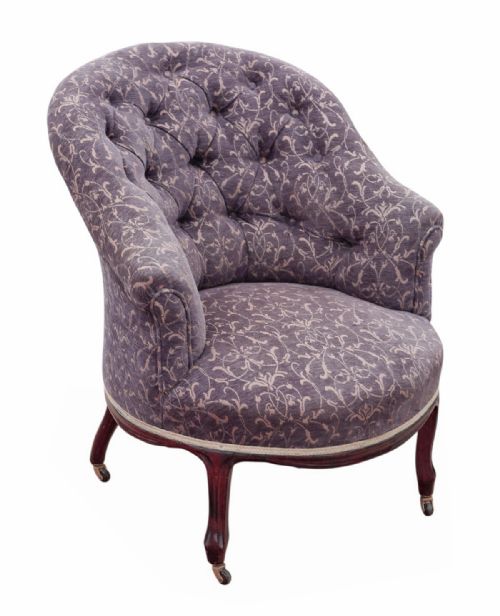
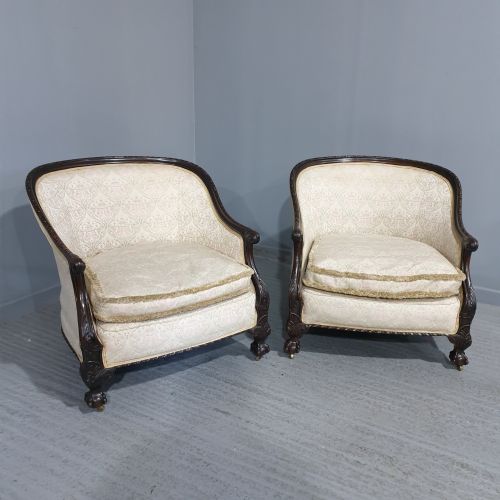
A Victorian slipper tub is typically represented on this page by nineteenth-century armchairs, accent chairs, and boudoir seating designed with curved, enclosing backs. These pieces span the nineteenth century, Victorian, Edwardian, and French Napoleon III styles, with origins appearing in British and French workshops.
Makers and workshops are represented by specific cabinet makers like Gillows, alongside stamped pieces, offering distinct stylistic markers from the period. The assortment leans heavily towards intimate bedroom or drawing-room seating designed for low-slung, relaxed posture.
How they were made
Frames are constructed from sturdy timbers such as mahogany, rosewood, and ebonised wood, often supported by brass castors and shaped legs. These structural elements provide the dense foundation necessary to sustain the tight curves of the tub shape.
Upholstery relies on traditional textile applications including velvet, linen, fabric, and vintage French cotton, frequently finished with buttoned back detailing. The integration of iron-back supports in certain country house examples adds rigidity to the enclosed frame.
Victorian Slipper Tub Retail Price Guide 2026
Typical asking prices for victorian slipper tub among the pieces listed under this phrase on Sellingantiques today, from the lower quarter to the upper quarter. They describe what is for sale here now, not the wider market.
Listings feature nineteenth century and Edwardian pieces constructed from mahogany, rosewood, and ebonised wood.
What varies in quality
The distinction between tiers of quality rests upon the integrity of the original frame timber and the refinement of the carved details or gilt legs. Superior examples exhibit substantial rosewood or mahogany structures with crisp lines, whereas simpler pieces rely on ebonised finishes.
Upholstery execution separates standard output from exceptional work, particularly in the precision of button-backed tufting and the choice of period-appropriate fabrics like velvet or vintage cotton. Maker attributions, such as stamps by Gillows, elevate the standing of a piece through documented provenance.
Gillows
The Victorian Slipper Tub Glossary
- Tub chair
- An upholstered armchair with a continuous curved back and arms forming a single enclosing structure. This design provides draught-proof seating originally favoured in bedrooms and studies.
- Buttoned back
- A method of upholstery where depressions are formed in the padding by stitches pulled tight and secured with buttons. This creates a diamond pattern that keeps the stuffing evenly distributed.
- Ebonised wood
- Timber treated with a dark stain or finish to imitate ebony. It was widely utilised in the nineteenth century to achieve a sleek, formal contrast against bright upholstery fabrics.
- Open armchair
- A chair with uncovered wooden arms rather than fully upholstered padding. These frames expose the craftsmanship of the maker along the structural supports.
Victorian Slipper Tub: Frequently Asked Questions
What is a Victorian slipper tub?
A Victorian slipper tub is a compact, low-seated armchair featuring an enclosed, curved back designed for comfort and warmth.
These chairs were traditionally used in bedrooms, boudoirs, or dressing rooms where space was limited but comfortable seating was desired.
How do I identify a Victorian tub chair?
Look for a continuous curved backrest that wraps around the sides to form low, integrated armrests. The frames often rest on short timber legs, occasionally fitted with brass castors.
Nineteenth-century examples frequently feature buttoned upholstery, exposed rosewood or mahogany, and traditional textile coverings such as velvet or cotton.
Where were these chairs placed?
They were designed for private domestic spaces like bedrooms, dressing rooms, and intimate sitting areas. Their low profile made them suitable for sitting near a fireplace.
Today, they function well as accent chairs in corners, bedrooms, or smaller living spaces where bulky furniture would overwhelm the room.
How do French and British styles differ?
French nineteenth-century and Napoleon III models often emphasise decorative fabric choices, such as vintage cotton, and lighter decorative frames. British Victorian versions frequently employ heavier timbers like rosewood and mahogany.
Both traditions share the defining enclosed tub shape, though British examples often lean towards robust country house utility or formal cabinet maker production.