





Victorian Slant Front Box
These Victorian slant front box pieces bring period utility to a desk or hearth, offering tidy storage for correspondence and fuel.
Victorian Slant Front Box
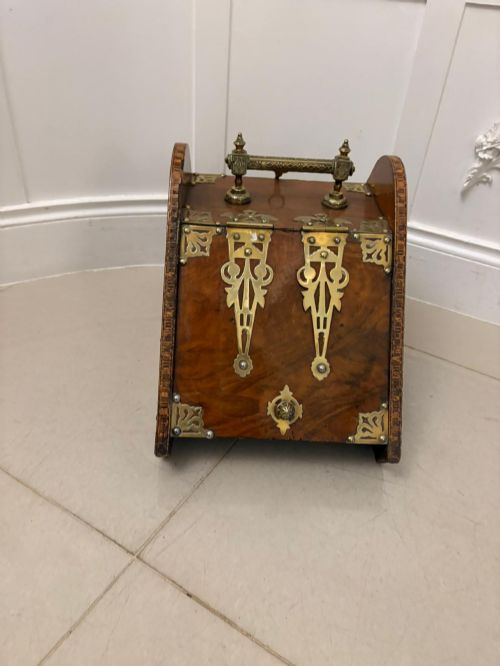
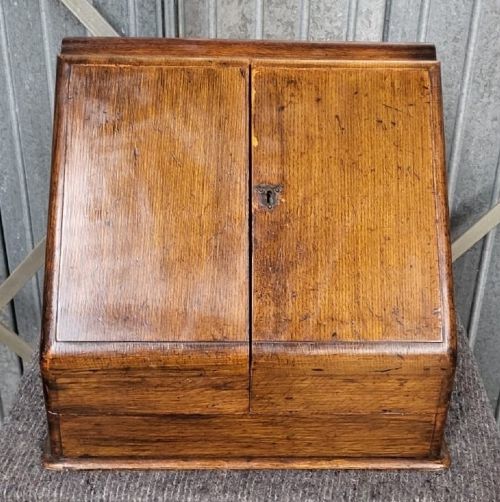
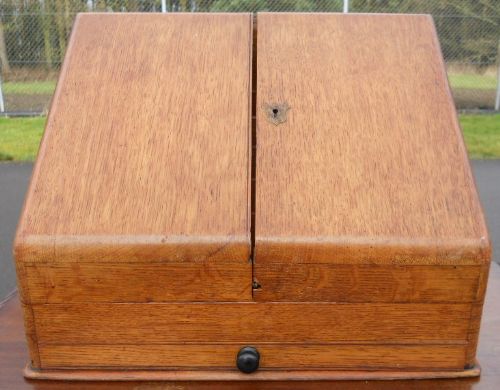
A victorian slant front box encompasses a range of lidded containers designed primarily for desk organisation or fireside fuel storage. The selection on this page spans utilitarian coal boxes, purdoniums, and fitted stationery cabinets with sloping lids.
Most examples date from the Victorian era, utilising durable timbers such as oak, walnut, and mahogany alongside metal components like brass and sheet iron. Forms vary from simple desk boxes to elaborate cabinets equipped for daily correspondence and fireside upkeep.
Construction and materials
Cabinetmakers constructed these pieces from solid hardwoods including oak, walnut, mahogany, and satinwood, frequently augmenting the timber with brass mounts, hinges, and handles. The sloping fronts required precise joinery to ensure the lids closed flush against the main body of the box or cabinet.
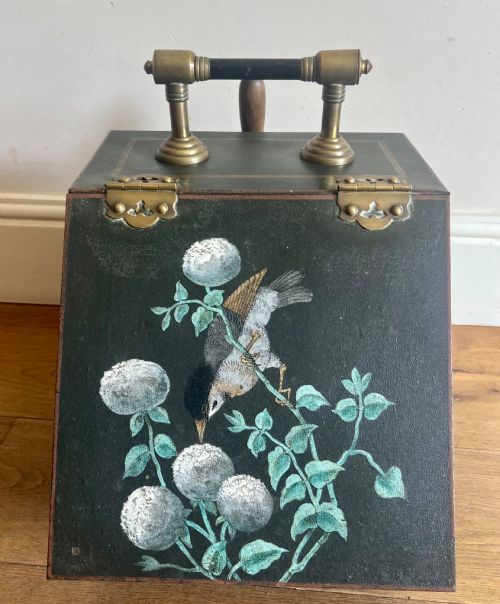
Metal variants employ sheet iron and tole ware, shaped into scuttles and purdoniums designed to withstand the daily wear of holding coal and logs. Decorative elements on wooden versions often include carved details and brass fittings that reinforce the corners and lids.
Victorian Slant Front Box Retail Price Guide 2026
Typical asking prices for victorian slant front box among the pieces listed under this phrase on Sellingantiques today, from the lower quarter to the upper quarter. They describe what is for sale here now, not the wider market.
The available selection includes both desktop stationery boxes and heavy fireside coal purdoniums.
Judging quality and craftsmanship
Quality in these pieces is dictated by the selection of timber and the integrity of the brass hardware. Finer examples display figured grain in walnut or oak, paired with substantial, well-fixed brass mountings rather than thin, stamped metal.
Internal complexity also separates standard items from superior ones, particularly in stationery cabinets that feature dedicated slots, adjustable dates, and fitted compartments. The crispness of carved details on the sloping front further distinguishes finer workshop output.
The Victorian Slant Front Box Glossary
- Purdonium
- A specialised coal container, typically featuring a sloping front or fall-front door, designed to stand neatly by a fireplace. It often houses a removable metal liner and a matching shovel.
- Stationery cabinet
- A desktop box featuring a sloping or compartmented lid designed to hold writing paper, envelopes, and inkwells. These pieces often include internal dividers for organisation.
- Tole ware
- Enamelled or japanned metalware, commonly sheet iron, decorated with painted or printed designs. It appears on utilitarian fireside items requiring a durable, wiped finish.
- Brass-mounted
- Fitted with brass hinges, handles, or corner brackets that provide structural reinforcement and decorative contrast against the timber body.
Victorian Slant Front Box: Frequently Asked Questions
What is a purdonium?
A purdonium is a decorative coal box designed to sit by the fireplace during the Victorian period. It usually includes a sloping front or door to conceal the fuel.
Inside, these pieces typically contain a metal liner to catch dust and hold coal cleanly. They often come with a small matching shovel stored in a compartment on the side or back.
How were stationery cabinets used?
Stationery cabinets kept writing paper, envelopes, and correspondence organised on a desk before the widespread use of telephones. The sloping front allowed easy access to frequently used papers.
Finer versions included internal slots, drawers, and sometimes adjustable dates or calendars. They were standard fixtures in Victorian studies and libraries.
What woods are common?
Oak and walnut are the most frequently encountered timbers in these pieces, valued for their durability and rich grain. Mahogany and satinwood also appear on desk boxes and cabinets.
Cabinetmakers selected these hardwoods to withstand heavy daily use while providing a handsome appearance for the home. Metal and tole ware were reserved primarily for fireside fuel containers.
How do I date these pieces?
Dating relies on observing the timber species, construction methods, and stylistic cues such as Victorian Gothic Revival details. Brass hardware style and the presence of factory components also help narrow the decade.
Most items date from the mid to late nineteenth century, reflecting the manufacturing standards of that era. Accompanying items like adjustable date mechanisms provide specific chronological clues.