





Victorian Silver Trowel
A victorian silver trowel is a miniature or ceremonial implement prized by collectors for its whimsical form and fine metalwork.
Victorian Silver Trowel
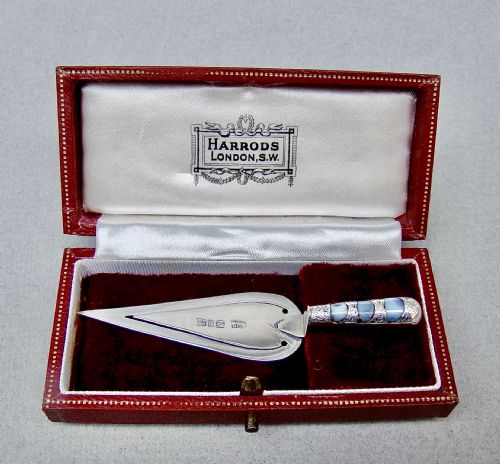
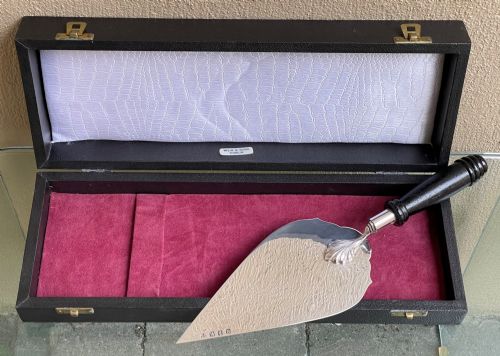
When you search for a victorian silver trowel, you encounter two distinct forms: ceremonial presentation pieces and miniature novelty bookmarks. The presentation examples are larger trowels designed for laying foundation stones or cutting cakes, often bearing detailed engravings. The smaller versions function as page markers, shaped precisely like masonry trowels.
The evidence shows these pieces span the Victorian period, with similar novelty items appearing in Edwardian times and later decades. Bookmarks dominate the surviving records, frequently fitted with decorative handles. Presentation trowels appear less often but command attention through their scale and commemorative inscriptions.
Materials and construction
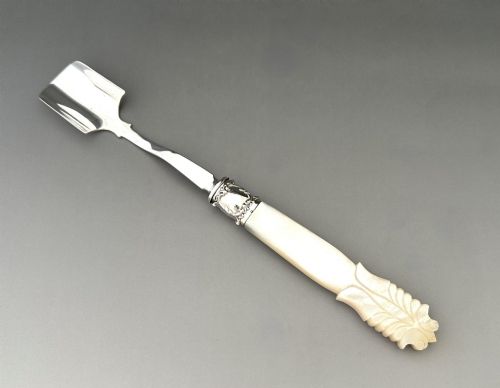
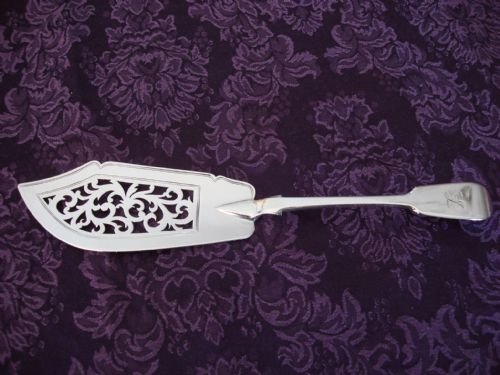
The blades are forged from sterling silver, occasionally featuring pierced decoration or flat engraving. Makers mounted these silver blades onto handles turned from ebony, mother-of-pearl, or banded agate. These contrasting materials give the small novelty bookmarks their distinctive visual weight.
Hallmarks stamped directly into the silver record the assay office, date letter, and maker's mark. Presentation trowels often incorporate organic handle materials like ivory alongside substantial silver ferrules and shafts.
Victorian Silver Trowel Retail Price Guide 2026
Typical asking prices for victorian silver trowel among the pieces listed under this phrase on Sellingantiques today, from the lower quarter to the upper quarter. They describe what is for sale here now, not the wider market.
Judging quality and execution
Quality rests in the crispness of the blade piercing, the depth of the hand engraving, and the selection of the handle material. A well-matched piece of banded agate or iridescent mother-of-pearl elevates a novelty bookmark above standard production.
The integrity of the join between the blade and the handle dictates the soundness of the object. Crisp, legible hallmarks and unrubbed presentation inscriptions separate standard items from superior examples.
Crisford & Norris·Martin Hall & Co·George Adams·Charles Boyton·Adie & Lovekin·Elizabeth & John Eaton
The Victorian Silver Trowel Glossary
- Presentation Trowel
- A ceremonial implement used for laying foundation stones or serving celebratory cakes. These larger pieces often feature engraved dedications and substantial handles.
- Bookmark
- A page marker designed to slip between leaves. In this category, novelty trowels combine utility with miniature scale.
- Banded Agate
- A variety of chalcedony displaying distinct natural stripes. Makers utilised this stone to form decorative handles for small silver items.
- Mother-of-Pearl
- The iridescent inner layer of certain mollusc shells. It provides a smooth, gleaming surface for knife scales and bookmark handles.
- Sterling Silver
- An alloy consisting of silver and other metals to increase durability. British items of this standard bear the lion passant hallmark.
Victorian Silver Trowel: Frequently Asked Questions
What is a silver trowel bookmark?
A silver trowel bookmark is a miniature novelty page marker fashioned in the exact shape of a builders trowel. These small pieces were produced in large numbers during the nineteenth century.
They combine a sterling silver blade with a decorative handle made from agate, mother-of-pearl, or all-silver construction.
How were presentation trowels used?
Presentation trowels served as ceremonial tools for significant civic and religious events, such as laying the foundation stone of a chapel or public building. Dignitaries used them symbolically before the trowel was engraved and kept as a keepsake.
They also functioned as large cake slices for celebratory banquets.
How do I read the hallmarks?
British hallmarks stamped on the silver indicate the assay office, the specific year of manufacture, and the silversmith's registered mark. These tiny stamped symbols provide the definitive date for each piece.
Locating the marks usually requires a loupe, as the stamps are placed on the blade or ferrule.
Can I use these as actual bookmarks?
While sturdy enough to mark a place in a book, their flat silver blades and decorative handles make them prized collector objects today. Handling them with care preserves the antique silver and delicate stone handles.
Many collectors display them in cabinets rather than placing them inside books.