



Victorian Silver Tea Cutlery
Victorian silver tea cutlery brings table service to life with bright metal, handled fruit knives, and cased teaspoons.
Victorian Silver Tea Cutlery
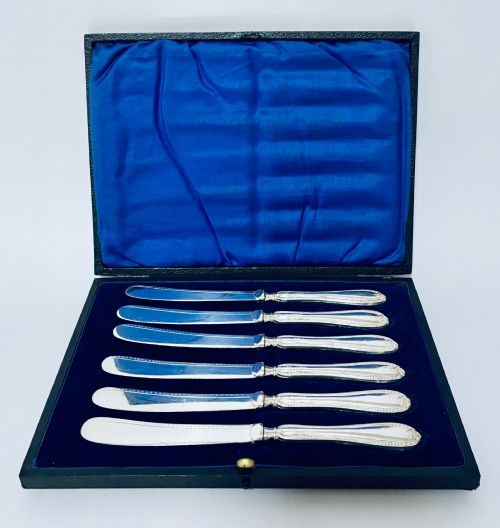
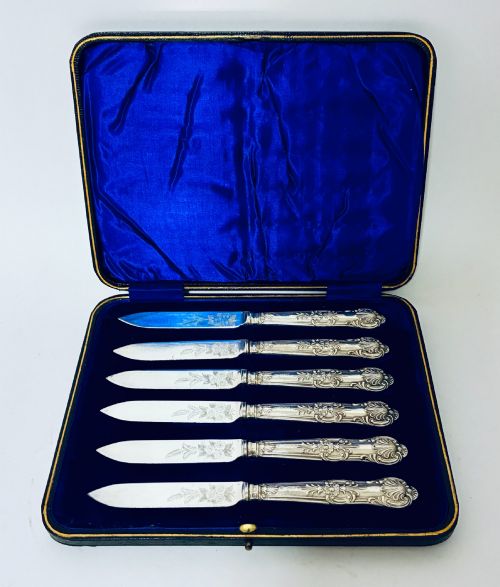
Victorian silver tea cutlery encompasses small implements designed for tea, fruit, and butter, spanning teaspoons, caddy spoons, and butter knives. These pieces often appear as matched or cased sets featuring silver or silver-handled utensils.
The selection on this page ranges through the Victorian period, late Victorian years, Edwardian era, and Russian Revival styles. Items include sets of butter knives, Apostle teaspoons with sugar tongs, fruit knives, and silver-gilt spoons.
Makers and assay locations such as Birmingham, Sheffield, Chester, and Exeter mark the origins of these items. Forms vary from simple spoons to elaborate cloisonné sets and mother-of-pearl handled knives.
How they were made
Makers utilised solid silver, sterling silver, and silver plate for the metal components, often pairing them with steel blades for knives. Silver-gilt appears on select items to provide a rich, gold-coloured finish over silver.
Handles incorporate materials like mother-of-pearl alongside silver, while presentation cases utilise velvet, silk, leatherette, and satin linings. Enamel work decorates specific pieces, notably in Russian Revival cloisonné designs.
Victorian Silver Tea Cutlery Retail Price Guide 2026
Typical asking prices for victorian silver tea cutlery among the pieces listed under this phrase on Sellingantiques today, from the lower quarter to the upper quarter. They describe what is for sale here now, not the wider market.
Apostle spoons bring tiny disciples to tea, watching over your sugar cubes with miniature metal solemnity.
What varies in quality
Quality shows in the weight of the silver, the crispness of the chasing or engraving, and the preservation of fitted cases lined in silk or velvet. Solid silver construction stands apart from silver plate.
The integrity of applied decoration, such as enamel work or mother-of-pearl handles, dictates the finish of a set. Maker marks and clear town assay stamps indicate standard and origin.
George Unite·Robert Stebbings
The Victorian Silver Tea Cutlery Glossary
- Silver-gilt
- Silver that has been coated with a thin layer of gold on its surface. This technique adds a warm, gilded appearance to spoons and tongs.
- Caddy spoon
- A short spoon specifically designed for measuring loose tea leaves from a caddy. These often feature decorative bowls and short handles.
- Cloisonné
- An enamelwork technique where thin metal wire creates compartments on a metal base, filled with coloured glass paste and fired. Russian Revival pieces utilise this method.
- Assay mark
- A stamp indicating the purity of the metal and the office where it was tested. Towns like Birmingham, Sheffield, Chester, and Exeter struck these marks.
- Mother-of-pearl
- The iridescent inner layer of certain mollusc shells, utilised for knife handles. It offers a smooth, pale grip for fruit and butter knives.
Victorian Silver Tea Cutlery: Frequently Asked Questions
What is victorian silver tea cutlery?
Victorian silver tea cutlery includes small spoons, butter knives, and fruit knives created for table use during the nineteenth and early twentieth centuries. These items range from single caddy spoons to cased sets with sugar tongs.
Many pieces combine sterling silver bowls or blades with handles made of silver, mother-of-pearl, or steel. They reflect the dining habits and metalworking standards of the period.
How do I care for cased cutlery?
Cased cutlery benefits from dry storage away from direct sunlight and damp conditions. Keeping the velvet or silk lined presentation boxes closed protects the metal from rapid tarnishing.
Cleaning requires appropriate silver polishes used sparingly to avoid damaging delicate engraving, gilt surfaces, or handle attachments.
Were these items used daily?
Many sets served formal tea tables, whilst others remained housed in fitted presentation cases for special occasions. Caddy spoons saw regular use in measuring tea leaves.
Survival in original cases often suggests lighter use or careful preservation by owners over generations.
How do I identify periods?
Assay marks, style conventions, and maker details help date victorian silver tea cutlery. Victorian items share characteristics with later Edwardian and Russian Revival pieces.
Town marks from places like Birmingham, Sheffield, Chester, and Exeter provide specific geographic and chronological reference points.