



Victorian Silver Smelling Salts
Victorian silver smelling salts bottles and vinaigrettes are pocket companions for reviving the senses, combining precious metalwork with glass or natural stones.
Victorian Silver Smelling Salts
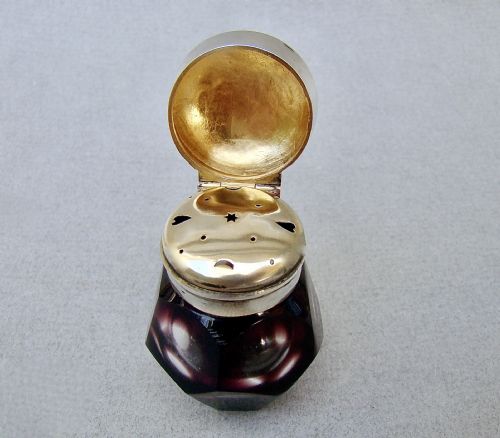
When searching for victorian silver smelling salts, collectors encounter small receptacles designed to hold volatile compounds inside a pocket or reticule. The forms on this page span scent bottles, vinaigrettes, and small boxes created during the nineteenth century.
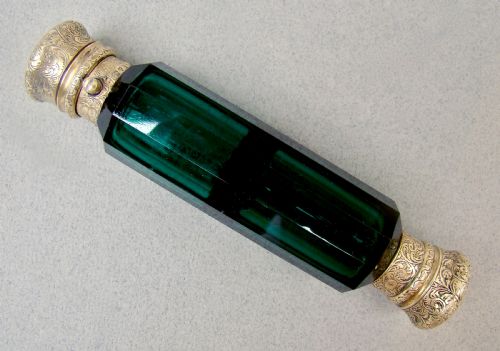
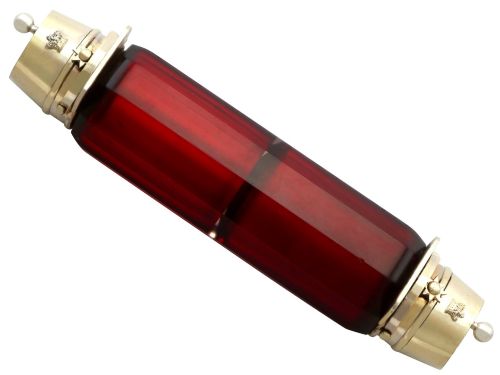
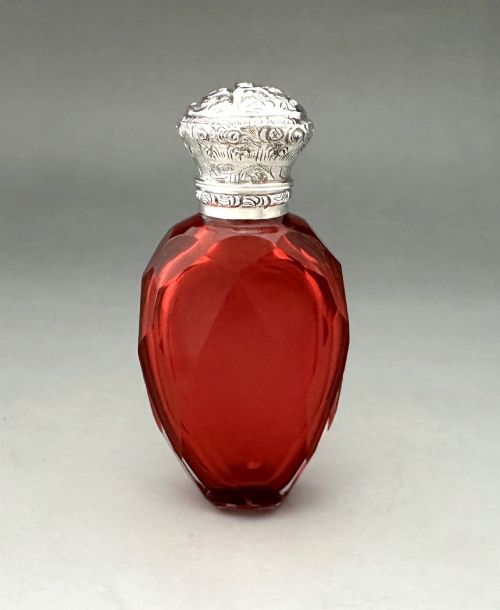
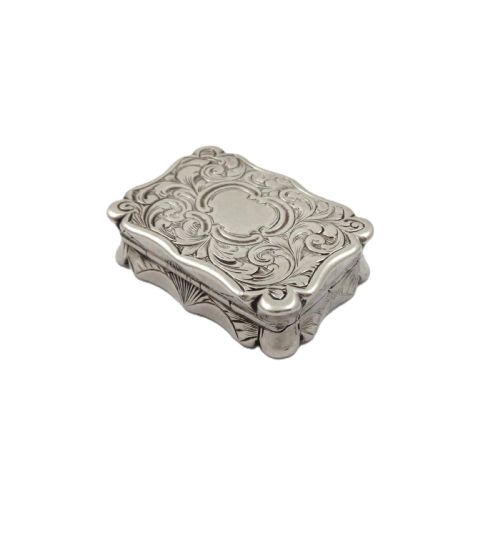
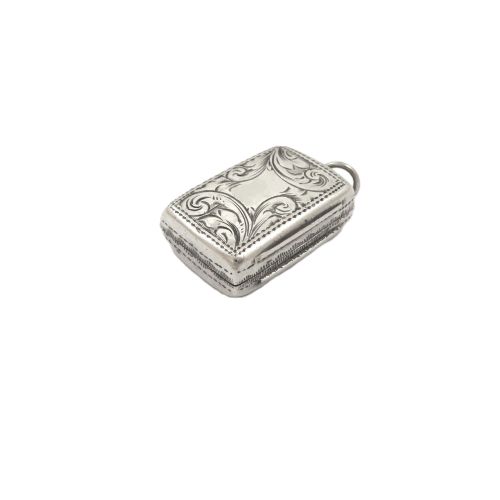
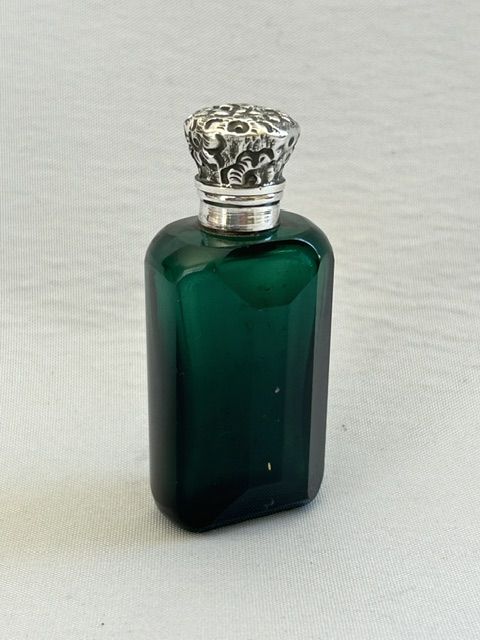
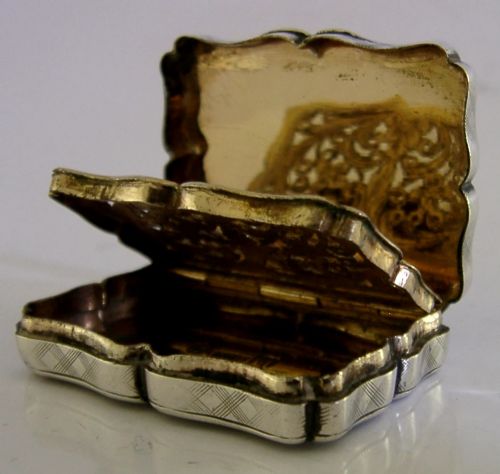
Vinaigrettes differ from standard scent bottles by housing a pierced internal grill through which the scent of a sponge soaked in vinegar or aromatics escapes. Scent bottles instead contain liquids held behind stoppers or screw caps, sometimes configured as double-ended vessels.
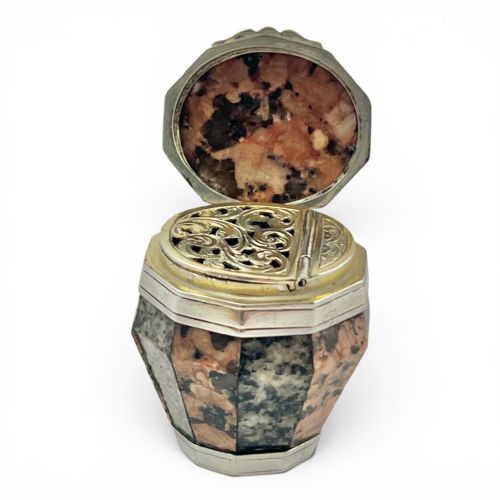
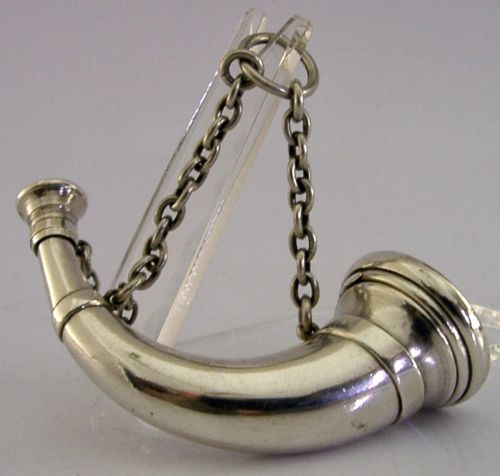
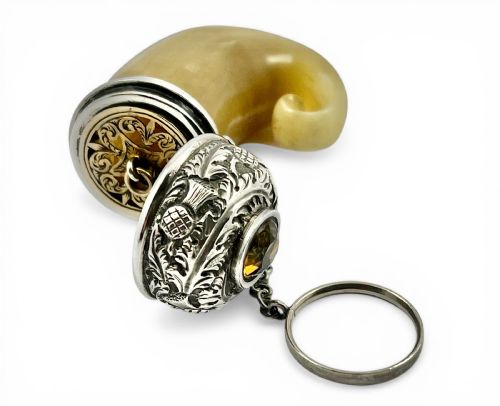
Most examples originate in the Victorian period, supplemented by occasional Georgian pieces and later nineteenth-century variations. Makers utilised diverse shapes, ranging from standard rectangular boxes to novelty forms such as hunting horns, walnuts, and eggs.
What varies in quality
Quality rests upon the ambition of the form and the crispness of the silversmith's chasing. Novelty shapes and architectural castle top engravings demand greater skill than plain rectangular boxes.
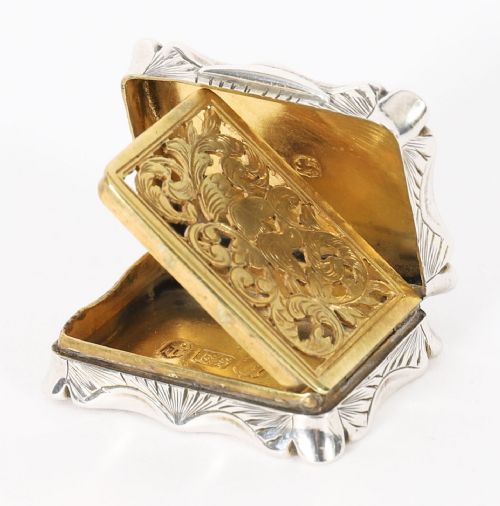
The integration of materials dictates distinction, particularly where coloured glass or polished stone meets well-preserved silver mounts. Internal grilles in vinaigrettes show varying degrees of piercing complexity, from simple geometric perforations to intricate floral designs.
Victorian owners could revive themselves in stifling ballrooms using tiny silver boxes shaped precisely like walnuts or hunting horns.
Horton & Allday·Sampson Mordan·Nathaniel Mills·Edward Smith
The Victorian Silver Smelling Salts Glossary
- Vinaigrette
- A small ornamental box containing a perforated internal grill for holding a sponge soaked in aromatic vinegar. This allowed the owner to inhale the freshening vapours discreetly.
- Silver gilt
- Sterling silver covered with a thin layer of gold, providing a rich yellow lustre on the interior or exterior of the piece. This treatment protected the silver from certain chemical reactions.
- Castle top
- A detailed architectural engraving on the silver lid of a box or vinaigrette, depicting a specific landmark or building. These represent highly desirable topographical items.
- Opaline glass
- An opaque or semi-translucent glass that displays delicate pastel tones, popular for Victorian vanity items. It provides a soft contrast to polished silver mounts.
- Double-ended
- A scent bottle featuring openings at both ends, allowing two different perfumes or smelling salts to be carried in one container.
Victorian Silver Smelling Salts: Frequently Asked Questions
What is the difference between a vinaigrette and a scent bottle?
A vinaigrette is a small box containing a sponge soaked in vinegar or aromatics, accessed through a hinged lid and a pierced internal grill.
A scent bottle holds liquid perfume behind a stopper or cap, often made of coloured or cut glass with silver mounts.
How do you use a vinaigrette?
The user opens the outer silver lid to reveal an interior pierced metal grill. The volatile salts or vinegar-soaked sponge beneath releases vapours through the perforations.
This method was historically employed to ward off faintness in crowded rooms.
How are novelty shapes identified?
Novelty pieces take inspiration from everyday objects and nature, including hunting horns, walnuts, eggs, and barrels. Silversmiths modelled the silver and stone to mimic these forms while maintaining functionality.
These tactile shapes were popular personal accessories in the nineteenth century.