


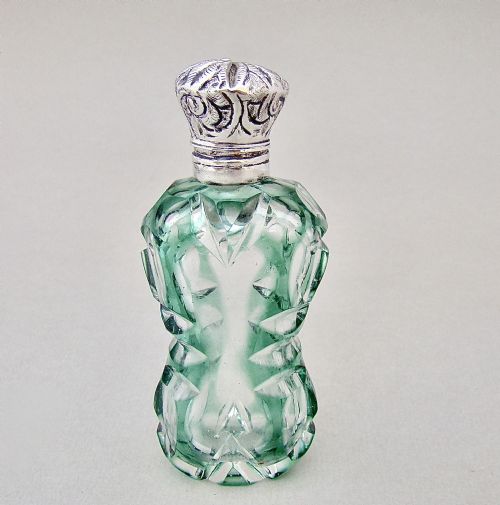

Victorian Silver Overlay
Victorian silver overlay pieces are decorated glass and porcelain vessels fused with precious metal, prized for their intricate contrast.
Victorian Silver Overlay
When you search for Victorian silver overlay, you encounter items designed for personal adornment and grooming, predominantly scent bottles alongside hip flasks and dressing mirrors. These pieces combine coloured glass bodies with worked metal decoration.
The most common examples on this page are scent bottles, frequently fashioned from coloured glass and mounted with sterling silver or French silver deposit. They date from the nineteenth century, including specific periods like eighteen fifty and eighteen ninety.
Makers and origins span English workshops and French centres, with specific items attributed to Jean Gille. The glass itself ranges from amethyst and mercury glass to green, cranberry, and blue porcelain grounds.
Materials and construction methods
The fabrication relies on forming blown glass vessels, sometimes utilising triple overlay or mercury glass techniques, before applying silver deposition or mounted sterling silver. Artisans etched or cut the glass surfaces to create floral patterns and botanical motifs.
French and English workshops utilised distinct methods for adhering the metal to the porcelain and glass substrates, resulting in secure silver mountings and delicate silver deposit work. The combination of coloured glass with heavy silver or silver deposit required precise chemical and thermal control.
Victorian Silver Overlay Retail Price Guide 2026
Typical asking prices for victorian silver overlay among the pieces listed under this phrase on Sellingantiques today, from the lower quarter to the upper quarter. They describe what is for sale here now, not the wider market.
Assessing quality and execution
Quality rests in the depth and complexity of the silver work, distinguishing heavy cast or applied sterling mounts from thinner chemical deposits. Finer pieces display crisp botanical piercing and secure bonding to the underlying glass or porcelain.
The sophistication of the glass body itself dictates standard, with layered cranberry, green, or amethyst glass providing superior visual contrast compared to plain grounds. The integration between the metal collar, cap, and the glass body shows the precision of the original maker.
Jean Gille
The Victorian Silver Overlay Glossary
- Silver overlay
- A technique where silver is applied directly to the surface of glass or porcelain in decorative patterns. This creates a tactile, raised metallic design against the smooth glass ground.
- Mercury glass
- A blown double-walled glass filled with a silvering liquid and sealed, producing a mirror-like sheen. It is frequently found paired with exterior silver mountings.
- Cranberry glass
- A rich red-pink glass coloured by the addition of gold chloride during melting. It provides a striking backdrop for silver deposit work.
- Chatelaine scent bottle
- A small perfume vessel fitted with a chain or hook to suspend from a belt ornament. These portable containers were essential personal accessories in the nineteenth century.
- Sterling silver
- An alloy consisting of ninety-two point five percent silver and seven point five percent other metals, usually copper. This standard composition provides the durability required for functional items like hip flasks and bottle mounts.
Victorian Silver Overlay: Frequently Asked Questions
What is Victorian silver overlay?
It is a decorative technique where silver is bonded onto glass or porcelain vessels, creating intricate metallic patterns against coloured backgrounds.
These pieces typically date from the nineteenth century and include functional personal items like scent bottles and hip flasks.
How do I care for these glass pieces?
Clean the glass gently using a soft cloth, avoiding harsh chemical dips that can damage the delicate silver deposit or mounted metal.
Store them away from direct sunlight and extreme temperature shifts to protect both the glass body and the silver components.
Were these bottles used daily?
Wealthy individuals carried these vessels in pockets, handbags, or suspended from chatelaines for personal scent and refreshment during travel.
They served both as practical grooming accessories and as displays of personal taste and social standing.
How do I distinguish different glass colours?
Makers utilised specialised mineral oxides during production, resulting in distinct hues such as deep amethyst, flash cranberry, and layered green.
Certain items feature multiple glass layers, known as overlay, which were selectively cut away to expose contrasting colours underneath.