



Victorian Silver Label
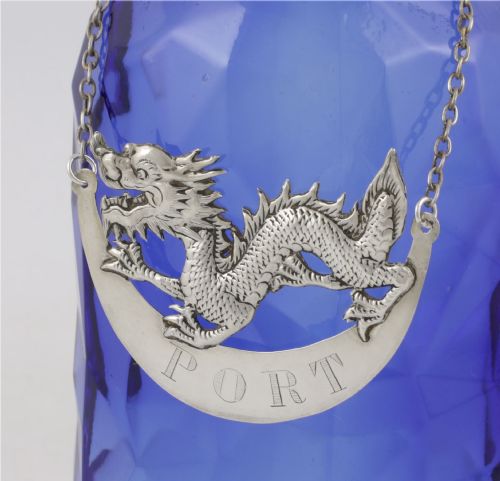
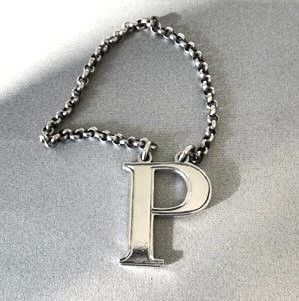
A victorian silver label sits upon the neck of a decanter, naming the spirit within with pierced or engraved letters.
Victorian Silver Label
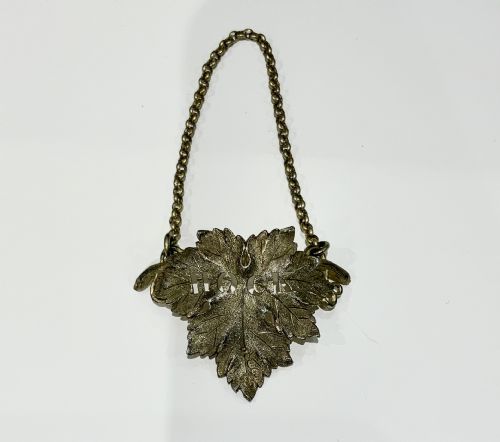
A victorian silver label identifies decanted spirits and wines such as port, sherry, claret, madeira, brandy, gin, whiskey and rum. These small tags appear across the Victorian, Georgian and Edwardian periods, frequently taking the form of stamped sheets or naturalistic vine leaves.
Most examples encountered here are formed from sterling silver or silver gilt, though Chinese export silver and silver plate also appear. They hang from chains around the necks of glass decanters or bottles containing teal glass, cobalt glass and clear crystal.
Materials and Technique
Silversmiths utilised sterling silver and silver gilt, shaping the metal through piercing, stamping and hand engraving. Vine leaf motifs and pierced lettering demonstrate the detailed die-stamping and cutting techniques common to nineteenth-century workshops.
Chains and suspension rings accompany the tags, securing them around glass decanter necks. Glass bodies paired with these mounts utilise cobalt, teal and clear glass.
Victorian Silver Label Retail Price Guide 2026
Typical asking prices for victorian silver label among the pieces listed under this phrase on Sellingantiques today, from the lower quarter to the upper quarter. They describe what is for sale here now, not the wider market.
Dedicated collectors hunt down unusual bottle tags inscribed for obscure beverages like chili, absinthe, or calcavella.
Design and Finish
Quality rests in the crispness of the pierced or engraved title and the weight of the metal sheet. Stronger examples display deep hallmarks, sharp lettering and substantial gauge silver rather than thin, pliable metal.
Design complexity separates standard pieces from finer ones, with naturalistic vine leaf borders, silver gilt finishes and named maker marks elevating a tag. The integration of matching sets or unusual titles like Sauterne, Calcavella or Benedictin also distinguishes superior specimens.
Nathaniel Mills·Hilliard and Thomason·George Unite
The Victorian Silver Label Glossary
- Hallmark
- Official marks stamped into precious metals indicating the standard of purity, the assay office, and the date letter. These stamps provide verifiable proof of origin and age.
- Decanter Label
- A small tag suspended by a chain around the neck of a wine or spirit bottle to identify its contents. They are also known historically as bottle tickets.
- Silver Gilt
- Silver that has been coated with a thin layer of gold on its surface. This technique provides a rich golden appearance while retaining a solid silver base.
- Pierced
- A decorative technique where metal is cut through to create openwork patterns or lettering. This method allows the glass beneath to show through the design.
- Vine Leaf
- A popular nineteenth-century motif shaped like the foliage of a grapevine. Silversmiths often embossed or pierced these leaves to frame the drink title.
Victorian Silver Label: Frequently Asked Questions
How were they used?
Owners placed the chain around the neck of a glass decanter to label the contents for guests at the dining table. This prevented confusion when multiple decanters of dark wines or spirits were served.
They remained a standard accessory in nineteenth-century dining rooms, pairing with crystal, cobalt glass and teal glass bottles.
How do you clean silver labels?
Regular dusting with a soft, dry cloth preserves the finish without harming the antique metal or wearing down engraved details. Avoid harsh chemical dips that strip away desirable patination and age.
For stubborn tarnish, use a mild silver polish applied gently with a cloth, taking care around chains and pierced lettering.
How to date a silver label?
Assay office hallmarks stamped on the reverse or rim provide the exact year of manufacture through specific date letters. Stylistic clues, such as Rococo Revival curves or plain Regency shapes, also indicate the period.
Comparing the lettering style and mounting hardware helps distinguish early Victorian examples from later Edwardian productions.