





Victorian Silver Fish Servers
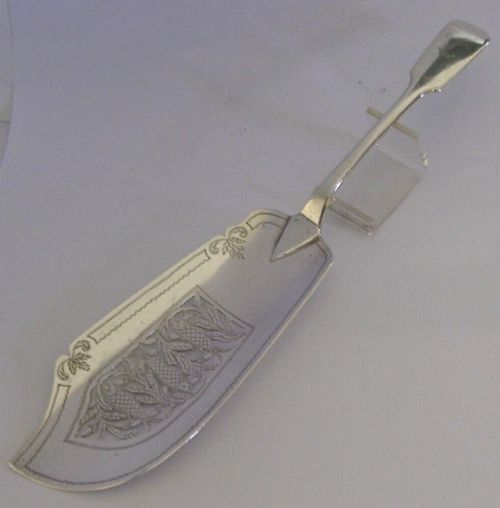
Victorian silver fish servers are purposeful dining implements designed for nineteenth-century tables, bringing substantial craftsmanship and engraved decoration to the serving of fish.
Victorian Silver Fish Servers
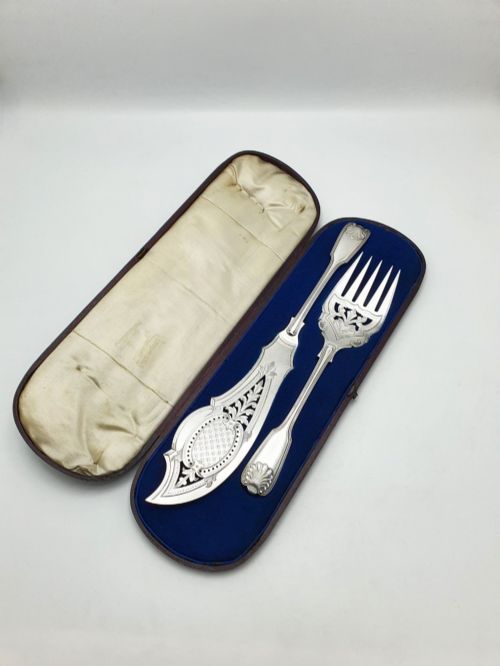
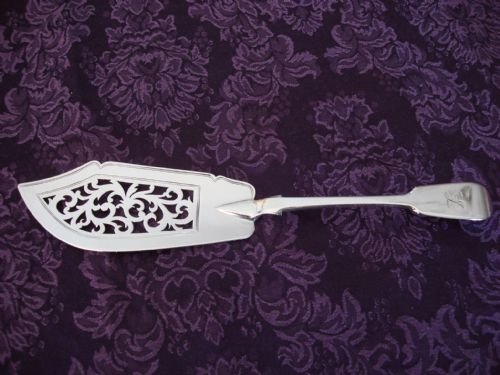
When someone searches for victorian silver fish servers, they encounter matched pairs of serving knives and forks, often configured as a wide-bladed slice paired with a matching fork. These utensils appear primarily as Victorian productions, spanning mid to late-nineteenth-century decades.
The objects take the form of boxed canteen sets, cased presentation pairs, or individual serving pieces. Formats range from solid sterling silver implementations to silver-plate alternatives equipped with alternative handle materials.
Many examples arrive accompanied by fitted presentation cases lined with velvet, satin, or leather. These fitted boxes indicate domestic utility for formal dining occasions of the period.
Materials and Techniques
Makers utilised sterling silver and silver-plate for the primary cutting and lifting blades, applying piercing, chasing, and flat-chasing techniques to create intricate scrollwork, dolphin motifs, and hunting scenes. Blades frequently feature geometric or naturalistic perforations designed to drain cooking liquids.
Handles incorporate diverse materials including mother-of-pearl, bone, horn, antler, and ivory, fixed to the metal components viapins or ferrules. Presentation sets often utilise wooden canteens constructed from oak to house the cutlery securely.
Victorian Silver Fish Servers Retail Price Guide 2026
Typical asking prices for victorian silver fish servers among the pieces listed under this phrase on Sellingantiques today, from the lower quarter to the upper quarter. They describe what is for sale here now, not the wider market.
Several Victorian fish servers feature enthusiastic engravings of dolphins alongside flora, proving that nineteenth-century silversmiths possessed vivid imaginations.
Judging Quality
The distinction between standard utility items and exceptional pieces rests upon the depth of the engraving and the complexity of the blade piercing. Superior examples display crisp, hand-chased marine motifs or armorial crests rather than shallow machine stamping.
Material selection for the handles dictates tactile refinement, with natural materials like carved mother-of-pearl or intact horn maintaining greater integrity than degraded composites. The presence of the original fitted case adds significant context to the survival of the set.
Henry Wilkinson·Alvin·George Adams·Charles Boyton·Mappin & Webb·Walker And Hall
The Victorian Silver Fish Servers Glossary
- Piercing
- The cutting away of metal to form decorative patterns or openwork designs on the blade. This technique lightened the utensil while displaying craftsmanship.
- Cased Set
- A matching pair or collection of cutlery housed in a dedicated, fitted box lined with fabric. These boxes protected the silver when not in use.
- Sterling Silver
- An alloy containing a high proportion of pure silver combined with strengthening metals. Hallmarks on these pieces confirm their metallic standard and origin.
Victorian Silver Fish Servers: Frequently Asked Questions
What are victorian silver fish servers used for?
These utensils served formal nineteenth-century dining tables during the course of removing and plating courses of fish. The wide blade lifted delicate flesh while the accompanying fork provided stability.
Such implements remained exclusive to affluent households where multi-course dinners required specialised tableware for every stage of the meal.
How do you store silver fish servers?
Storing these pieces inside their original fitted cases protects the metal from atmospheric tarnish and physical knocks. Velvet or satin linings cushion the handles and blades during storage.
Alternative storage requires acid-free tissue paper within a dry drawer to prevent unnecessary scratching of the silver and handle materials.
Are the handles made of ivory?
Certain nineteenth-century sets utilise natural materials including bone, horn, antler, mother-of-pearl, and ivory for the handle construction. These materials provided tactile contrast against the cold metal of the blade.
Care instructions for handles differ from silver cleaning, requiring minimal moisture to preserve organic materials over time.
How do I identify the date of my fish servers?
Assay office marks, maker's stamps, and date letters stamped directly onto the silver components provide precise manufacturing years. Reference books match these punch marks to specific towns and operational decades.
Stylistic indicators such as Late Victorian patterns or specific engraving motifs offer additional clues when hallmarks are rubbed or absent.