


Victorian Shell Dish
These items bring the natural forms of the sea into domestic spaces through silver, porcelain, glass and natural material.
Victorian Shell Dish
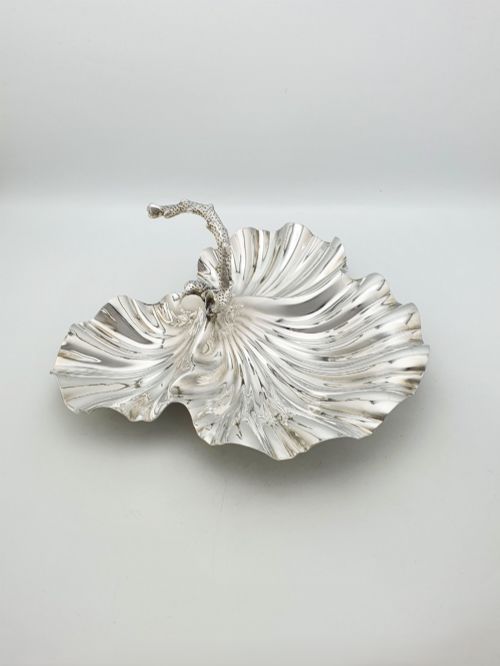
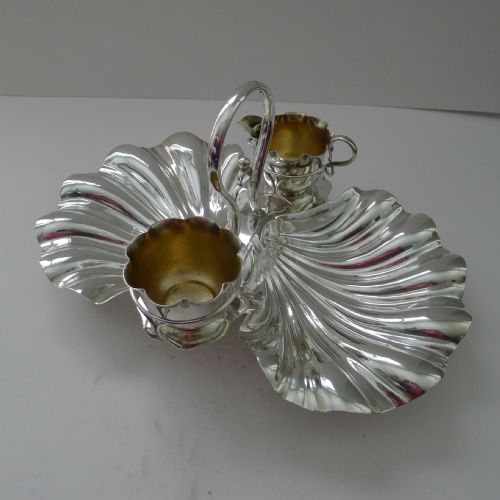
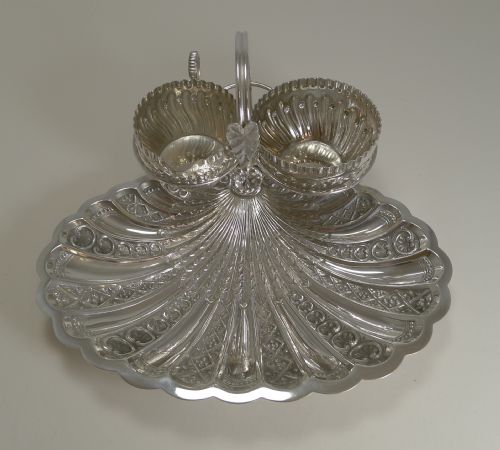
A victorian shell dish takes many forms across domestic settings, serving as salt cellars, butter dishes, centrepieces and decorative bowls. The selections on this page draw principally from Victorian manufacture, alongside related examples from the nineteenth and early twentieth centuries.
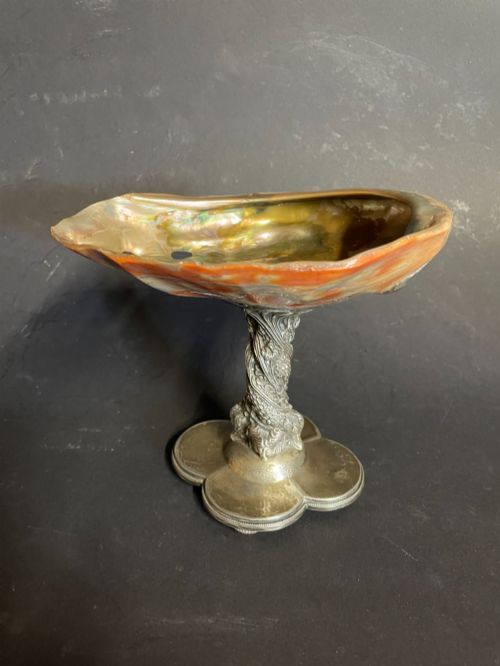
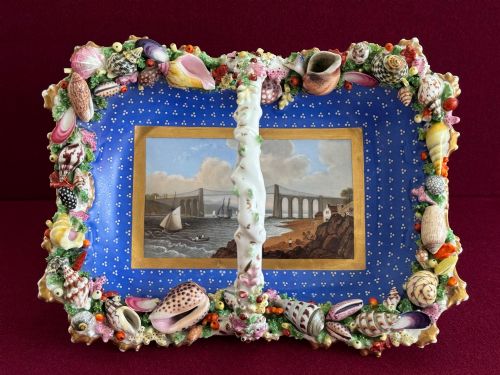
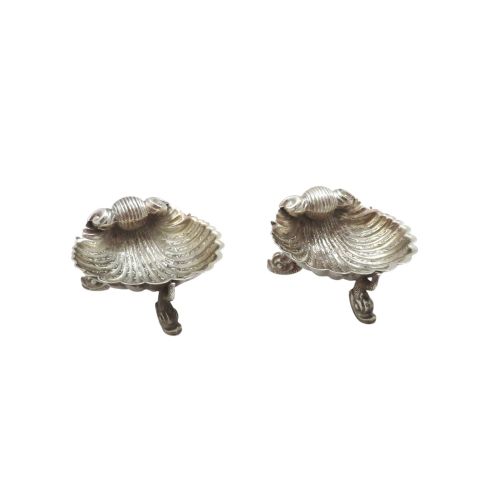
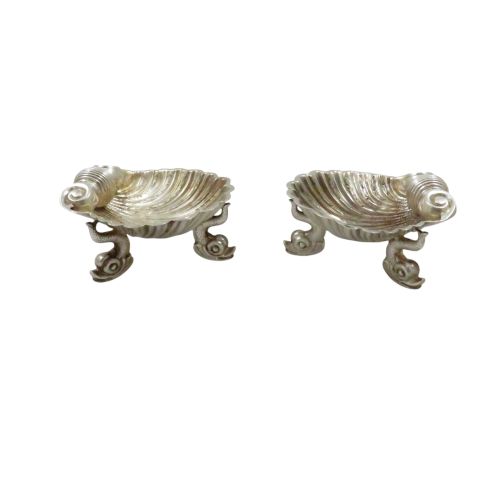
Makers shaped these items for specific dining and decorative uses, producing matched pairs of salt cellars, larger serving dishes with coral handles, and baskets or comports incorporating mother-of-pearl or natural shell. Such pieces reflect nineteenth-century interests in natural history and marine ornamentation.
The materials span solid sterling silver, silver plate, opaline glass, porcelain, bronze and actual clam shells or tortoiseshell. Silver salt cellars and butter dishes appear most frequently, often resting on small ball or dolphin feet.
How they were made
Silversmiths hammered, cast and pierced sterling silver and silver plate to capture the ribbed contours and fluted edges of natural scallop shells. Workshops utilised electroplating methods for base metal wares, occasionally adding gold gilt or tortoiseshell accents.
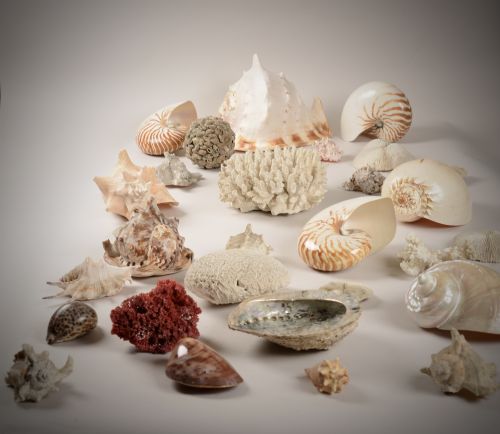
Ceramic examples required porcelain bodies formed into basin and basket shapes, finished with painted floral sprays and gilt highlights around the rim. Glassmakers pressed opaline glass into scalloped moulds, while workers shaped natural giant clam shells and mother-of-pearl plates for cabinets of curiosities.
Several dining tables hosted small metallic sea creatures doing double duty, resting upon tiny dolphin feet while holding table salt.
What varies in quality
The standard of execution depends heavily upon the crispness of the casting and the fidelity to natural marine forms. Master silversmiths achieved convincing rippled surfaces and detailed hinge details, whereas simpler production pieces display softer definition.
Quality also rests on the choice of materials, from heavy solid sterling silver down to plated base metals, and the finesse of secondary elements like coral-shaped handles, dolphin feet, or hand-painted porcelain floral sprays.
Daniel Arter·Roberts and Belk·Stephen Smith·Josiah Williams and Co·Mappin Bros
The Victorian Shell Dish Glossary
- Salt Cellar
- A small vessel used for holding loose salt at the dining table. Many examples in this category take the exact shape of a small scallop shell supported by tiny feet.
- Butter Dish
- A covered or open dish designed specifically for serving butter at table. These frequently incorporate sterling silver shell designs with matching knives.
- Opaline Glass
- An opaque or translucent art glass popular during the nineteenth century. It often appears in soft green or white shades formed into scalloped dishes.
- Centrepiece
- A large decorative vessel placed in the middle of a dining table. Examples recorded here combine silver or porcelain shells with figurative supports like cherubs or dolphins.
- Naturalism
- An artistic movement focusing on the faithful representation of natural subjects. This style underpins the Victorian fascination with marine specimens and shell motifs.
Victorian Shell Dish: Frequently Asked Questions
What were victorian shell dish items used for?
These vessels served functional roles on the dining table for butter, salt, fruit, or cheese. Smaller versions held condiments during formal meals, while larger comports and centrepieces displayed fruit or confections.
Over time, many transitioned into purely decorative objects for side tables, cabinets, and mantelpieces. Their marine forms suited the Victorian appetite for natural history displays.
How do I care for silver and plated pieces?
Silver and silver-plated items require gentle cleaning with appropriate silver polish to maintain their finish and prevent tarnish accumulation. Avoid abrasive cloths that might wear down thin plating on older wares.
Store them in dry environments away from direct sunlight and humidity. For pieces combining silver with tortoiseshell or glass, take care to use cleaning agents safe for all component materials.
How can I tell sterling silver from silver plate?
Sterling silver pieces generally feature hallmarks indicating the assay office, standard mark, and date letter. These stamps confirm solid silver construction rather than a plated base metal.
Silver-plated items often bear manufacturer marks or stamps denoting electroplated nickel silver. Examining the edges and high points can sometimes reveal the underlying base metal if the silver layer has thinned.
Are porcelain and glass versions fragile?
Porcelain and opaline glass demand careful handling due to their inherent composition. Thin edges on scalloped glass dishes and delicate painted porcelain surfaces chip easily if knocked.
Display them on stable, flat surfaces away from heavy traffic areas. Hand washing in lukewarm water with mild soap is necessary for antique ceramic and glass pieces.
What periods do these pieces come from?
The majority of these objects originate from the Victorian era and the broader nineteenth century. Production extends into the Edwardian period and the early twentieth century.
Designs reflect changing tastes from early Victorian classicism through late Victorian naturalism and the revival styles popular toward the turn of the century.