



Victorian Sewing Stand
A victorian sewing stand is a tidy domestic companion for needlework, offering fitted compartments and displays built to last.
Victorian Sewing Stand
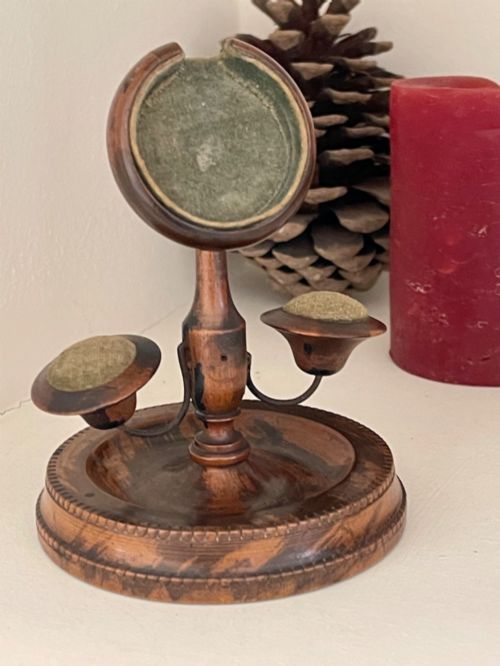
When you search for a victorian sewing stand, you enter a practical nineteenth-century world of needlecraft, thread storage, and small household tasks. These pieces range from small tabletop cotton reel displays and pocket watch stands to substantial freestanding work tables with drop leaves and fitted interiors.
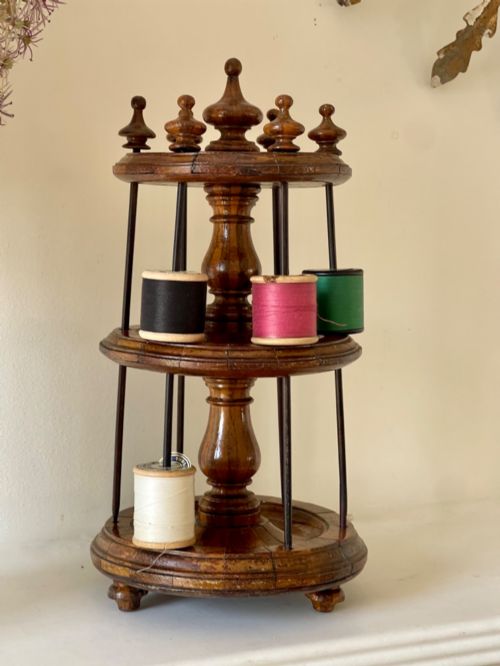
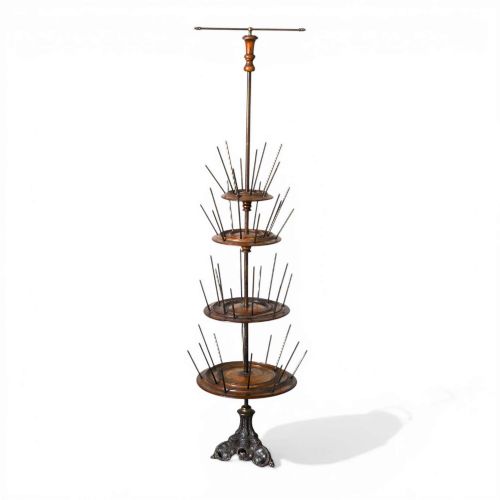
The versions most commonly met on this page include rosewood and mahogany work tables alongside tiered wooden cotton reel stands and brass bobbin holders. They bridge the gap between utility and display, designed to keep threads, needles, and textile projects close at hand in the Victorian parlour.
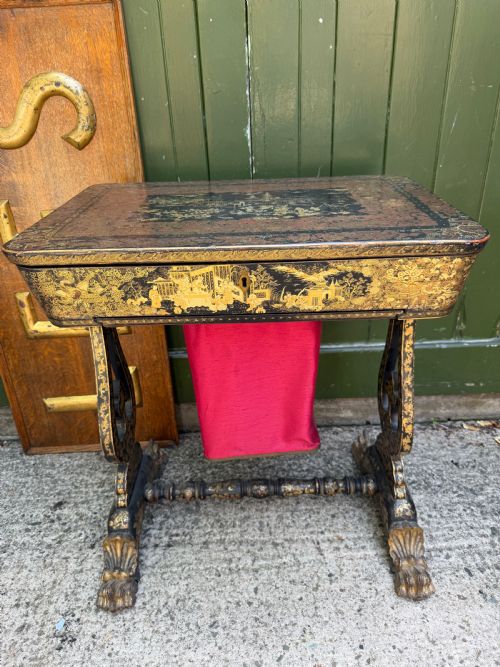
Origin and form vary considerably across the selection, taking in English shop fittings, Scottish examples, Chinese export lacquer work-tables, and Anglo-Indian designs. Each type reflects the specific needs of the maker and the domestic habits of the period.
Materials and construction
Cabinetmakers relied heavily on rich timbers such as rosewood, mahogany, walnut, and burr walnut for the structure of freestanding work tables. These woods were frequently polished to a deep lustre, occasionally accented with carved details or contrasting veneers.
Smaller tabletop stands and display trees make extensive use of turned wood and brass, providing sturdy supports for delicate cotton reels and pins. Fabric, velvet, and needlepoint tapestry are integrated into pin cushions and interior linings, offering soft textures against the hard timber and metal frameworks.
Victorian Sewing Stand Retail Price Guide 2026
Typical asking prices for victorian sewing stand among the pieces listed under this phrase on Sellingantiques today, from the lower quarter to the upper quarter. They describe what is for sale here now, not the wider market.
Listings feature items spanning the nineteenth century, including specific dates from 1850, 1860, and 1890, alongside broader Victorian and William IV periods.
Judging quality
The distinction between standard examples and finer pieces lies in the precision of the turning, the complexity of the internal fittings, and the choice of primary timber. Burr walnut and finely figured rosewood command attention for their visual depth, while intricate turned tiers on display stands show the skill of the woodturner.
The sophistication of the design also marks out the superior pieces, whether seen in the gilded decoration of an export lacquer work-table or the elaborate arrangement of a multi-tiered cotton reel tree. Original fabric linings and complete internal compartments elevate the integrity of a surviving piece.
The Victorian Sewing Stand Glossary
- Work table
- A freestanding domestic table equipped with drawers, bags, or compartments specifically designed to hold sewing and needlework equipment.
- Cotton reel stand
- A vertical or tiered wooden or metal fixture designed to organise and display multiple spools of thread for crafting or retail.
- Drop-leaf
- A table design featuring hinged flaps on either side that can be raised to extend the surface area or lowered when space is restricted.
- Treen
- Small handmade wooden items for domestic use, prized by collectors for their varied turning and tactile qualities.
Victorian Sewing Stand: Frequently Asked Questions
What is a victorian sewing stand used for?
These pieces were built to organise threads, needles, fabrics, and small tools used in everyday domestic needlework and mending.
Today, they function as versatile accent furniture that brings nineteenth-century character and practical surface space to living rooms or bedrooms.
How do I identify a work table?
Look for hinged tops, fitted interior compartments, and sometimes suspended fabric work bags designed to hold ongoing textile projects.
They often feature drop leaves and sit on pillar supports or turned legs suited for placement beside a chair.
What materials were used?
Cabinetmakers utilised dense hardwoods like rosewood, mahogany, and walnut, often selecting burr veneers for decorative effect.
Smaller display items incorporate turned wood, polished brass, velvet, and fabric elements for pin cushions and thread storage.
Are cotton reel stands different from work tables?
Cotton reel stands are typically smaller tabletop or display fixtures built with tiers and spindles specifically for holding spools of thread.
Work tables are larger freestanding items that provide enclosed storage and a table surface rather than focusing solely on thread display.