


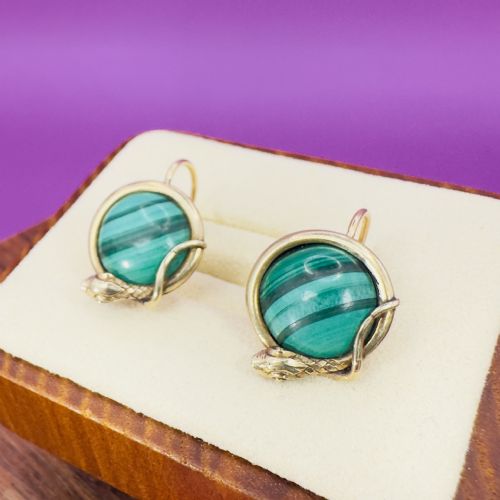


Victorian Serpent Jewellery
Victorian serpent jewellery wraps rings, bangles, and necklaces around the body in gold, diamonds, and enamel as enduring symbols of eternal love.
Victorian Serpent Jewellery
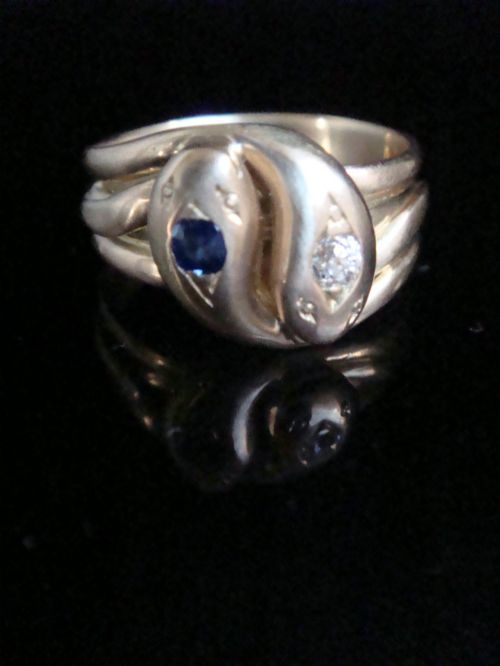
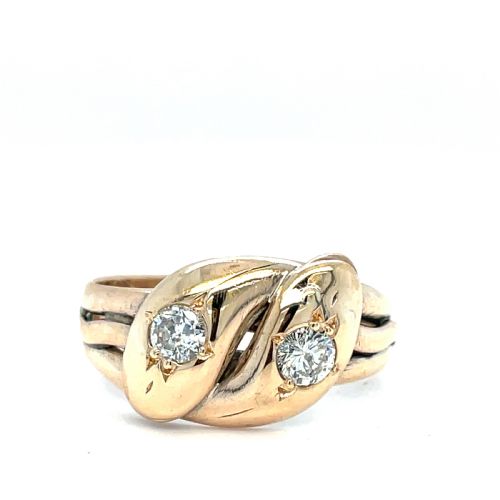
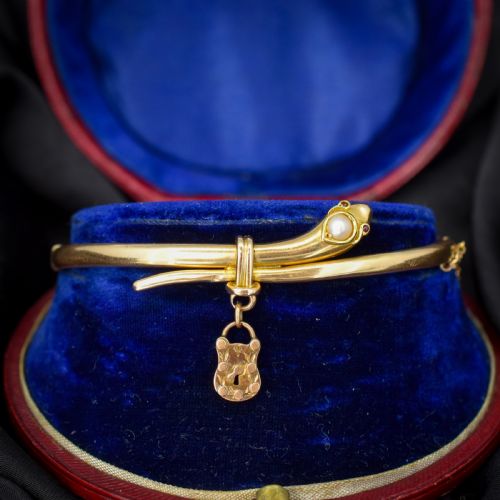
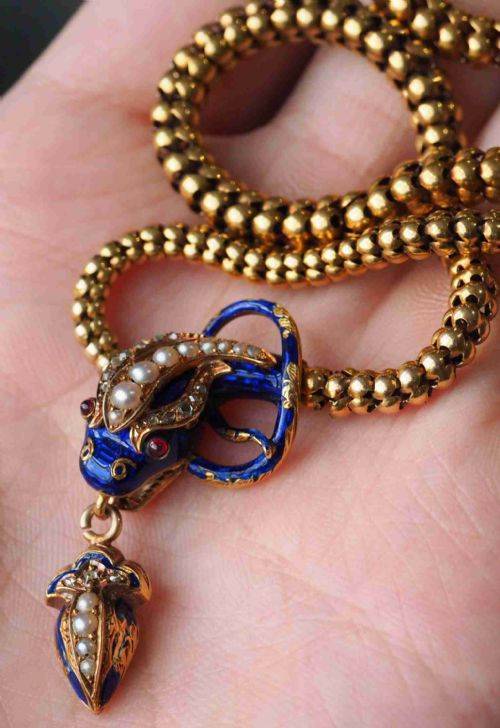
When you search for Victorian serpent jewellery, you encounter rings, bangles, necklaces, earrings, and pendants shaped as snakes. The form spans the Victorian and Edwardian periods, stretching from the mid-nineteenth century into the early twentieth century.
Gold bands coil around fingers, while hinged bangles wrap the wrist with textured scales and gemstone eyes. Many pieces combine yellow gold with old cut diamonds, rubies, pearls, and enamel.
Rings dominate the selection, often featuring single or double coiled serpents marked with British hallmarks from assay offices in towns such as Chester and London. Alongside rings, you find drop earrings, charm pendants, and belt buckles fashioned from nine-carat, fifteen-carat, and eighteen-carat gold.
Materials and construction
Goldsmiths shaped these serpentine pieces using nine-carat, fifteen-carat, and eighteen-carat yellow gold, alongside platinum and silver settings. Metal was cast, chased, and engraved to render realistic scales and flexible bodies that curve around the wearer.
Gemstones such as old cut diamonds, rose-cut diamonds, rubies, sapphires, garnets, malachite, coral, and natural saltwater pearls were flush-set or star-set into the heads and bodies. Enamel work added vibrant colour to the coiled forms, while integrated hinges allowed rigid gold bangles to open securely.
Victorian Serpent Jewellery Retail Price Guide 2026
Typical asking prices for victorian serpent jewellery among the pieces listed under this phrase on Sellingantiques today, from the lower quarter to the upper quarter. They describe what is for sale here now, not the wider market.
Some serpents double as belt buckles, fastening Victorian waists with a golden bite.
Assessing quality and craftsmanship
Quality rests upon the crispness of the chasing on the gold scales and the articulation of the serpent's head. Finer pieces display careful hand-engraving that defines each individual scale along the coiled body.
The selection and matching of gemstones elevate a piece, particularly when old cut diamonds or natural pearls are chosen for the eyes and head. Hallmarks stamped inside ring shanks and bangle hoops provide clear dates and assay office origins that confirm the period.
The Victorian Serpent Jewellery Glossary
- Old cut
- A diamond cutting style from the nineteenth century featuring a small table, high crown, and open culet. These stones catch candlelight with broad, soft flashes.
- Rose-cut
- A historic diamond cut with a flat base and a domed crown faceted into triangles. It offers a subtle, translucent shimmer rather than modern brilliance.
- Hallmark
- Official marks stamped into precious metals to guarantee purity and origin. British marks often include a date letter and assay office symbol.
- Enamel
- Powdered glass fused to metal under high heat to add colour. It appears on serpent bodies to create realistic markings or decorative patterns.
- Chasing
- A metalworking technique where details are hammered into the surface from the front using punches. It creates the texture of scales on gold snake bodies.
Victorian Serpent Jewellery: Frequently Asked Questions
What does a snake symbolise in antique jewellery?
Serpents symbolised eternal love and wisdom during the nineteenth century. Prince Albert famously gave Queen Victoria an engagement ring featuring a snake set with an emerald, which popularised the motif across Britain.
Craftsmen turned this symbolism into wearable art, shaping coiled bands and flexible necklaces that hugged the skin as protective amulets.
How do I date a Victorian snake ring?
Dating relies on British hallmarks stamped inside the gold band, which indicate the assay office and year of testing. Stylistic details such as old cut diamonds and specific chased scale patterns also point toward the mid or late nineteenth century.
Edwardian pieces from the early twentieth century often share similar serpentine motifs but carry later hallmarks from London or Chester.
Are these pieces comfortable for daily wear?
Coiled rings and wrap-around bangles are generally smooth against the skin, designed to follow the natural contours of fingers and wrists. Rigid hinged bangles secure safely with integrated clasps for everyday use.
Care should be taken with delicate elements like pearl settings or enamel work to protect them from knocks during daily activities.
What metals were used in Victorian serpent pieces?
Goldsmiths utilised nine-carat, fifteen-carat, and eighteen-carat yellow gold for the majority of these serpentine forms. Silver and platinum also appear, particularly in earlier settings or alongside diamond clusters.
The varying gold purities reflect the standards of the Victorian and Edwardian eras, prior to the adoption of modern eighteen-carat and nine-carat benchmarks.